Spanish Phrases for Restaurants, Cafés, and Ordering Politely
If you can order a coffee, ask for the bill, and make a small change to your meal in Spanish, you can handle a lot of everyday travel situations with confidence. This guide gives you the most useful restaurant and café phrases for polite, practical communication.
The core phrases you’ll use most often
These are the phrases worth learning first. They cover greeting the staff, ordering, asking questions, and closing the interaction politely. You do not need perfect Spanish to sound respectful and clear.
- Hola / Buenas — Hello / Hi
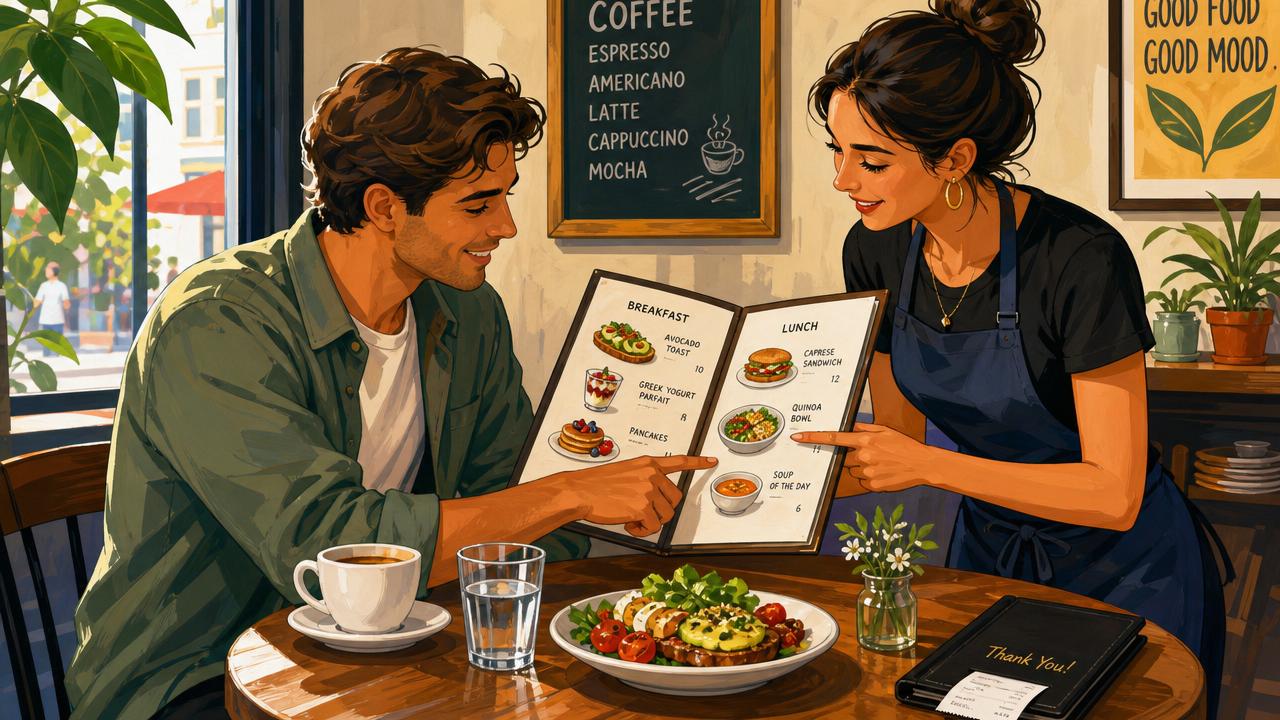
- ¿Me puede traer el menú, por favor? — Can you bring me the menu, please?
- Quisiera pedir… — I’d like to order…
- Para mí, … — For me, …
- ¿Me trae la cuenta, por favor? — Can you bring me the bill, please?
- Muchas gracias — Thank you very much
Ordering food and drinks politely
In many Spanish-speaking places, a polite but direct request sounds natural and easy to understand. If you want to keep things simple, use quisiera, me trae, or para mí. These are friendly, everyday phrases that work well in restaurants, cafés, and bars.
You can also add por favor to soften your request. For example: Quisiera un café, por favor. If you are ordering several things, try listing them one by one so the server can follow easily.
- Quisiera un café con leche. — I’d like a coffee with milk.
- Para mí, una ensalada y una sopa. — For me, a salad and a soup.
- Me trae una cerveza, por favor. — Bring me a beer, please.
- ¿Tiene agua sin gas? — Do you have still water?
- ¿Qué me recomienda? — What do you recommend?
How to make small changes to an order
If you need to adjust something, keep it short and specific. In food service, simple requests are usually easier than long explanations. A useful pattern is no + item, or sin + ingredient.
- Sin cebolla, por favor. — Without onion, please.
- No muy picante. — Not very spicy.
- Sin queso, por favor. — Without cheese, please.
- ¿Lo puede hacer sin gluten? — Can you make it gluten-free?
- ¿Puede traer la salsa aparte? — Can you bring the sauce on the side?
If you have an allergy or a serious dietary need, say it clearly and early. A helpful phrase is: Tengo alergia a… — I’m allergic to… You can then name the ingredient, such as nueces, mariscos, or leche.
Asking questions without sounding rude
Questions are normal, especially if you are deciding what to order. The key is to keep your tone polite and your sentence short. Most staff members will appreciate clear questions rather than complicated ones.
- ¿Qué lleva este plato? — What does this dish have in it?
- ¿Es vegetariano? — Is it vegetarian?
- ¿Es para compartir? — Is it for sharing?
- ¿Cuánto cuesta? — How much does it cost?
- ¿Está incluido el servicio? — Is service included?
At the café: coffee, pastries, and a quick order
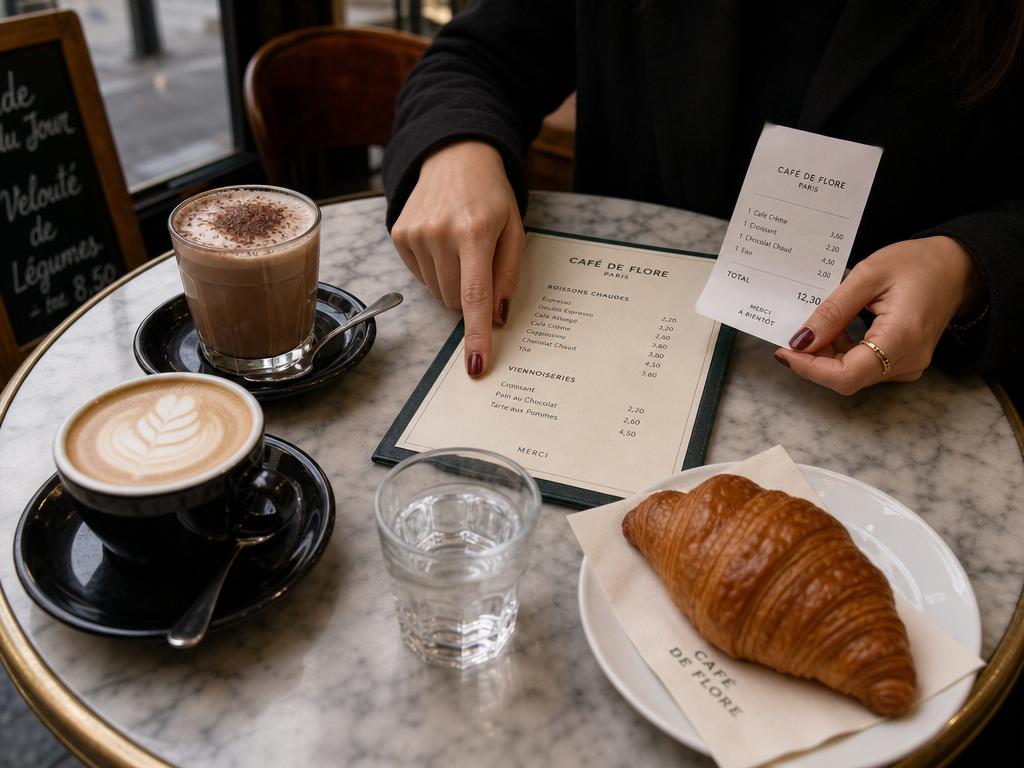
Cafés often move quickly, so a few set phrases can help you order smoothly. If you want to sound natural, ask for what you want in one sentence, then wait for the response. You do not need a long conversation unless you want one.
A very useful café pattern is: Quisiera un café solo y un croissant, por favor. If you are staying at the table, you can also ask: ¿Nos trae dos cafés, por favor? — Can you bring us two coffees, please?
Useful café phrases
- Un café solo, por favor. — An espresso, please.
- Un café con leche. — A coffee with milk.
- Un té, por favor. — A tea, please.
- Algo dulce, por favor. — Something sweet, please.
- Para llevar, por favor. — To go, please.
Asking for the bill and finishing politely

When you are ready to leave, the most important phrase is asking for the bill. In many places, the staff will not rush you, so asking directly is normal and polite. You can also ask whether they accept card payments before ordering if you want to avoid surprises.
- La cuenta, por favor. — The bill, please.
- ¿Me puede traer la cuenta? — Can you bring me the bill?
- ¿Se puede pagar con tarjeta? — Can I pay by card?
- ¿Puedo pagar aquí? — Can I pay here?
- Está bien, gracias. — That’s fine, thank you.
A simple goodbye helps end the interaction warmly. Try: Gracias, hasta luego. — Thank you, see you later. In a café or restaurant, that small courtesy goes a long way.
A short phrase formula you can reuse anywhere
When you feel unsure, rely on this formula: polite request + item + por favor. For example, Quisiera una sopa, por favor. Or: ¿Me trae una botella de agua, por favor? This pattern is simple, flexible, and easy to remember.
You can also build confidence by learning just one question at a time. Start with the bill, then drinks, then dietary changes. Small wins add up quickly in real conversations.
Quick recap
For restaurants and cafés, focus on a few high-value phrases: what you want, how to modify it, how to ask for the bill, and how to say thank you. The goal is not perfect Spanish — it is clear, polite communication that gets you what you need.