
Ask Everyday Questions in German Colloquially
If you want to sound more natural in German, learning how to ask everyday questions colloquially is one of the fastest wins. In real conversations, people often shorten phrases, leave out words, and choose softer, more casual wording than textbook German. This guide gives you practical questions you can use right away in shops, cafés, with friends, and while travelling. For German phrases, the text is annotated for TTS-friendly pronunciation support.
Start with the most useful everyday question patterns
In casual German, many common questions begin with simple starters like Wie (how), Was (what), Wo (where), Wann (when), and Wie viel (how much). The key is not to build perfect sentences first. It is to get comfortable with short, clear questions that native speakers actually say in daily life.
- Wie geht’s? — How’s it going?
- Was machst du? — What are you doing?
- Wo bist du? — Where are you?
- Wann kommst du? — When are you coming?
- Wie viel kostet das? — How much does that cost?
Use casual greetings and check-ins with friends
When speaking with friends, classmates, or people your age, German often becomes shorter and warmer. Instead of a formal opener, you can jump straight into a friendly check-in. These are especially useful when meeting someone you already know, texting, or starting a relaxed conversation.
- Alles klar? — Everything good? / All good?
- Na, wie geht’s? — Hey, how’s it going?
- Was geht? — What’s up?
- Wie läuft’s? — How’s it going? / How’s it going so far?
- Was gibt’s Neues? — What’s new?
A small note: some of these are friendly and natural, but they are not always appropriate with strangers or in formal situations. If you are not sure, Wie geht’s? is a safe, versatile choice.
Questions you’ll hear in shops, cafés, and on the street
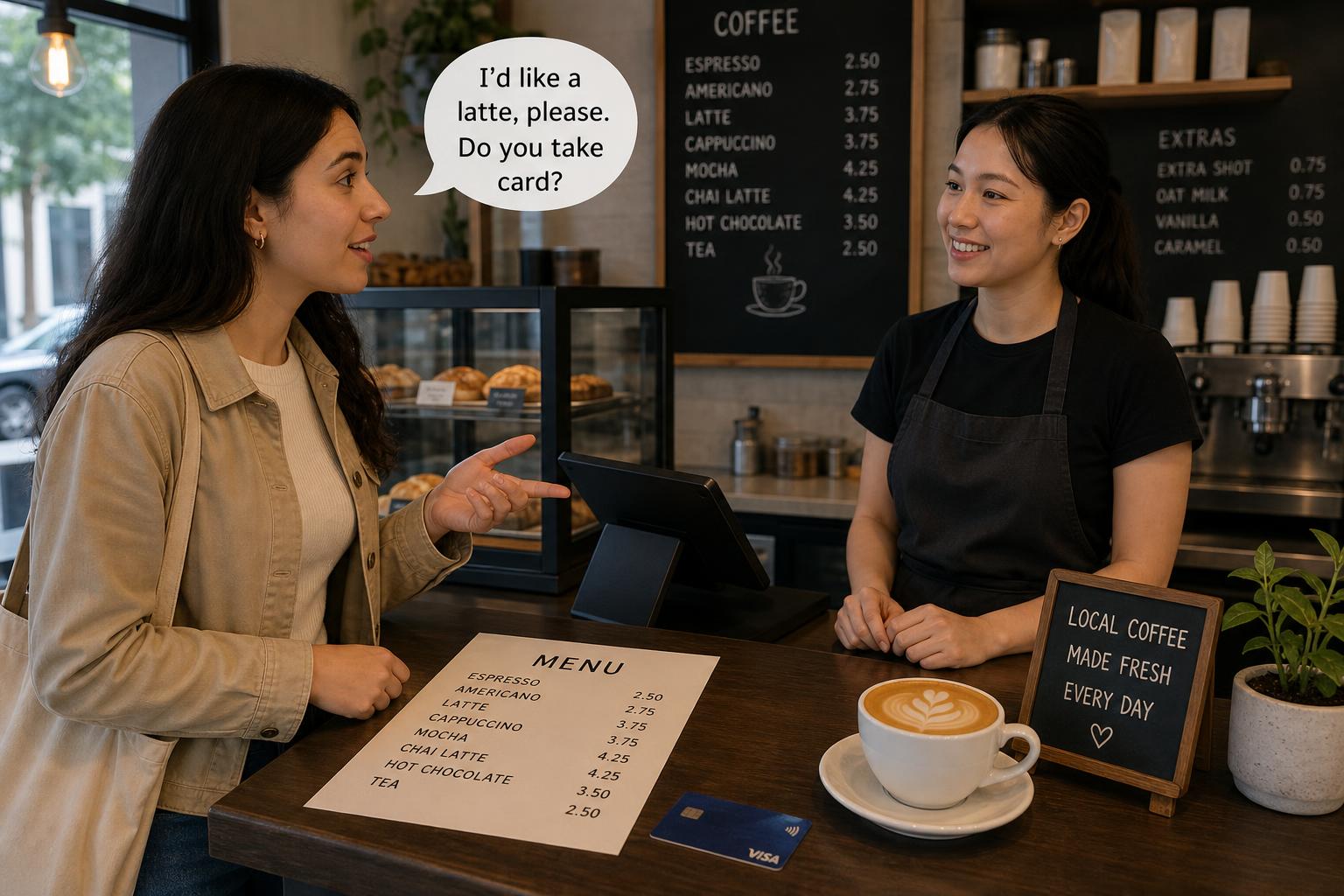
When you are out and about, the most useful questions are the ones that get you what you need quickly. In German, people often ask these in a very direct way. That can feel abrupt at first, but it is usually normal and not rude. A short question is often the most natural question.
- Haben Sie …? — Do you have …?
- Kann ich …? — Can I …?
- Wo finde ich …? — Where can I find …?
- Geht das? — Is that possible? / Does that work?
- Noch ein Kaffee, bitte? — Another coffee, please?
For example, if you are in a bakery, Haben Sie ein veganes Brötchen? means “Do you have a vegan bread roll?” If you are unsure about pronunciation, focus on the rhythm first. German listeners usually understand a simple, well-placed question even if your accent is not perfect.
How to ask for directions naturally

Directions are one of the most common real-world needs for beginners. Colloquial German tends to favor short, direct questions here too. You do not need to make them long to be polite; a Entschuldigung or Bitte can make the tone softer.
- Wo ist …? — Where is …?
- Wie komme ich zu …? — How do I get to …?
- Ist das weit? — Is it far?
- Gleich hier? — Right here?
- Geradeaus? — Straight ahead?
A useful travel phrase is Entschuldigung, wo ist die U-Bahn? — “Excuse me, where is the subway?” It is short, practical, and easy to adapt to any destination you need.
Ask about time, plans, and availability
If you are making plans with someone, checking opening times, or asking whether something is available, everyday German often relies on a few core question forms. These phrases are especially useful because you can reuse them in many situations with only one or two words changed.
- Hast du Zeit? — Do you have time?
- Wann hast du Zeit? — When do you have time?
- Wann macht ihr auf? — When do you open?
- Bist du morgen da? — Are you there tomorrow?
- Geht heute? — Does today work?
Notice how casual German often drops extra words. Instead of a full textbook sentence, speakers may ask the shortest version that still sounds clear. That is a good habit to copy once you recognize the pattern.
Polite questions that still sound natural
Being polite in German does not always mean sounding formal. You can be friendly, respectful, and still keep the sentence short. A soft tone often comes from the context, your word choice, and adding bitte or entschuldigen Sie when needed.
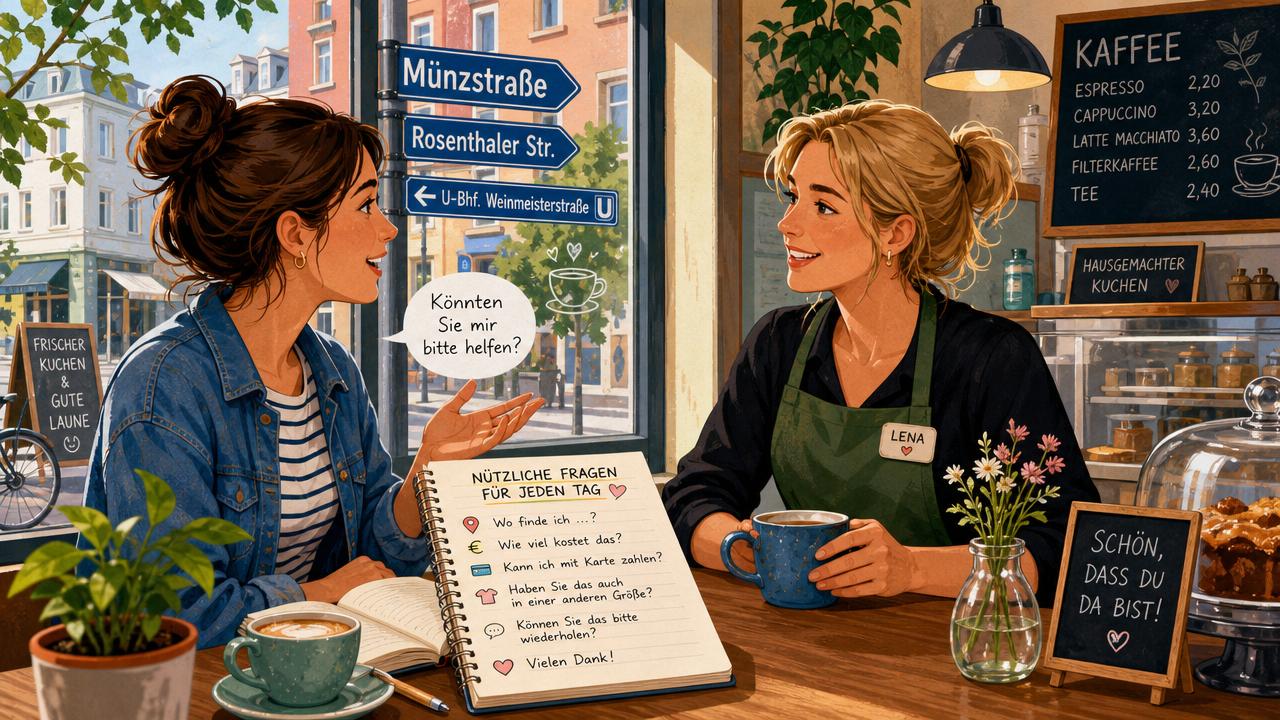
- Könnten Sie mir helfen? — Could you help me?
- Wo kann ich hier parken? — Where can I park here?
- Wären Sie so nett? — Would you be so kind?
- Darf ich mal fragen? — May I ask something?
- Ist es okay, wenn ich …? — Is it okay if I …?
If you are a beginner, do not try to memorize every polite variation at once. Pick one or two and use them often. That repetition will make your German sound more confident and much less scripted.
A simple formula for making your own questions
Once you know a few patterns, you can build your own colloquial questions quickly. A useful formula is: question word + verb + object. For example, Wo ist …?, Wann kommt …?, or Wie viel kostet …?. This keeps your German flexible and useful in real life.
- Wo ist der Bahnhof? — Where is the train station?
- Wann kommt der Bus? — When does the bus come?
- Wie viel kostet das Ticket? — How much is the ticket?
- Kann ich mit Karte zahlen? — Can I pay by card?
- Hast du das verstanden? — Did you understand that?
A good practice tip: say the question out loud in chunks. For example, Wie viel + kostet das?. This makes the phrase easier to remember and helps you sound more natural under pressure.
Quick recap: the phrases to keep ready
If you only remember a few colloquial German questions, start with these: Wie geht’s?, Wo ist …?, Wie viel kostet das?, Hast du Zeit?, and Kann ich …?. These will cover a surprising number of everyday situations.
The best way to sound more local is not to use fancy language. It is to use short, clear, high-frequency questions with confidence. Practice them in real contexts, and you will start recognizing how native speakers trim them down in everyday conversation.