Japanese at a Tokyo Izakaya: Enter, Order, and Pay
At a Tokyo izakaya, the first exchange starts at the door: tell the staff how many people are in your group and wait for them to show you a seat. Then order a drink and a small dish, ask what they recommend if the menu leaves you unsure, and request the bill when you’re ready.
These polite Japanese lines fit a straightforward visit. Izakaya menus, seating, ordering systems and payment points differ, so check what this place does instead of assuming every bar runs the same way.
Five lines to keep on your phone
| Japanese and pronunciation | Meaning |
|---|---|
| 二人です。 Futari desu. | There are two of us. |
| おすすめは何ですか? Osusume wa nan desu ka? | What do you recommend? |
| これをお願いします。 Kore o onegai shimasu. | I’d like this, please. |
| お会計、お願いします。 Okaikei, onegai shimasu. | The bill, please. |
| すみません。もういちど、お願いします。 Sumimasen. Mō ichido, onegai shimasu. | Sorry. Once more, please. |
Point to the exact menu line when you say これ (“this”). The romanization is a reading aid: the bar over ō in mō means you hold that vowel longer. The Japan Foundation’s restaurant recordings let you hear real teaching dialogues before you try the phrases aloud.
At the door: answer the number question
You may hear 何名様ですか? Nanmei-sama desu ka? (“How many people?”). 二人です is a clear answer for two; replace it with 一人です Hitori desu if you’re alone. Staff may then say こちらへどうぞ Kochira e dōzo (“This way, please”). Follow their lead rather than taking an empty chair. The Japan Foundation’s restaurant lesson models these questions and answers.
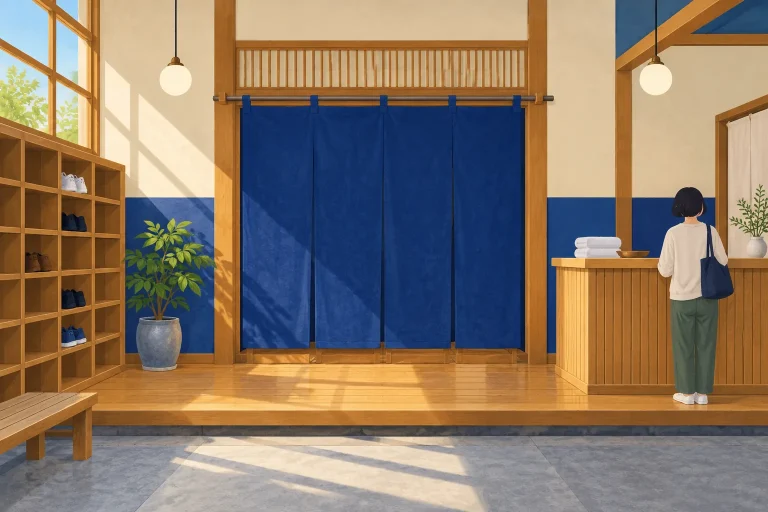
Some places have a counter, tables or a raised seating area, and some ask you to remove your shoes for a particular room. Let the staff show you the seat and any shoe storage. A greeting such as いらっしゃいませ Irasshaimase is what you may hear on entry; you don’t need to say it back.
Order a drink, then a small dish
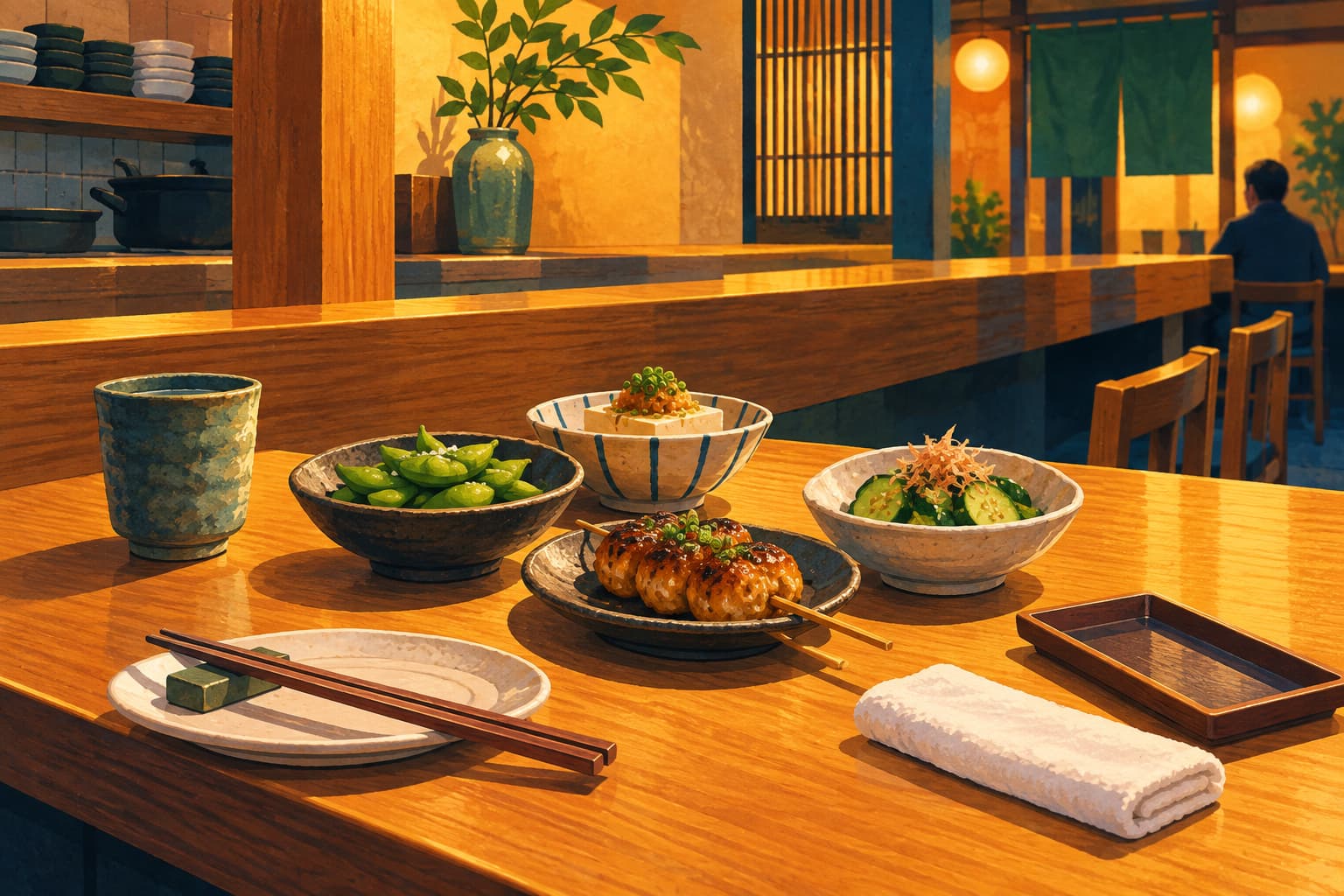
Izakaya meals often begin with a drink. You can order a nonalcoholic one: ウーロン茶をお願いします Ūroncha o onegai shimasu asks for oolong tea. Ask for what you see on this menu. Tokyo’s official izakaya guide describes small plates, including yakitori and edamame, and says you can add dishes during the meal rather than order everything at once.
You may receive お通し otoshi, a small starter you didn’t ask for. Tokyo’s dining guide says it often carries a per-person charge. Check the menu or ask staff about a charge before you sit if it affects your choice. Don’t treat the starter as a free sample.
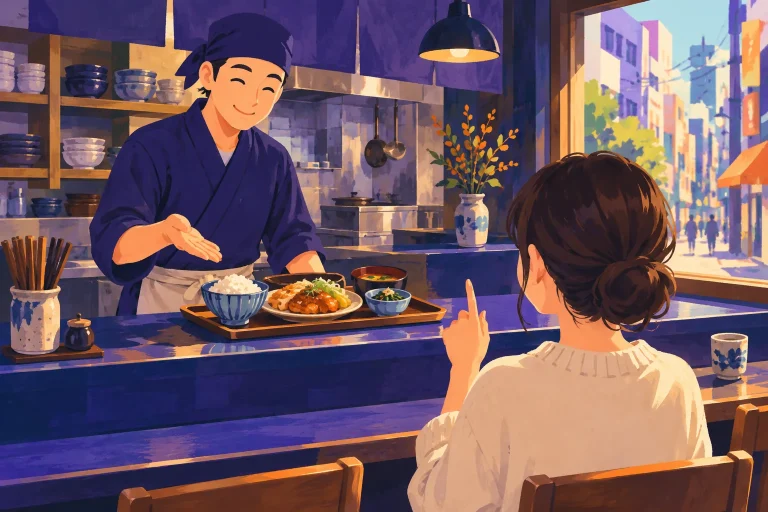
When staff ask ご注文、お決まりですか? Gochūmon, okimari desu ka? (“Have you decided what to order?”), point to a dish and say これをお願いします. To ask for guidance, use おすすめは何ですか? The reply may name a dish you don’t recognise. Point to its line or photo before accepting it, especially if an ingredient matters to you. For an allergy, get the ingredients and preparation confirmed in writing; a phrase card isn’t enough.
A short exchange you can practise
This invented exchange uses a dish that appears on many izakaya menus. It doesn’t describe a particular Tokyo restaurant.
- Staff: 何名様ですか? Nanmei-sama desu ka? — How many people?
- You: 二人です。 Futari desu. — Two of us.
- Staff: ご注文、お決まりですか? Gochūmon, okimari desu ka? — Have you decided?
- You: おすすめは何ですか? Osusume wa nan desu ka? — What do you recommend?
- Staff: 焼き鳥がおすすめです。 Yakitori ga osusume desu. — I recommend the grilled chicken skewers.
- You: これをお願いします。 Kore o onegai shimasu. — I’d like this, please. (Point to the menu item.)
- Staff: 以上でよろしいですか? Ijō de yoroshii desu ka? — Is that all?
- You: はい、お願いします。 Hai, onegai shimasu. — Yes, please.
If you miss the recommendation or a follow-up, say すみません。もういちど、お願いします. For a slower repeat, the Japan Foundation teaches もう少し、ゆっくり言ってください Mō sukoshi, yukkuri itte kudasai (“Please say it a little more slowly”). Show the menu if the room is too loud.
Ask for the bill and check where to pay
Say お会計、お願いします when you’re ready to leave. In Tokyo, some restaurants settle at the table and others have you take a slip to the register. Follow the staff’s direction and check the total, including any otoshi charge. The venue also decides which payment methods it accepts.
Use です and お願いします with staff even if friends at your table speak casually to each other. You don’t need to copy the honorific wording you hear from a server. Practise the entry question, one order, and the bill request as a single exchange so you can recognise the reply between your lines.