Japanese for a Kyoto Temple Visit: Tickets, Shoes, and Questions
At Kyoto’s Sanjūsangen-dō, buy an admission ticket before you approach the main hall, then take off your shoes at its entrance. The short Japanese lines below help you ask for one adult admission, check the shoe threshold, and recover when you miss an answer.
These examples follow a visit to Sanjūsangen-dō, a working Buddhist temple. Other Kyoto temples have their own rules. Follow the signs and staff where you visit. The temple’s visitor page gives the current admission details and shows the shoe racks at the hall entrance.
Four lines to keep on your phone
- 大人一人、お願いします。 Ōtona hitori, onegai shimasu. — One adult, please.
- 靴はここで脱ぎますか。 Kutsu wa koko de nugimasu ka? — Should I take off my shoes here?
- 写真を撮ってもいいですか。 Shashin o totte mo ii desu ka? — May I take a photo?
- すみません。もういちど、お願いします。 Sumimasen. Mō ichido, onegai shimasu. — Sorry. Once more, please.
Use these polite forms with ticket and hall staff. The romanization helps you start reading, but it can’t show the rhythm of a whole exchange. In ōtona and mō, the bar marks a long vowel: hold it a little longer.
At the ticket window
Look for 拝観券売り場 haikan-ken uriba, the admission-ticket counter named by the temple. Say 大人一人、お願いします。 The Japan Foundation’s service lesson uses the same short “adult, one person, please” pattern at a museum desk. If you travel with others, point to the number of people rather than guessing a counter word.
As checked on 2 October 2026, the temple lists general admission at ¥600 and seasonal closing times. Last admission ends 30 minutes before closing. Read the temple’s live visit page again on your travel day; an old article can’t settle a future price or opening time.
At the main hall: shoes and signs
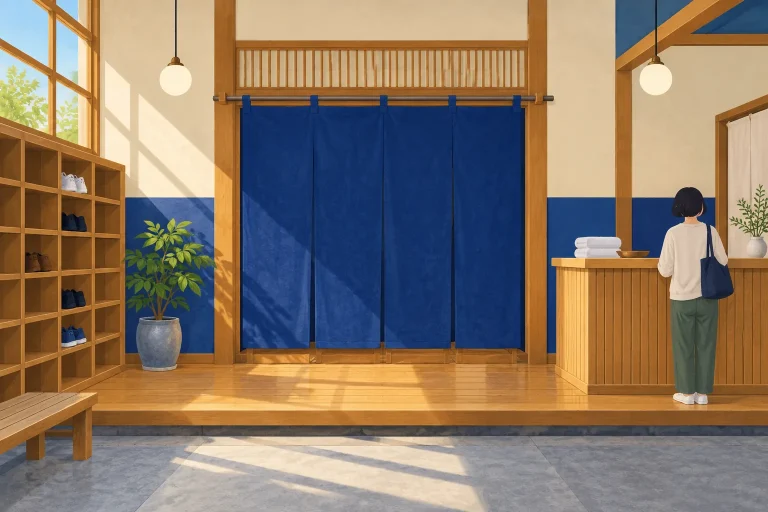
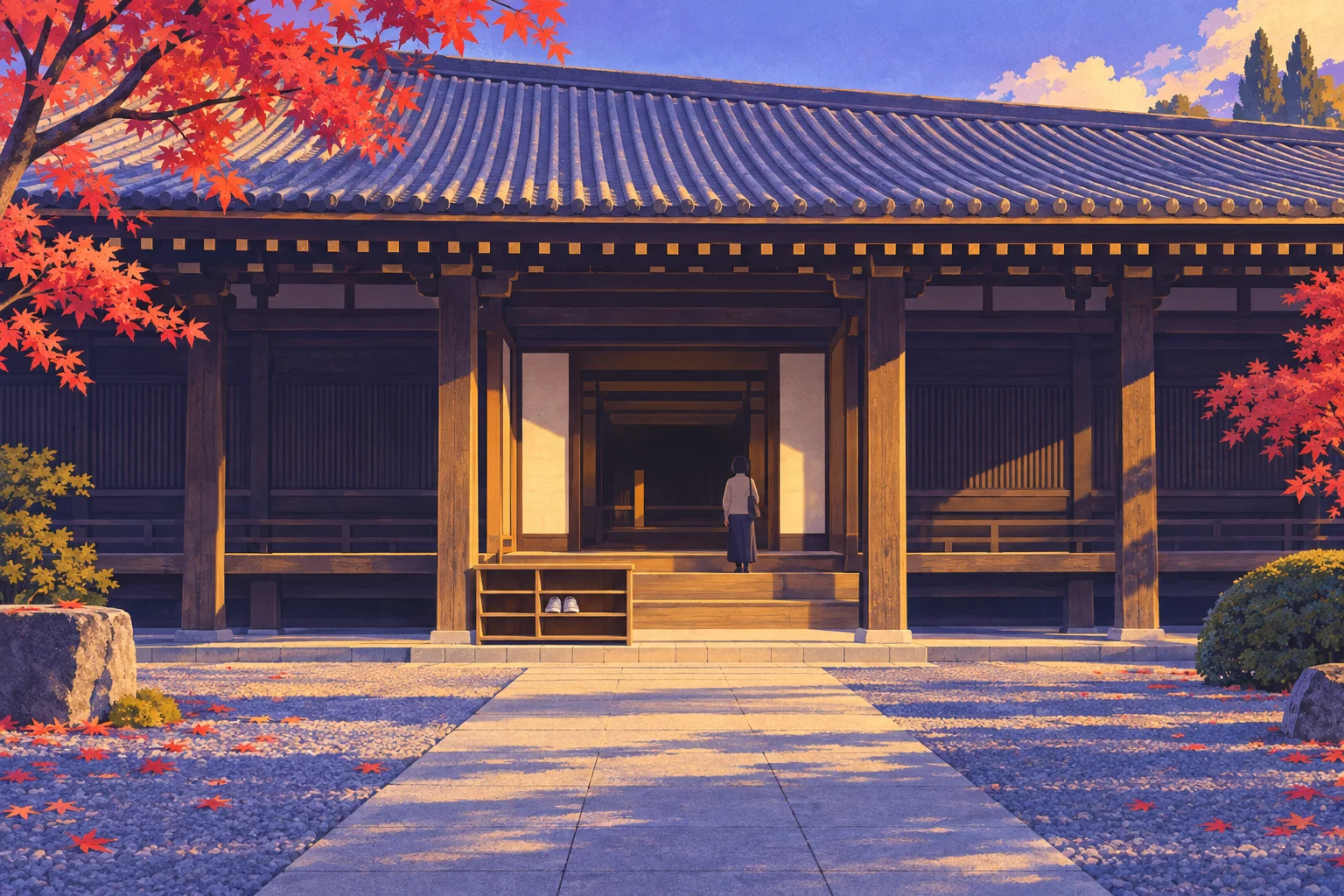
The temple says outdoor shoes aren’t allowed inside its 本堂 hondō (main hall) and provides a 下駄箱 getabako (shoe rack) at the entrance. Watch where the threshold begins and place your shoes where the hall directs you. Don’t apply this shoe rule to every building on the grounds or every Kyoto temple.
If the entry point isn’t clear, ask 靴はここで脱ぎますか。 Kutsu wa koko de nugimasu ka? The phrase and a staff reply, はい、お願いします。 Hai, onegai shimasu (“Yes, please”), appear in a JapanesePod101 teaching dialogue. Point to the floor beside the rack as you ask.
The sign 土足禁止 dosoku kinshi means no outdoor shoes. 受付終了 uketsuke shūryō means admissions have ended. Both are worth recognising even if nobody says them aloud.
Ask before taking a photo
Kyoto’s official visitor guidance says photography restrictions differ by place and area. Check the sign where you’re standing. If it doesn’t settle the question, ask 写真を撮ってもいいですか。 Shashin o totte mo ii desu ka? The Japan Foundation’s visitor-service lesson also models this question. A spoken yes about one spot isn’t permission to photograph the whole hall or its objects.
A short exchange to practise
This is a practice conversation using the temple’s posted adult admission and shoe rule as checked on 2 October 2026. Staff may use different words or direct you with a gesture.
- You, at the ticket window: 大人一人、お願いします。 Ōtona hitori, onegai shimasu. — One adult, please.
- Staff: 六百円です。 Roppyaku-en desu. — It’s 600 yen.
- You: ありがとうございます。 Arigatō gozaimasu. — Thank you.
- You, at the hall entrance: 靴はここで脱ぎますか。 Kutsu wa koko de nugimasu ka? — Should I take off my shoes here?
- Staff: はい、お願いします。 Hai, onegai shimasu. — Yes, please.
When the answer goes past you
Use すみません。もういちど、お願いします。 Sumimasen. Mō ichido, onegai shimasu. if you need a repeat. For slower speech, the Japan Foundation’s beginner lesson teaches もう少し、ゆっくり言ってください。 Mō sukoshi, yukkuri itte kudasai. — “Please say it a little more slowly.” Show the ticket or point to the threshold so staff know which answer you missed.
Before you go, practise the ticket request and the shoe question as one sequence. Keep the characters on your phone for the signs. For another staff-facing exchange with the same polite お願いします, see our Tokyo izakaya guide; its seating and payment routine belongs to a different setting.