Italian Transportation Phrases for Trains, Buses, and Taxis
If you are traveling in Italy, you do not need perfect Italian to get around. A few clear phrases are enough to buy a ticket, find the right platform, check whether a train or bus goes where you need, and speak to a taxi driver.
This guide focuses on the phrases you are most likely to use in real transport situations: at the station, at the bus stop, on board, and in a taxi. Learn a few of them before your trip, and keep the rest handy for when you need them.
Start with the phrases you’ll actually need
If you are traveling in Italy, a few transportation phrases can make the whole trip smoother. You do not need perfect Italian to buy a ticket, ask where to wait, or tell a taxi driver your destination. In this guide, you’ll learn practical phrases for trains, buses, and taxis, plus a little context so you can use them with confidence.
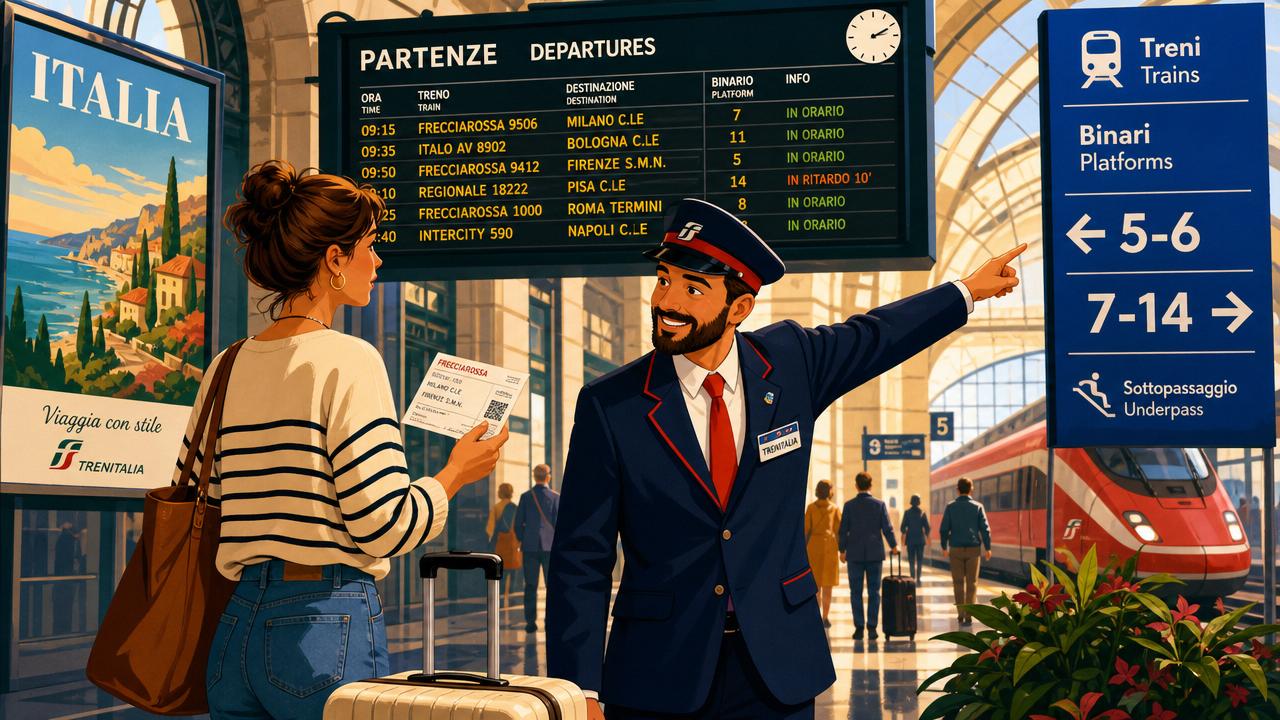
Words you will see on Italian transport signs
It also helps to recognise a few words you will see on signs, screens, ticket machines, and timetables. You do not need to use all of these in conversation, but knowing them can make stations and bus stops much less confusing.
- Binario — Platform / track
- Partenza — Departure
- Arrivo — Arrival
- Ritardo — Delay
- Cancellato — Cancelled
- Fermata — Stop
- Biglietteria — Ticket office
- Distributore automatico — Ticket machine
- Uscita — Exit
- Coincidenza — Connection
- Destinazione — Destination
- Capolinea — Last stop / end of the line
For example, if you see binario, you are looking for the platform. If you see ritardo, the train or bus is delayed. If you see cancellato, it has been cancelled. These small words are very useful because they help you understand what is happening even before you speak to anyone.
Train phrases for stations and tickets
Train travel is one of the easiest ways to move around Italy, but stations can still feel busy and fast-paced. These phrases help when you are buying a ticket, checking the platform, or confirming where the train goes.
- Un biglietto per Milano, per favore. — A ticket to Milan, please.
- A che ora parte il treno? — What time does the train leave?
- Dov’è il binario 5? — Where is platform 5?
- Questo treno va a Firenze? — Does this train go to Florence?
- È il treno giusto per Roma? — Is this the right train for Rome?
- Devo cambiare treno? — Do I need to change trains?
A useful word to remember is binario, which means platform. If you are unsure, you can ask staff or another passenger: Scusi, questo treno va a Venezia? That simple question can save a lot of stress before boarding.
Useful train station follow-up questions
Once you have the basics, you may also need a few follow-up questions. These are especially handy if you are trying to avoid getting on the wrong train or missing a connection.
- Dove posso comprare il biglietto? — Where can I buy the ticket?
- Si ferma a Bologna? — Does it stop in Bologna?
- Quanto dura il viaggio? — How long is the trip?
- È in ritardo? — Is it delayed?
- Da quale binario parte? — Which platform does it depart from?
Do you need to validate your ticket?
One important thing to know in Italy is that buying a ticket is not always enough. For some regional trains, buses, trams, and metro systems, you may need to validate the ticket before you travel, or just after you get on.
To validate a ticket means to stamp or activate it in a machine. In Italian, the word is convalidare.
Useful phrases:
- Devo convalidare il biglietto? — Do I need to validate the ticket?
- Dove si convalida il biglietto? — Where do I validate the ticket?
- Ho già comprato il biglietto. Devo convalidarlo? — I already bought the ticket. Do I need to validate it?
This is worth checking because you can sometimes get a fine even if you bought a ticket but did not validate it correctly. If you are not sure, ask before boarding. A simple Scusi, devo convalidare il biglietto? can save you a lot of trouble.
Bus phrases for stops and boarding
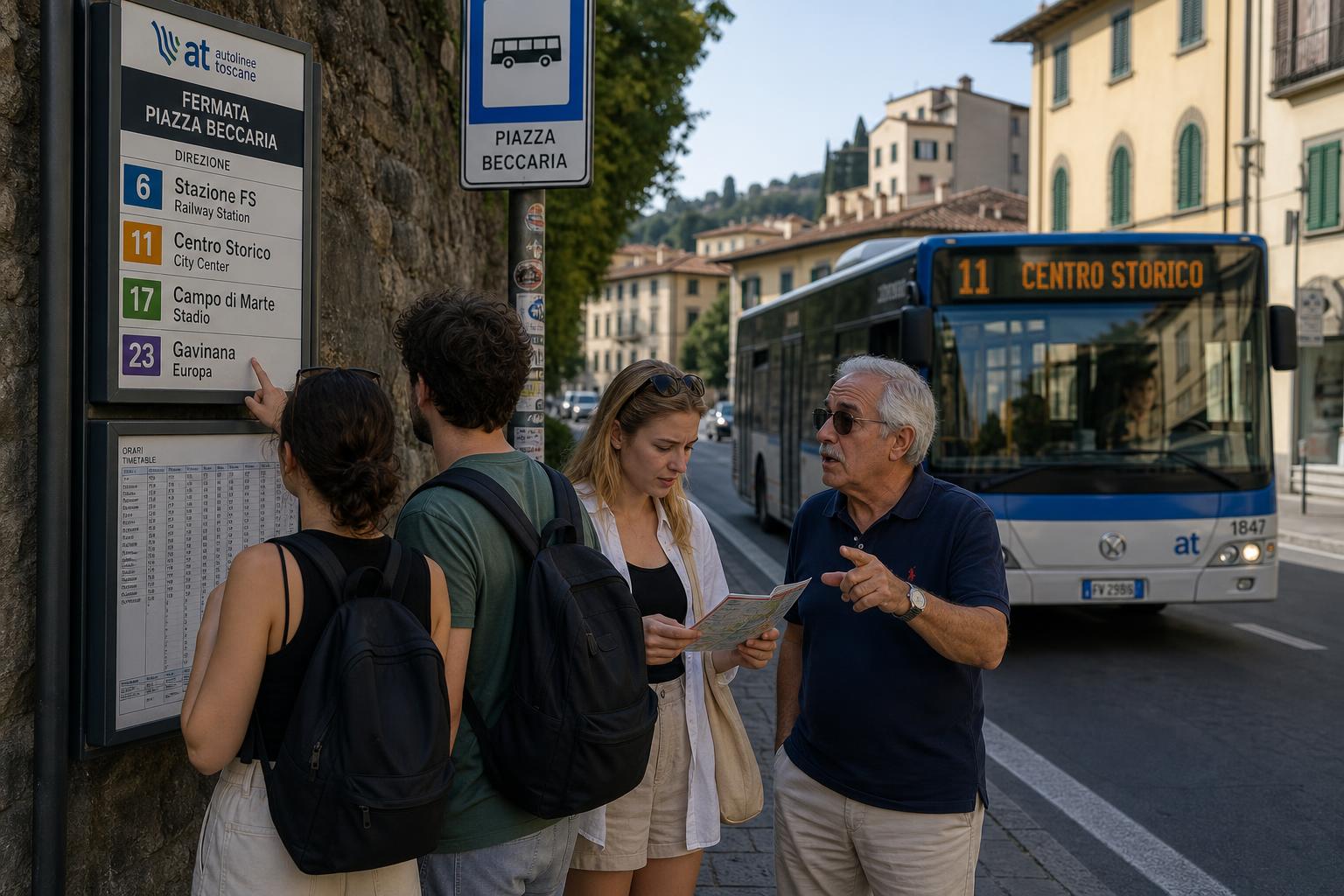
Buses can be very useful in cities and smaller towns, but the process is not always obvious for beginners. You may need to ask where to board, whether you need a ticket before getting on, or which stop is closest to your hotel or destination.
- Questo autobus va in centro? — Does this bus go to the center?
- Dove si prende l’autobus per il museo? — Where do I catch the bus for the museum?
- Devo comprare il biglietto prima di salire? — Do I need to buy the ticket before getting on?
- Si scende qui per la stazione? — Do I get off here for the station?
- Mi può avvisare quando arriviamo alla fermata? — Can you let me know at the next stop?
If you are not sure where to stand, ask: Dov’è la fermata dell’autobus? — Where is the bus stop? That phrase is very practical because bus stops can have several lines, and the right side of the street is not always obvious.
Taxi phrases for quick, clear communication
Taxi rides are usually short and direct, so clarity matters more than fancy language. The best taxi phrases are the ones that quickly tell the driver where you want to go and whether you need help with luggage, timing, or payment.
- Può portarmi a questo indirizzo? — Can you take me to this address?
- Mi porta alla stazione, per favore. — Take me to the station, please.
- Quanto costa andare all’aeroporto? — How much does it cost to go to the airport?
- Può aspettare un minuto? — Can you wait a minute?
- Posso pagare con carta? — Can I pay by card?
When you are giving an address, it helps to speak slowly and show it on your phone if needed. You can also say: Si ferma qui, per favore. — Stop here, please. That works well if your destination is close but not exactly on a main street.
Polite words that make every trip easier
A few polite words go a long way in Italian transportation settings. Even if your sentence is simple, adding Scusi, per favore, or grazie makes the interaction smoother and more natural.
- Scusi — Excuse me / Sorry
- Per favore — Please
- Grazie — Thank you
- Mi scusi, può aiutarmi? — Excuse me, can you help me?
- Non capisco. — I don’t understand.
- Può ripetere, per favore? — Can you repeat, please?
If someone answers quickly, do not worry. It is completely normal to ask them to repeat more slowly. You can say: Più lentamente, per favore. — More slowly, please. This is one of the most useful beginner phrases in real life.
One simple phrase to remember
If you only remember one transport phrase, make it this one:
Scusi, devo andare a Roma. È questo il treno giusto?
Excuse me, I need to go to Rome. Is this the right train?
This works because you do not need to explain the whole situation. You are simply saying where you need to go and asking whether you are in the right place.
You can change the destination and the type of transport:
| Situation | Italian | English |
|---|---|---|
| Checking a train | Scusi, devo andare a Firenze. È questo il treno giusto? | Excuse me, I need to go to Florence. Is this the right train? |
| Checking a bus | Scusi, devo andare in centro. È questo l’autobus giusto? | Excuse me, I need to go to the city centre. Is this the right bus? |
| Checking a stop | Scusi, devo andare alla stazione. È questa la fermata giusta? | Excuse me, I need to go to the station. Is this the right stop? |
The basic idea is:
Devo andare a [place]. È questo il treno giusto?
I need to go to [place]. Is this the right train?
For buses, say l’autobus giusto. For stops, say la fermata giusta.
This is a useful beginner phrase because it is clear, polite, and easy for someone to answer with sì or no. Before your trip, practice this phrase out loud with the places you are most likely to visit. Simple Italian is enough to get you moving, especially when it is clear and polite.