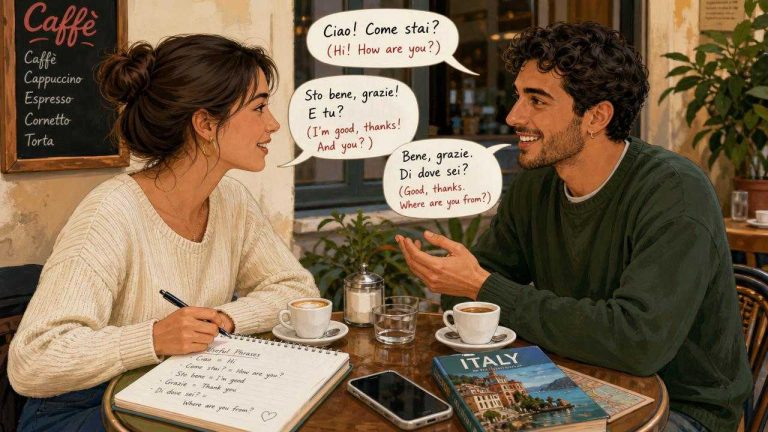
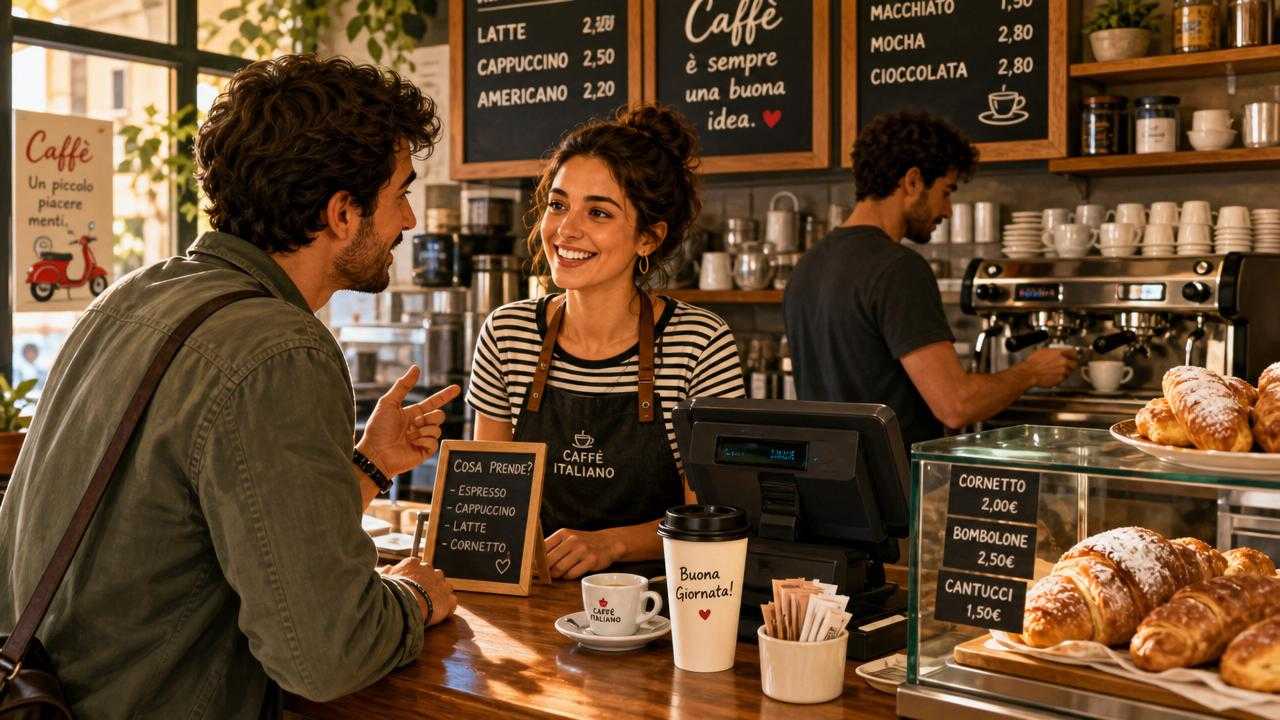
Italian Phrases for Cafés, Bars, and Coffee Orders in Italy
Order coffee without overthinking it
If you want to sound natural in an Italian café or bar, the goal is not perfect grammar. It is knowing a few reliable phrases for ordering, paying, and moving quickly through the counter routine. In Italy, coffee is usually fast, direct, and very practical—so your phrases should be too.
If you are also building basic travel confidence, this pairs well with our guide to Italian phrases for everyday travel and survival. The more you recognize the rhythm of common situations, the easier it becomes to answer quickly when staff speak fast.
The first thing to know: café and bar culture
In Italy, a bar is often where you get coffee, pastries, and quick snacks. You may order at the counter, pay first or after, and drink your espresso standing up. If you sit down, especially at a table, service can be a little slower and sometimes more expensive.
- At the counter: fast, common, and usually the cheapest option.
- At the table: good if you want to sit, but check whether table service applies.
- Morning coffee often means espresso, cappuccino, or caffè latte.
- After lunch or dinner, many Italians prefer espresso rather than milk-heavy coffee.
Useful phrases for ordering coffee
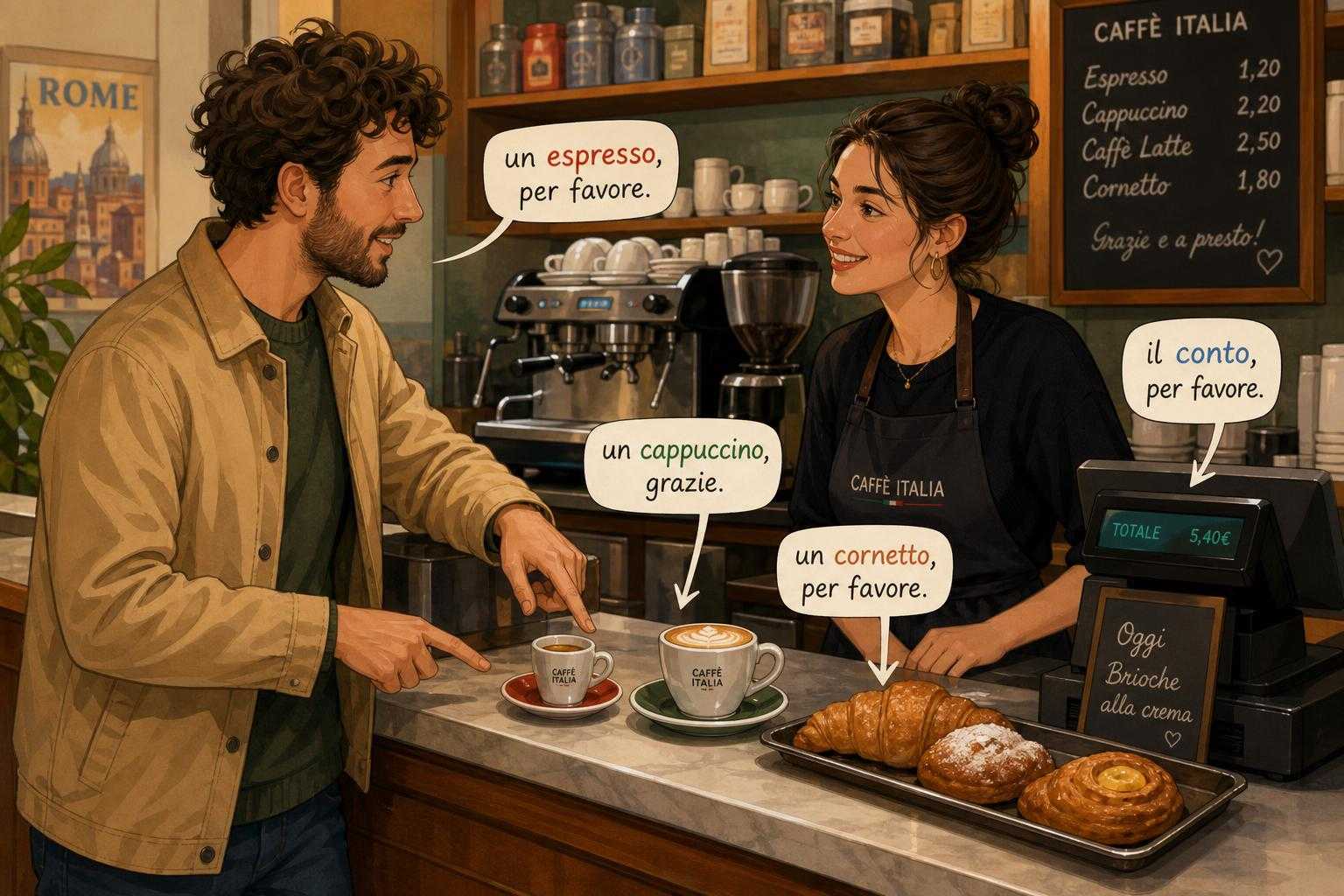
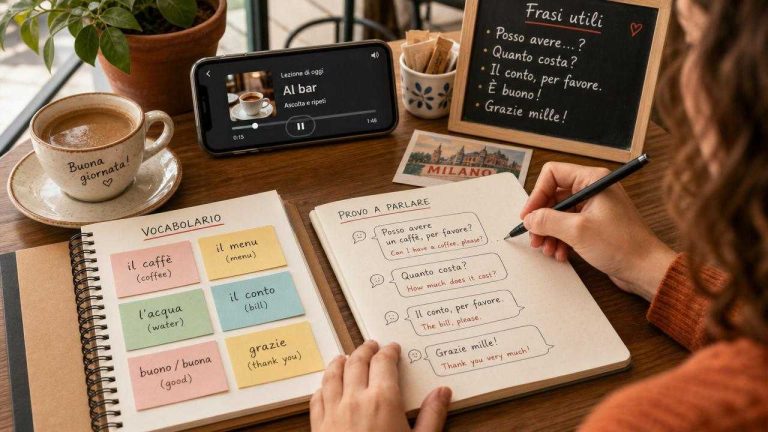
These are the phrases you will use most often. You can say them as-is, or swap in the drink you want. Keep them short and confident.
| Italian phrase | What it means | When to use it |
|---|---|---|
| Un caffè, per favore. | A coffee, please. | The safest basic order for espresso. |
| Un cappuccino, per favore. | A cappuccino, please. | Usually best in the morning. |
| Vorrei un caffè. | I would like a coffee. | A polite, simple way to order. |
| Posso avere un tè, per favore? | Can I have a tea, please? | For tea or another drink. |
| Un espresso, grazie. | An espresso, thanks. | Short, natural, and very common. |
If you want to sound a little more natural, use vorrei when speaking to staff. It is polite without sounding stiff. If the café is busy, though, a short order like un caffè, per favore works perfectly well.
For more everyday expressions that help you blend in, you may also like this guide to sounding local in Italian. Italian Everyday Expressions to Sound Local
How to customize your order
Once you can order the basics, you can add a small detail: milk, sugar, decaf, or a specific temperature. You do not need a lot of vocabulary to get what you want.
- Con zucchero, per favore. — With sugar, please.
- Senza zucchero. — Without sugar.
- Decaffeinato, per favore. — Decaf, please.
- Con latte. — With milk.
- Caldo. — Hot.
If the server asks, Va bene così? means “Is that okay like this?” You can answer Sì, grazie or No, grazie, basta così if you want to say that is enough.
Paying at the counter or register

Payment can vary by place. Sometimes you pay first at the register, get a receipt, and then take it to the bar. Other times you pay after drinking. If you are unsure, the easiest question is Dov’è la cassa? which means “Where is the register?”
- Posso pagare qui? — Can I pay here?
- Dov’è la cassa? — Where is the register?
- Il conto, per favore. — The bill, please.
- Posso avere lo scontrino? — Can I have the receipt?
- Tutto qui, grazie. — That’s all, thanks.
Ask for takeaway or a seat
If you want to take your coffee away, use semplice phrases. Staff will understand quickly, and you do not need to worry about long explanations.
- Da portare via, per favore. — To take away, please.
- Da asporto, per favore. — For takeaway, please.
- Posso sedermi qui? — Can I sit here?
- Un tavolo per uno/due, per favore. — A table for one/two, please.
- È occupato? — Is it taken?
A useful tip: in many cafés, takeaway coffee is not the default. If you want it to-go, say it directly instead of assuming the staff will ask.
What to say when things move fast
Italian cafés can feel fast, especially when the line is long. You do not need to keep up with every word. You just need a few rescue phrases that buy you time and keep the interaction smooth.
- Scusi. — Excuse me.
- Un momento, per favore. — One moment, please.
- Non ho capito. — I didn’t understand.
- Può ripetere, per favore? — Can you repeat, please?
- Parla inglese? — Do you speak English?
Short is better than perfect. In an Italian café, a clear “Un caffè, per favore” goes a long way.
Quick practice dialogues
Use these mini-dialogues to practice the flow from greeting to payment. Read them out loud a few times so the phrases start to feel automatic.
1. Ordering a cappuccino
| Italian | English |
|---|---|
| You: Buongiorno. Un cappuccino, per favore. | You: Good morning. A cappuccino, please. |
| Staff: Subito. | Staff: Right away. |
| You: Grazie. | You: Thank you. |
2. Ordering coffee to take away
| Italian | English |
|---|---|
| You: Un espresso da portare via, per favore. | You: An espresso to take away, please. |
| Staff: Certo. | Staff: Sure. |
| You: Grazie. | You: Thank you. |
3. Asking where to pay
| Italian | English |
|---|---|
| You: Dov’è la cassa? | You: Where is the register? |
| Staff: Lì in fondo. | Staff: Over there at the back. |
| You: Perfetto, grazie. | You: Perfect, thank you. |
A simple takeaway checklist
| What to do | Italian phrase | English meaning |
|---|---|---|
| Say what you want | Un caffè, per favore. | An espresso, please. |
| Add the style you need | Da portare via. | To take away. |
| Senza zucchero. | Without sugar. | |
| Decaffeinato. | Decaf. | |
| Use a payment phrase if needed | Posso pagare qui? | Can I pay here? |
| Dov’è la cassa? | Where is the till/register? | |
| Keep a backup phrase ready | Può ripetere, per favore? | Could you repeat that, please? |
| End with thanks | Grazie. | Thank you. |
If you can handle these phrases, you can handle most coffee stops in Italy. Practice them as short chunks, not as isolated words, and you will sound more natural right away.