Italian Phrases for Supermarkets, Bakeries, and Deli Counters
If you can ask for bread, cheese, fruit, or a few slices of prosciutto in Italian, everyday shopping feels much easier. These phrases will help you order at a bakery, ask for deli items by weight, find things in a supermarket, and handle checkout without needing full sentences.
Start with the most useful counter phrases
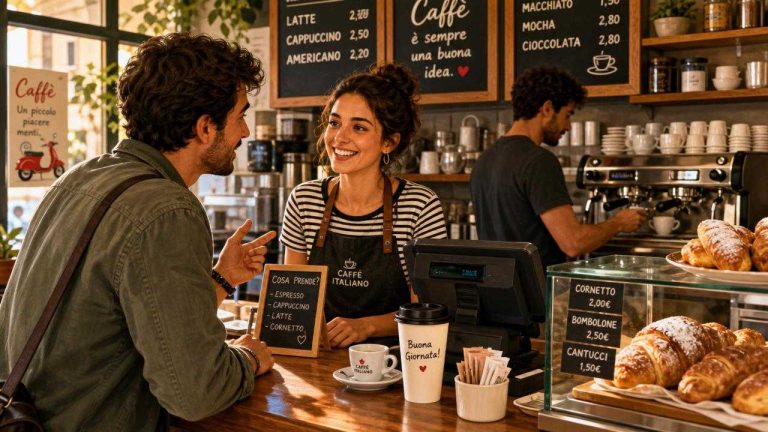
At a bakery or deli, keep your request short and polite. A greeting, a clear request, and a thank you are usually enough.
| Italian | English | When to use it |
|---|---|---|
| Buongiorno. | Good morning / hello. | A polite way to start in shops. |
| Vorrei…, per favore. | I’d like…, please. | A useful all-purpose request. |
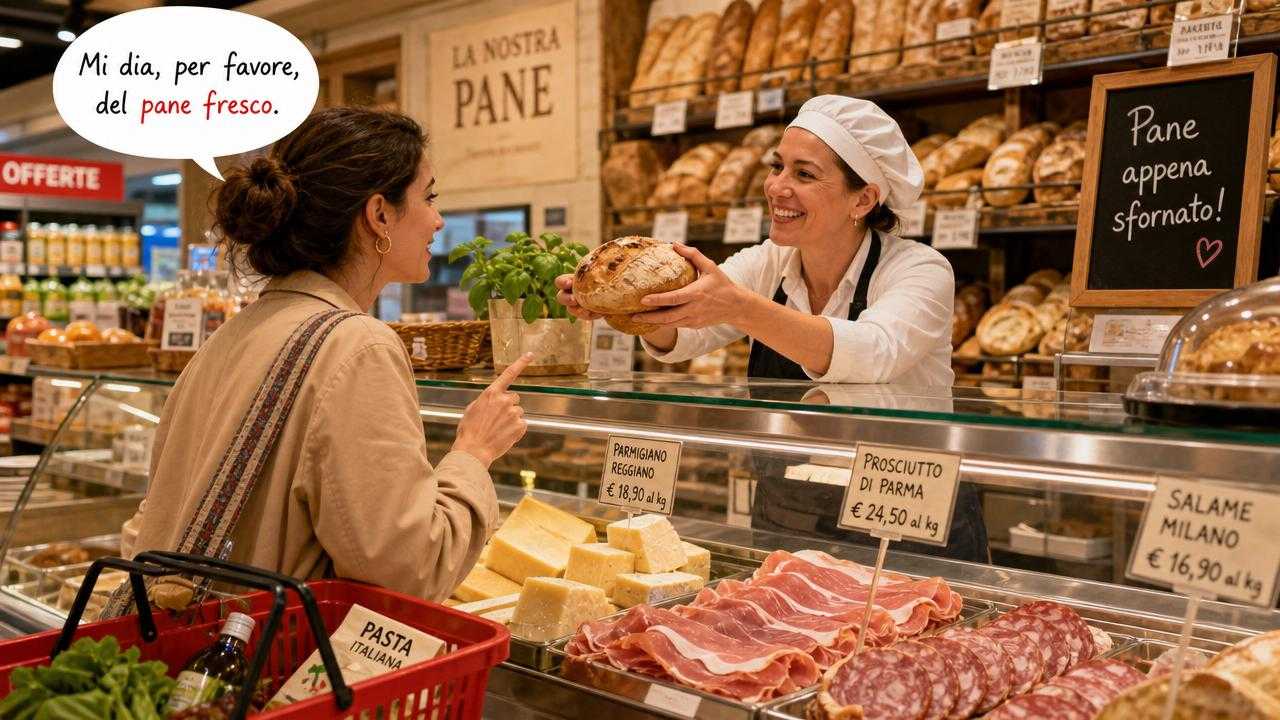
| Mi dà…, per favore? | Can I have…, please? | Good when staff are handing you something from behind a counter. |
| Posso avere…, per favore? | Can I have…, please? | Good as a general request. |
| Quanto costa? | How much does it cost? | Use for one item. |
| Grazie, arrivederci. | Thanks, goodbye. | A simple polite ending. |
Mi dà…? is especially useful at counters. You can point and say:
Mi dà questo, per favore?
Can I have this, please?
How quantities work in Italian shops
At bakeries and deli counters, you may ask for things by number, weight, slices, or piece. You do not need to know every unit. These are the ones travelers are most likely to use.
| Quantity | Italian | English |
|---|---|---|
| two pastries | due cornetti | two cornetti / Italian croissants |
| 100 grams of ham | un etto di prosciutto | 100 grams of ham |
| 200 grams of cheese | due etti di formaggio | 200 grams of cheese |
| thin slices | a fette sottili | in thin slices |
| a small piece | un pezzetto | a small piece |
| three apples | tre mele | three apples |
Un etto means 100 grams. It is especially useful at deli counters for ham, salami, cheese, and other sliced items.
Ordering at the bakery
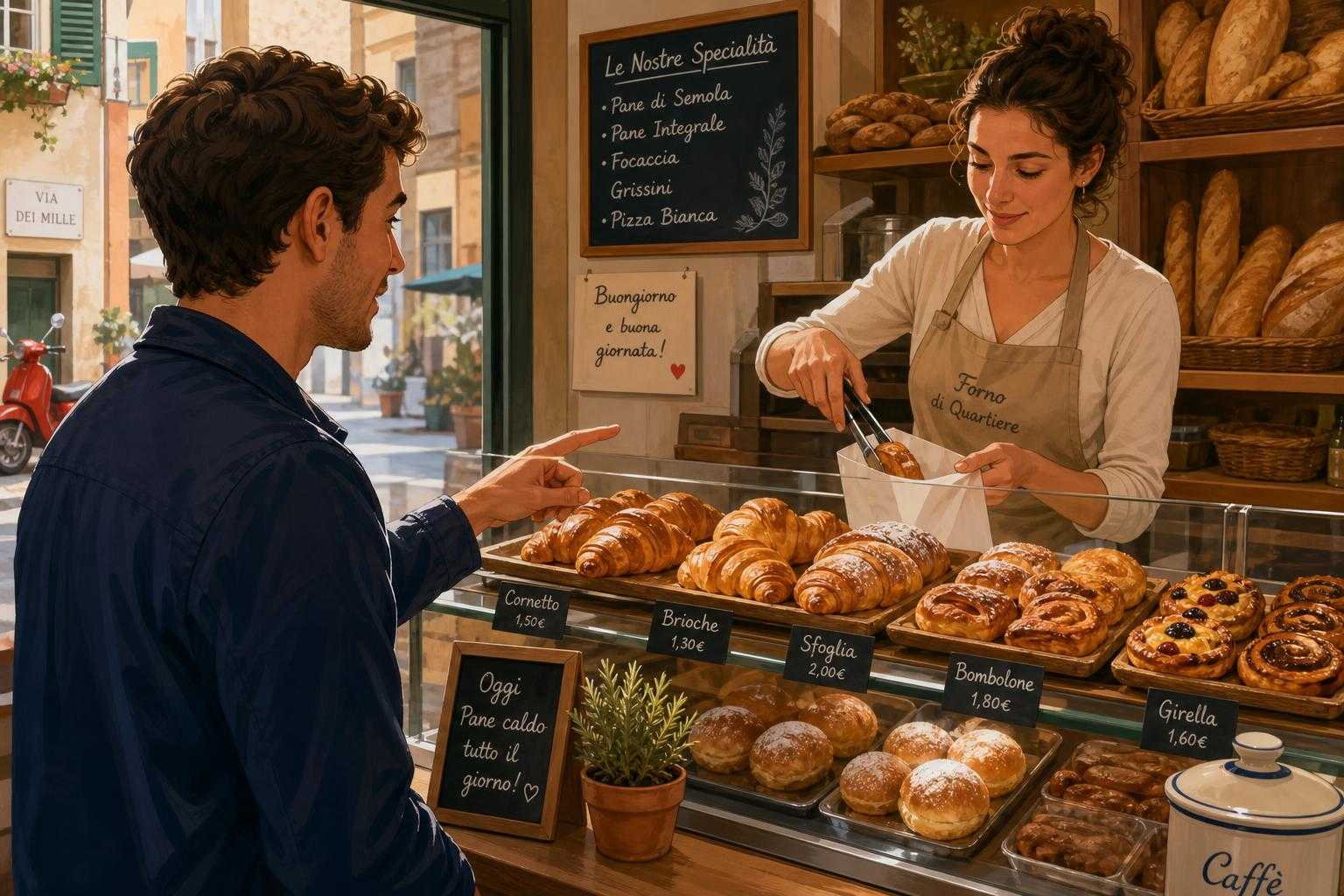
At bakeries and deli counters, you may ask for things by number, weight, slices, or piece. You do not need to know every unit. These are the ones travelers are most likely to use.
| Italian | English | When to use it |
|---|---|---|
| Vorrei due cornetti. | I’d like two cornetti. | When you know the exact number. |
| Un filone, per favore. | One loaf, please. | For a loaf of bread. |
| Due panini, per favore. | Two bread rolls, please. | For small rolls. |
| Una ciabatta, grazie. | One ciabatta, thanks. | For a common type of Italian bread. |
| Anche questo, per favore. | This one too, please. | When adding another item to your order. |
| È di oggi? | Is it from today? | Useful for bread, pastries, and baked goods. |
| È appena sfornato? | Is it freshly baked / just out of the oven? | Useful when asking about warm bread or pastries. |
You may hear caldo, meaning warm, or appena sfornato, meaning freshly baked. For bread and pastries, those are usually good signs.
If you want more everyday phrases for moving around town, you may also like this related guide. Italian Phrases for Everyday Travel and Survival
What to say at the deli counter
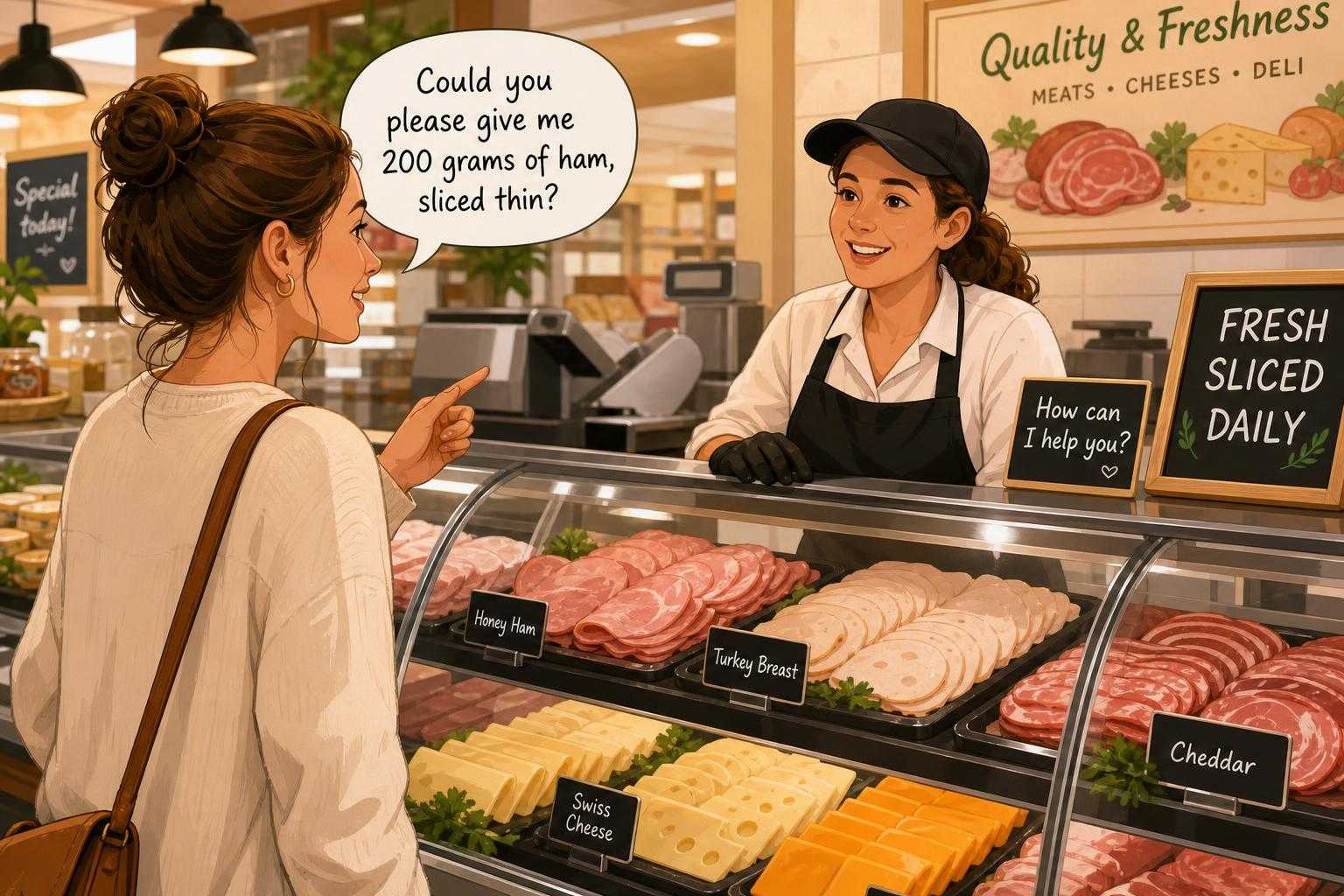
At the deli counter, it helps to know how to ask for grams, slices, and small pieces. You can point, name the product, and say the amount you want.
| Italian | English | When to use it |
|---|---|---|
| Mi dà due etti di prosciutto, per favore? | Can I have 200 grams of prosciutto, please? | A very useful deli-counter phrase. |
| Un etto di salame, per favore. | 100 grams of salami, please. | For a smaller amount. |
| Due etti di formaggio, grazie. | 200 grams of cheese, thanks. | For cheese by weight. |
| A fette sottili, per favore. | In thin slices, please. | For ham, salami, or cheese. |
| A fette spesse, grazie. | In thick slices, thanks. | When you want thicker slices. |
| Un pezzo di parmigiano, per favore. | A piece of Parmesan, please. | For cheese sold as a piece. |
| Solo un pezzetto, grazie. | Just a small piece, thanks. | Useful if you only need a little. |
| Va bene così, grazie. | That’s fine like that, thanks. | When the amount looks right. |
| Un po’ meno, grazie. | A little less, thanks. | If the portion is too much. |
| Un po’ di più, grazie. | A little more, thanks. | If you want a bit more. |
A helpful pattern is:
Mi dà + quantity + item + per favore?
Can I have + quantity + item + please?
For example:
Mi dà un etto di prosciutto, per favore?
Can I have 100 grams of prosciutto, please?
A small note on ham: prosciutto crudo is cured ham, while prosciutto cotto is cooked ham. You will often see both at deli counters.
Checking the queue or taking a number
At some bakeries, delis, and supermarket counters, you may need to take a number before ordering. If the queue is not obvious, these phrases help.
| Italian | English | When to use it |
|---|---|---|
| Devo prendere il numero? | Do I need to take a number? | When you see a ticket machine or waiting area. |
| Dov’è il distributore dei numeri? | Where is the number dispenser? | When you cannot find where to take a ticket. |
| Chi è l’ultimo? | Who’s last? | To check who is last in the queue. |
| Tocca a me? | Is it my turn? | When you are not sure whether to order. |
Chi è l’ultimo? literally means “Who is the last one?” It is a normal way to check the queue when people are waiting without a clear line.
Finding things in the supermarket
Supermarkets are mostly self-service, but a few simple questions are useful when you cannot find something.
| Italian | English | When to use it |
|---|---|---|
| Dov’è il pane? | Where is the bread? | Asking where something is. |
| Cerco il latte. | I’m looking for the milk. | A simple way to say what you need. |
| Avete questo in formato piccolo? | Do you have this in a small size? | Useful for bottles, packets, or toiletries. |
| Scusi, dove sono le casse? | Excuse me, where are the checkouts? | When you are ready to pay. |
| Scusi, dove sono i carrelli? | Excuse me, where are the trolleys? | When you need a shopping cart. |
| Scusi, dove sono i cestini? | Excuse me, where are the baskets? | When you need a hand basket. |
Scusi is your safest opener in shops. It means “excuse me” and keeps the tone polite.
Fruit, vegetables, and weighing produce
In some Italian supermarkets, you weigh fruit and vegetables yourself before checkout. In others, the cashier does it for you. If you are unsure, ask.
| Italian | English | When to use it |
|---|---|---|
| Devo pesarla? | Do I need to weigh it? | For one item or one type of produce. |
| Dove si pesa la frutta? | Where do you weigh the fruit? | In the produce section. |
| Devo mettere l’etichetta? | Do I need to put the label on? | When using the scale. |
| Che numero è? | What number is it? | When looking for the produce code. |
| Tre mele, per favore. | Three apples, please. | At a market or staffed produce counter. |
| Un chilo di arance, per favore. | One kilo of oranges, please. | For fruit sold by weight. |
Look for a scale near the fruit and vegetables. You may need to choose the item number, print a sticker, and put it on the bag before going to the checkout.
At checkout: paying, bags, and receipts
At the checkout, short phrases are best. You can usually say just the payment method or ask for a bag.
| Italian | English | When to use it |
|---|---|---|
| Posso pagare con la carta? | Can I pay by card? | Asking whether card is accepted. |
| Pago con la carta. | I’ll pay by card. | When paying by card. |
| In contanti. | In cash. | When paying with cash. |
| Una busta, per favore. | A bag, please. | At the checkout. |
| Un sacchetto, per favore. | A small bag, please. | Also common for a shopping bag. |
| No, grazie, ho una borsa. | No thanks, I have a bag. | If you brought your own bag. |
| Lo scontrino, per favore. | The receipt, please. | If you need the receipt. |
| Non mi serve lo scontrino, grazie. | I don’t need the receipt, thanks. | If you do not need it. |
You may be asked:
- Vuole una busta? – Do you want a bag?
A simple answer is:
- Sì, grazie. – Yes, thanks.
- No, grazie. – No, thanks.
Asking about ingredients or dietary needs
For serious allergies, it is best to be very clear and use a translation card if needed. But these simple phrases can help with basic ingredient questions.
| Italian | English | When to use it |
|---|---|---|
| Contiene frutta secca? | Does it contain nuts? | Useful for pastries, biscuits, and packaged food. |
| Contiene latte? | Does it contain milk? | Useful for dairy questions. |
| È senza glutine? | Is it gluten-free? | For bread, pasta, snacks, or packaged food. |
| È senza lattosio? | Is it lactose-free? | For milk, yoghurt, cheese, or desserts. |
| Sono allergico/a a… | I’m allergic to… | Use allergico if you are male and allergica if you are female. |
For nut allergies, frutta secca is common, but it can sometimes refer broadly to nuts and dried fruit. If the allergy is serious, be more specific, such as arachidi for peanuts or mandorle for almonds.
A simple mini-dialogue to practice
Here is a short bakery exchange you can practice before your trip or before going into a bakery in Italy.
| Italian | English |
|---|---|
| Cliente: Buongiorno, vorrei due cornetti e un filone, per favore. | Customer: Hello, I’d like two cornetti and one loaf, please. |
| Commesso/a: Certo. Qualcos’altro? | Shop assistant: Of course. Anything else? |
| Cliente: No, basta così. Grazie. | Customer: No, that’s all. Thanks. |
| Commesso/a: Sono tre euro e cinquanta. | Shop assistant: That’s €3.50. |
| Cliente: Ecco a lei. | Customer: Here you go. |
| Commesso/a: Grazie, arrivederci. | Shop assistant: Thanks, goodbye. |
The most reusable phrase here is basta così, which means “that’s enough” or “that’s all.” It is useful at bakeries, delis, markets, and cafés.
Mini cheat sheet for fast recall
If you only memorize a few phrases, start with these. They cover ordering, deli counters, finding things, and paying.
| Italian | English |
|---|---|
| Mi dà questo, per favore? | Can I have this, please? |
| Un etto di prosciutto, per favore. | 100 grams of ham, please. |
| A fette sottili, grazie. | In thin slices, thanks. |
| Dove sono le casse? | Where are the checkouts? |
| Pago con la carta. | I’ll pay by card. |
| Una busta, per favore. | A bag, please. |
| Basta così, grazie. | That’s enough / that’s all, thanks. |
What to remember before you shop
You do not need perfect Italian to shop for food in Italy. Start with one polite opener, one clear request, and one way to say thank you. That is enough for many everyday exchanges.
For more natural everyday phrasing, this guide is a great next step. Italian Everyday Expressions to Sound Local
Practice a few phrases out loud before you go. Mi dà questo, per favore?, un etto di prosciutto, and pago con la carta will already help you handle a lot of real shopping moments.