Italian vs. French False Friends: Words That Look Similar but Mean Different Things
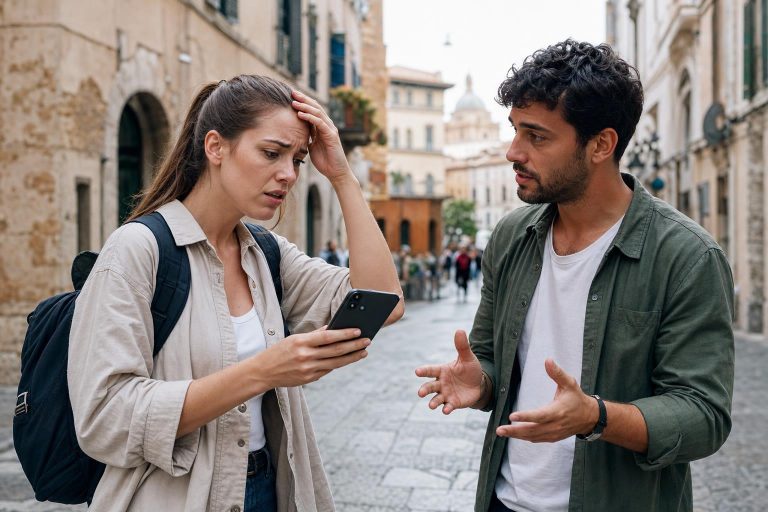
If you already know a little French, Italian can feel reassuringly familiar—until a word looks almost right and means something completely different. That is where false friends can trip you up in a taxi, at a restaurant, or in a polite conversation.
This guide focuses on the most useful beginner mix-ups between Italian and French, especially the ones that matter for travel, food, politeness, and everyday talk. If you want a quick refresher on practical language for real situations, you may also like Italian Phrases for Everyday Travel and Survival
Why false friends matter so much
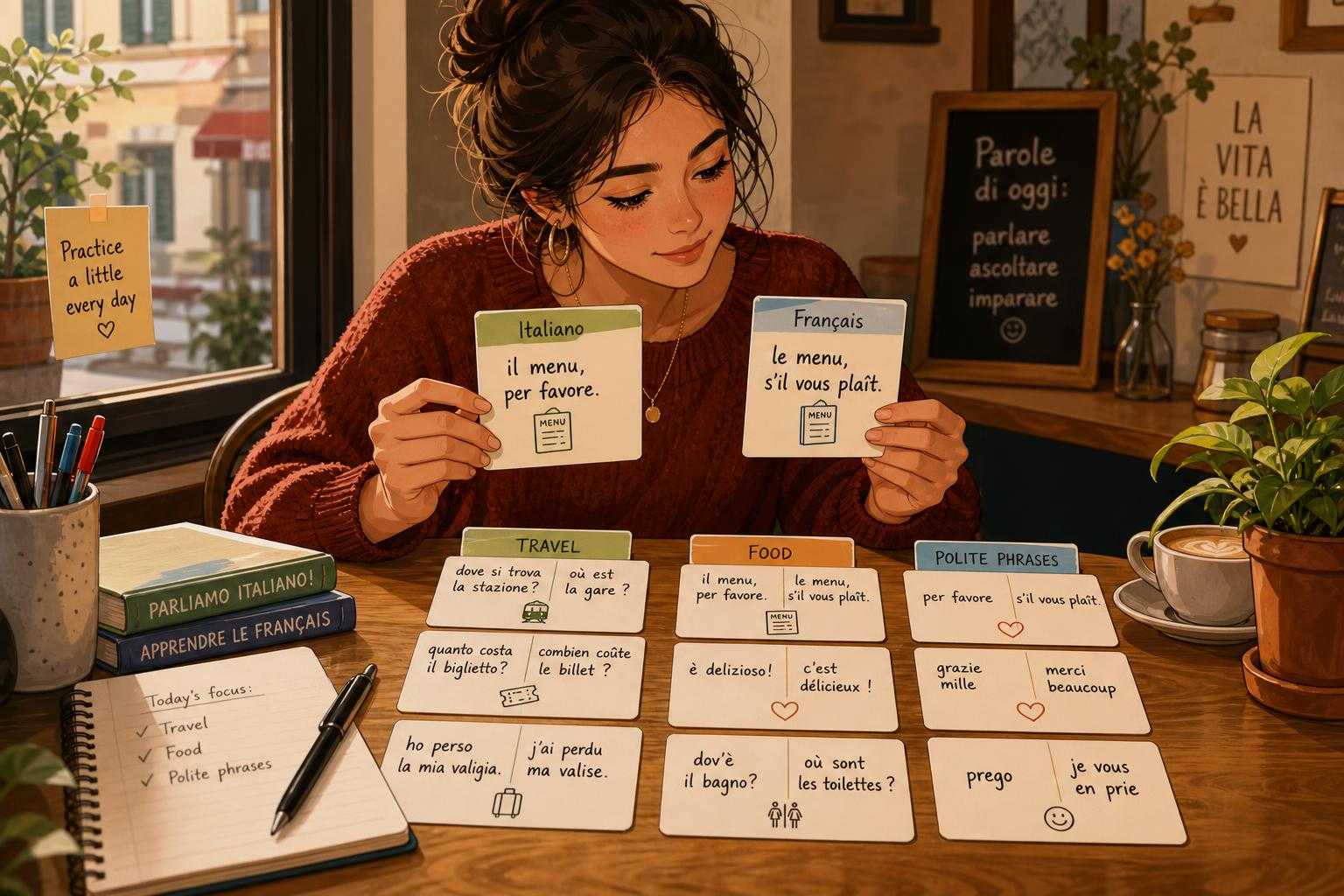
False friends are words that look similar in Italian and French but do not mean the same thing. Sometimes the meaning is only slightly different. Other times, the difference is big enough to cause real confusion.
- They can make you sound awkward even when your grammar is correct.
- They matter most in fast, everyday situations where you do not have time to stop and translate.
- A few key words are worth memorizing early because they appear in travel, menus, signs, and small talk.
The most dangerous beginner mix-ups
| Italian word | French lookalike | What it means in Italian | What it means in French | Memory tip |
|---|---|---|---|---|
| prego | près | You’re welcome / please / go ahead | near, close | Think of prego as a service word, not a distance word. |
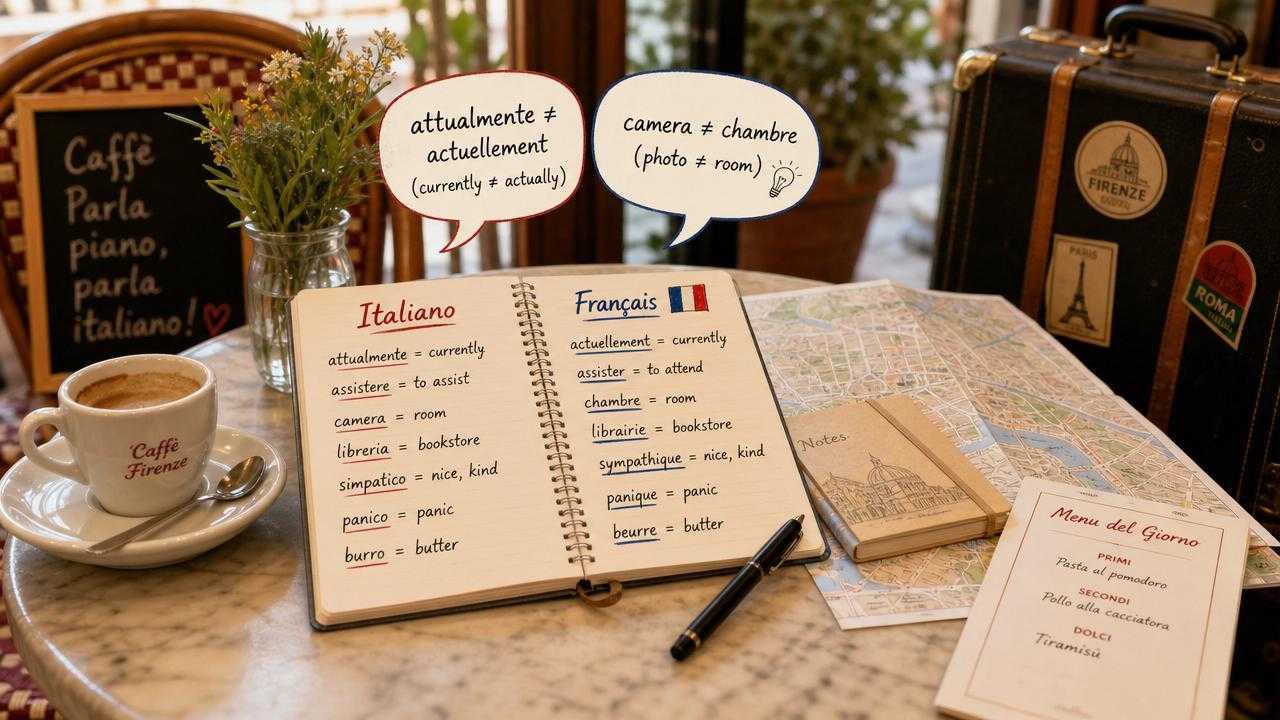
| camera | caméra | Room | Camera | In Italian, a camera is where you sleep, not what you film with. |
| parenti | parents | Relatives | Parents | Italian parenti are family members, not just mother and father. |
| eventualmente | éventuellement | Possibly / if needed | possibly, eventually depending on context | In Italian, it often means “if necessary,” not “in the future.” |
| colazione | collation | Breakfast | Snack / light meal | Colazione is the first meal of the day. |
| fabbrica | fabrique | Factory | manufacture / workshop / makes | Fabbrica is a place of production, not a crafting hobby. |
| morbido | morbide | Soft | Soft / tender | This one is close, but it is still useful to remember the exact Italian form. |
| attualmente | actuellement | Currently | currently | This one is actually a helpful near-cognate, but it still deserves attention because learners often overthink it. |
A simple memory trick helps: whenever a word looks familiar, pause and ask, “Does this mean the same thing in daily life?” That extra second can save you from ordering the wrong thing or answering the wrong question.
For more everyday phrasing that helps you stay calm in real situations, see How to Sound More Natural in Italian Without Learning Advanced Grammar
Travel words that can cause trouble
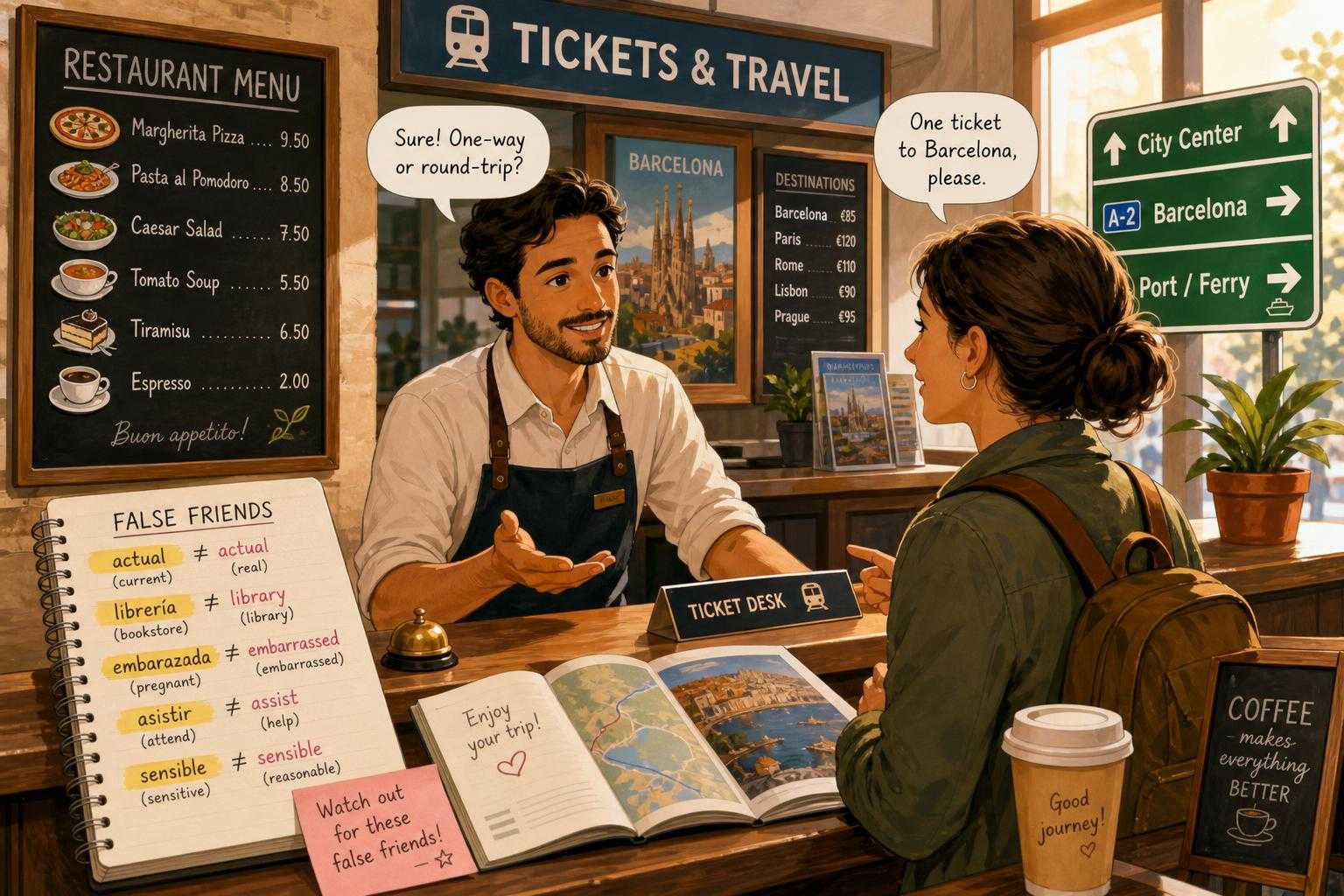
Travel is where false friends show up fast. If you are reading signs, asking for directions, or checking into a hotel, the wrong meaning can make a simple task harder than it needs to be.
- Stazione means station in Italian, which is close to French, but do not assume every similar travel word will behave the same way.
- Autostrada means highway or motorway, so it is useful when following road signs.
- Busta can mean envelope or bag depending on context, so check the sentence before guessing.
- Fattoria means farm, not a place where something is manufactured.
When in doubt, rely on the whole phrase, not just the word that looks familiar. In travel situations, context is often more reliable than your first instinct.
Food and shopping false friends
Menus and grocery stores are full of words that look friendly but can still surprise you. This matters because food words are the ones beginners use most often, and small mistakes can change what ends up on your plate.
- Pasta in Italian is the general word for pasta, while in French it may suggest a different context or a more specific dish use.
- Salsa in Italian means sauce, not a dance or a spicy dip by default.
- Confettura means jam or preserve, so it is worth recognizing on jars.
- Marmellata means jam too, but in Italian it is especially common for citrus preserves.
When you are ordering food, the safest habit is to ask one short follow-up question instead of guessing from a similar-looking word.
Politeness words that feel familiar but behave differently
Politeness is one area where false friends can matter a lot, because a word that seems “obviously correct” may sound slightly off in real conversation. Italian uses many small courtesy words, and they do not always match French in the way learners expect.
- Prego is a Swiss-army word: it can mean you’re welcome, please, or go ahead.
- Permesso is useful when asking to pass through a crowd or enter a space.
- Scusi is a polite way to say excuse me or sorry, especially when addressing someone formally.
- Grazie mille means thank you very much, and it is often a safe, natural choice.
A good rule: if you are trying to be polite, choose the simpler and more common Italian form rather than the word that merely looks closest to French.
Quick memory tips that actually help
- Group false friends by situation: travel, food, and politeness are easier to remember than a random word list.
- Make one simple flashcard for each word with a real example sentence.
- Say the Italian word out loud in a full phrase, not in isolation.
- If a word looks almost right but feels uncertain, assume it may be dangerous until you verify it.
The goal is not to memorize every possible trap. It is to build a reliable habit: pause, check context, and trust the full sentence. That habit will keep improving your accuracy long after this list is forgotten.
A simple recap before your next trip
Italian and French share enough vocabulary to feel friendly, but that is exactly why false friends are worth learning early. Once you know the most common traps, you can read signs, order food, and answer people with much more confidence.
Start with the handful of words that matter most in daily life, then add new ones as you encounter them. Small, practical progress is the best way to sound more natural without feeling overwhelmed.