French Bakery Phrases: How to Order Bread and Pastries
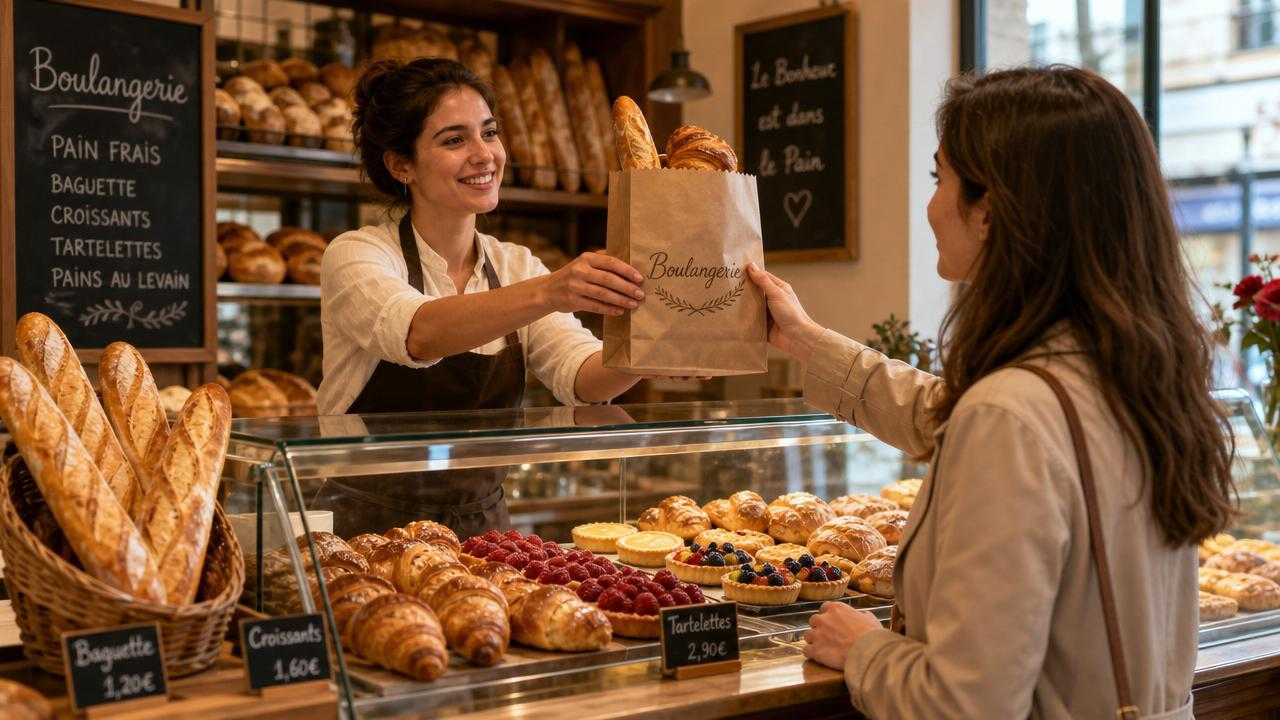
French bakeries are easy to love, but the counter can feel fast when you are still learning the language. You may need to order a baguette, point to a pastry, ask what something is, choose takeaway, or pay by card, all in a short exchange.
The good news is that you only need a few simple phrases. In this guide, you will learn natural French bakery phrases for ordering bread and pastries, asking about ingredients, buying lunch items, and finishing the interaction politely.
The main pattern to remember is Je prends… It means “I’ll have…” or “I’ll take…”, and it works well when you are choosing something from the counter or display case.
If you want more everyday survival phrases, you may also like this related guide: French Phrases for Everyday Survival (With Audio)
The first French bakery phrases to know
In many French bakeries, it is normal to greet the staff before you order. A simple greeting, a clear order, and s’il vous plaît are enough. It is also common to say goodbye when leaving, even after a very small purchase.
| French | English | When to use it |
|---|---|---|
| Bonjour. | Hello / Good morning. | Use this when you enter or reach the counter. |
| Bonsoir. | Good evening. | Use this in the evening. |
| Je prends… | I’ll have… / I’ll take… | Polite and useful for ordering. |
| Je vais prendre… | I’ll have… / I’ll take… | Natural when choosing from the display case. |
| S’il vous plaît. | Please. | Add this after your order. |
| Merci. | Thank you. | Use after ordering, paying, or receiving your food. |
| Au revoir, bonne journée. | Goodbye, have a good day. | A polite way to leave after paying. |
How to ask for bread and pastries
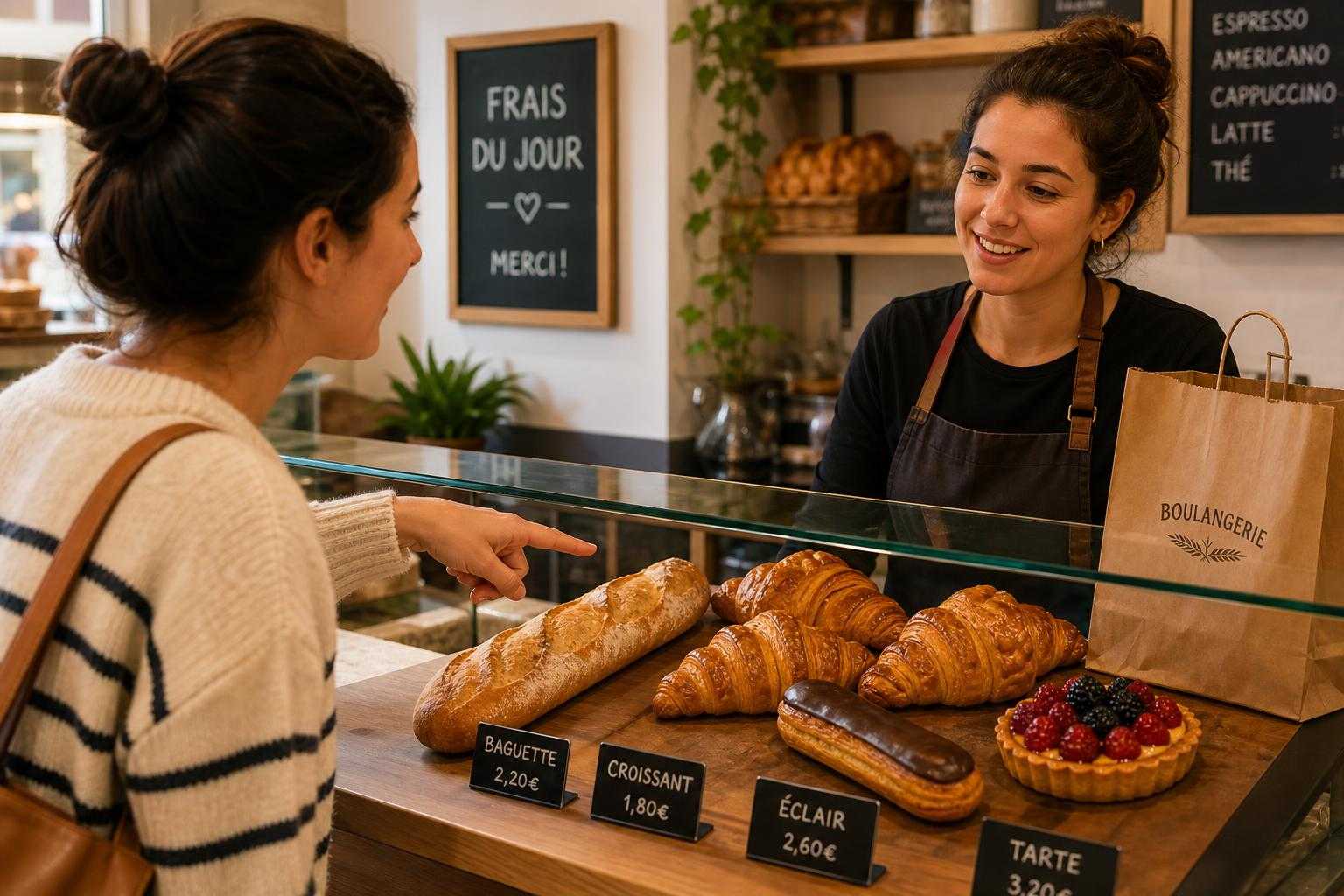
Use these patterns when pointing to what you want or asking for a specific item. The goal is to be short, polite, and easy to understand.
- Une baguette, s’il vous plaît. — A baguette, please.
- Deux croissants, s’il vous plaît. — Two croissants, please.
- Une tarte aux pommes, s’il vous plaît. — An apple tart, please.
- Un pain au chocolat, s’il vous plaît. — A chocolate pastry, please.
- Un éclair au chocolat, s’il vous plaît. — A chocolate éclair, please.
If you do not know the name of the pastry, you can also point and say Je vais prendre ça, s’il vous plaît. — I’ll take that, please. This is especially useful when the display case is full and you want to keep the interaction moving.
Regional note: Pain au chocolat is the standard term in most of France. In parts of southwest France, you may also hear chocolatine. If you say pain au chocolat, you will be understood almost everywhere.
How to order lunch items at a bakery
Many French bakeries also sell simple lunch items, such as sandwiches, quiches, salads, and set lunch deals. These phrases are useful if you are stopping at a boulangerie for a quick meal.
Vous avez des sandwichs ? — Do you have sandwiches?
Vous pouvez le réchauffer, s’il vous plaît ? — Can you heat it up, please?
Une formule, s’il vous plaît. — A meal deal / set menu, please.
Useful phrases for quantities and preferences
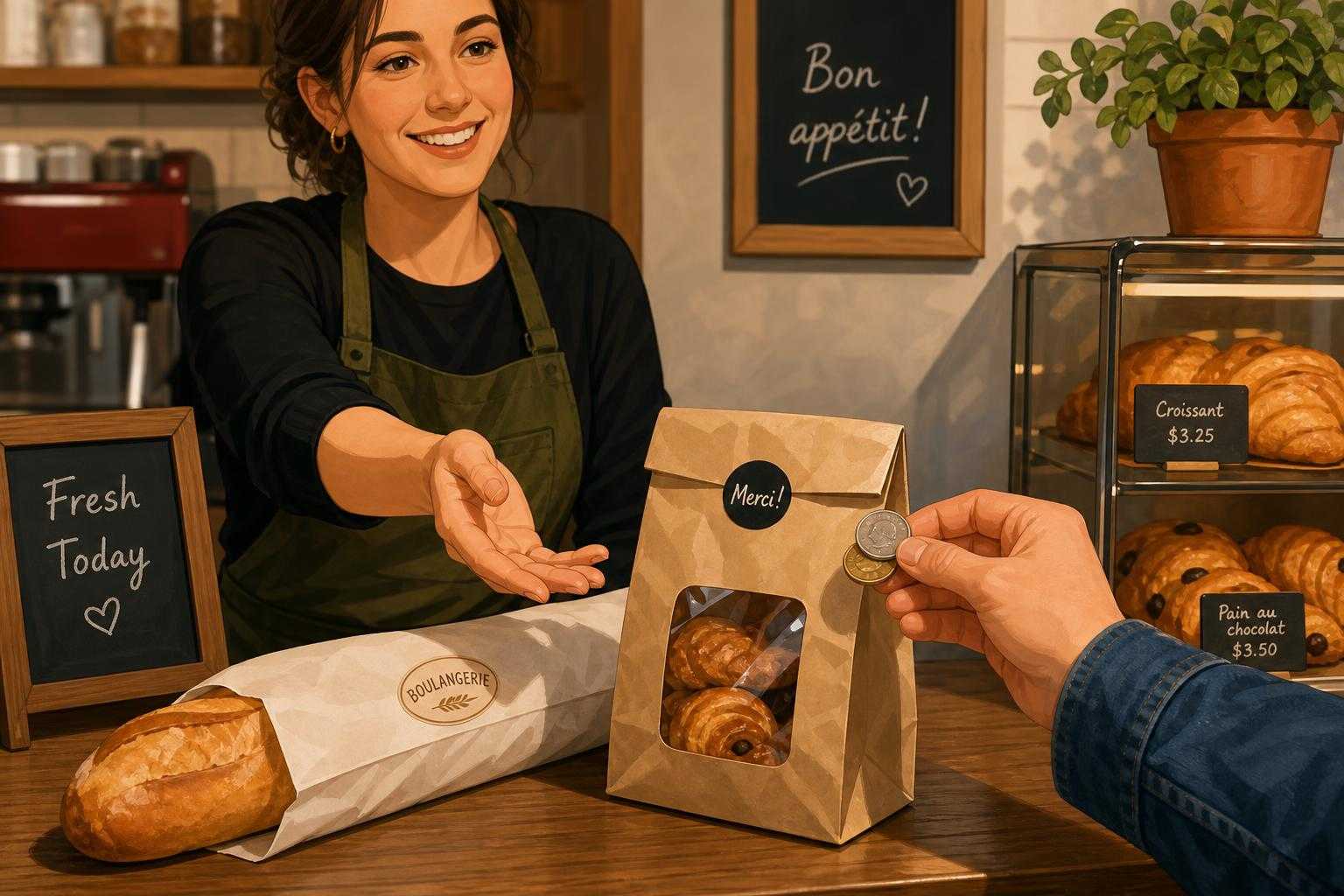
At a bakery, you will often need to specify how much you want or how you want it packed. These phrases are especially helpful for takeaway orders and small shopping trips.
- Sur place, s’il vous plaît. — For here, please.
- À emporter, s’il vous plaît. — To take away, please.
- Une demi-baguette, s’il vous plaît. — Half a baguette, please.
- Vous pouvez la couper en deux, s’il vous plaît ? — Can you cut it in half, please?
- Une baguette pas trop cuite, s’il vous plaît. — A not-too-well-done baguette, please.
- Vous pouvez me mettre ça dans un sac, s’il vous plaît ? — Can you put that in a bag for me?
For quantities, remember that French bakery staff hear short requests all day. You do not need a long sentence. A clear noun plus s’il vous plaît is usually enough.
If you need to ask a question
Sometimes you will want to know what something is, whether it contains an ingredient, or how much it costs. These short questions are practical and easy to reuse.
- Qu’est-ce que c’est, s’il vous plaît ? — What is it, please?
- Il y a quoi dedans ? — What’s inside?
- Il y a des fruits à coque ? — Are there tree nuts?
- C’est combien ? — How much is it?
- Il vous reste des croissants ? — Do you have any croissants left?
- Vous me recommandez quoi ? — What do you recommend?
What the bakery staff might ask you
You may hear one or two quick questions after you order. These are the most useful ones to recognize.
Sur place ou à emporter ? — For here or to take away?
Answer with Sur place, s’il vous plaît or À emporter, s’il vous plaît.
Et avec ceci ? — Anything else?
You can answer: Ce sera tout, merci. — That’s all, thank you.
Vous voulez autre chose ? — Would you like anything else?
You can answer: Non, merci. Ce sera tout. — No, thank you. That’s all.
Vous payez comment ? — How are you paying?
You can answer: Par carte, s’il vous plaît. — By card, please.
A simple ordering script you can copy
If you freeze when it is your turn, use a short script. You can swap in any item from the bakery case and keep the order moving smoothly.
Bonjour.
Je prends une baguette, s’il vous plaît.
Et deux croissants, s’il vous plaît.
C’est pour emporter.
Merci.
That script works because it is short, polite, and specific. Once you are comfortable with it, you can build your own version with different pastries, quantities, or preferences.
How to pay at the bakery
After you order, you may need one or two simple payment phrases. These are enough for most bakery situations.
Je peux payer par carte ? — Can I pay by card?
Vous prenez la carte ? — Do you take card?
Par carte, s’il vous plaît. — By card, please.
En espèces. — In cash.
A fast recap you can remember
- Bonjour. — Hello.
- Je prends une baguette, s’il vous plaît. — I would like a baguette, please.
- Je vais prendre ça, s’il vous plaît. — I’ll take that, please.
- À emporter, s’il vous plaît. — To take away, please.
- Ce sera tout, merci. — That’s all, thank you.
- Par carte, s’il vous plaît. — By card, please.
- Au revoir, bonne journée. — Goodbye, have a good day.
The main goal is not to say everything perfectly. It is to get the right item, clearly and politely, without stress. Practice these phrases once or twice, and your next bakery stop will feel much easier.