Italian Phrases for Hotels, Airbnbs, and Guesthouses: What to Say at Check-In and Beyond
Whether you’re checking into a hotel, a family-run guesthouse, or an Airbnb in Italy, a few simple phrases can make the whole stay smoother. This guide gives you the most useful Italian to use at arrival, during your stay, and when something needs fixing.
At check-in: the essentials
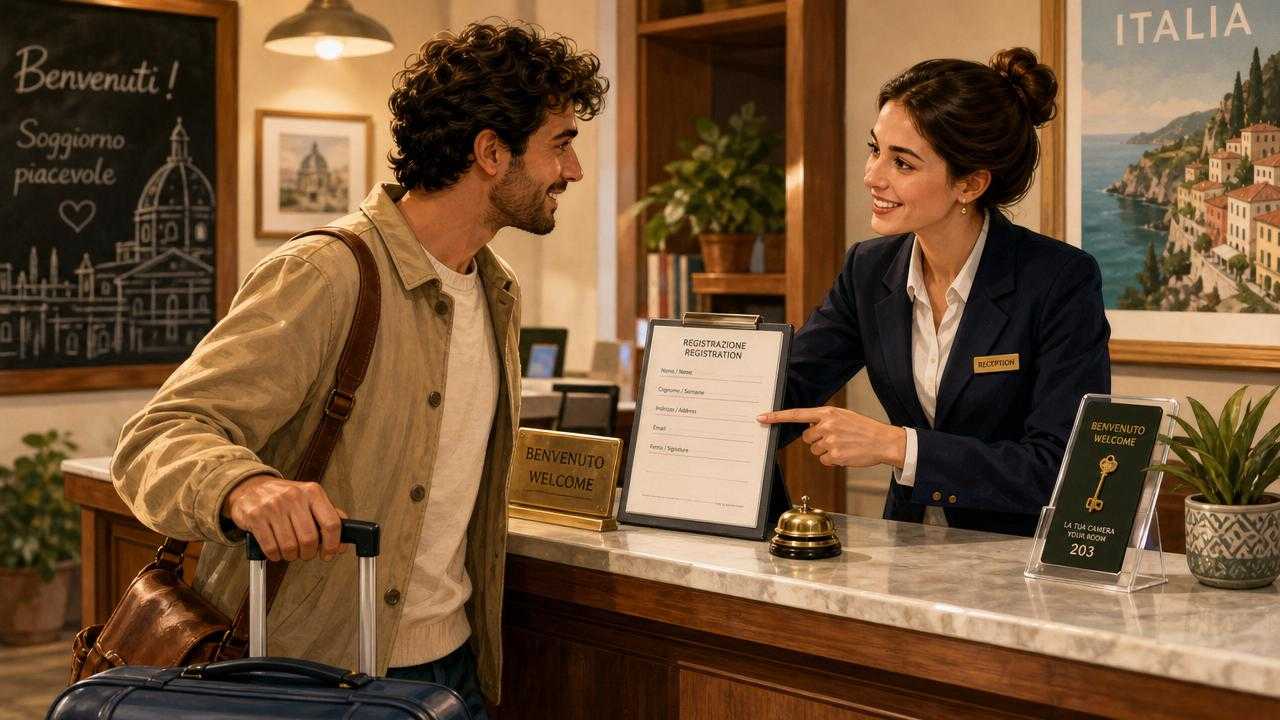
When you arrive, keep it simple and polite. In Italy, a friendly greeting and a clear sentence usually go a long way, especially in small properties where the host may be doing several jobs at once.
- Buongiorno, ho una prenotazione. — Good morning, I have a reservation.
- Sono qui per il check-in. — I’m here for check-in.
- La prenotazione è a nome di [name]. — Under the name of [name].
- Vorrei fare il check-in. — I’d like to check in.
- A che ora è il check-out? — What time is check-out?
If the host asks for your passport or ID, that’s normal. You can also say you’d like to confirm the booking details, especially if you booked through a platform and want to make sure everything matches.
Asking about the room and amenities
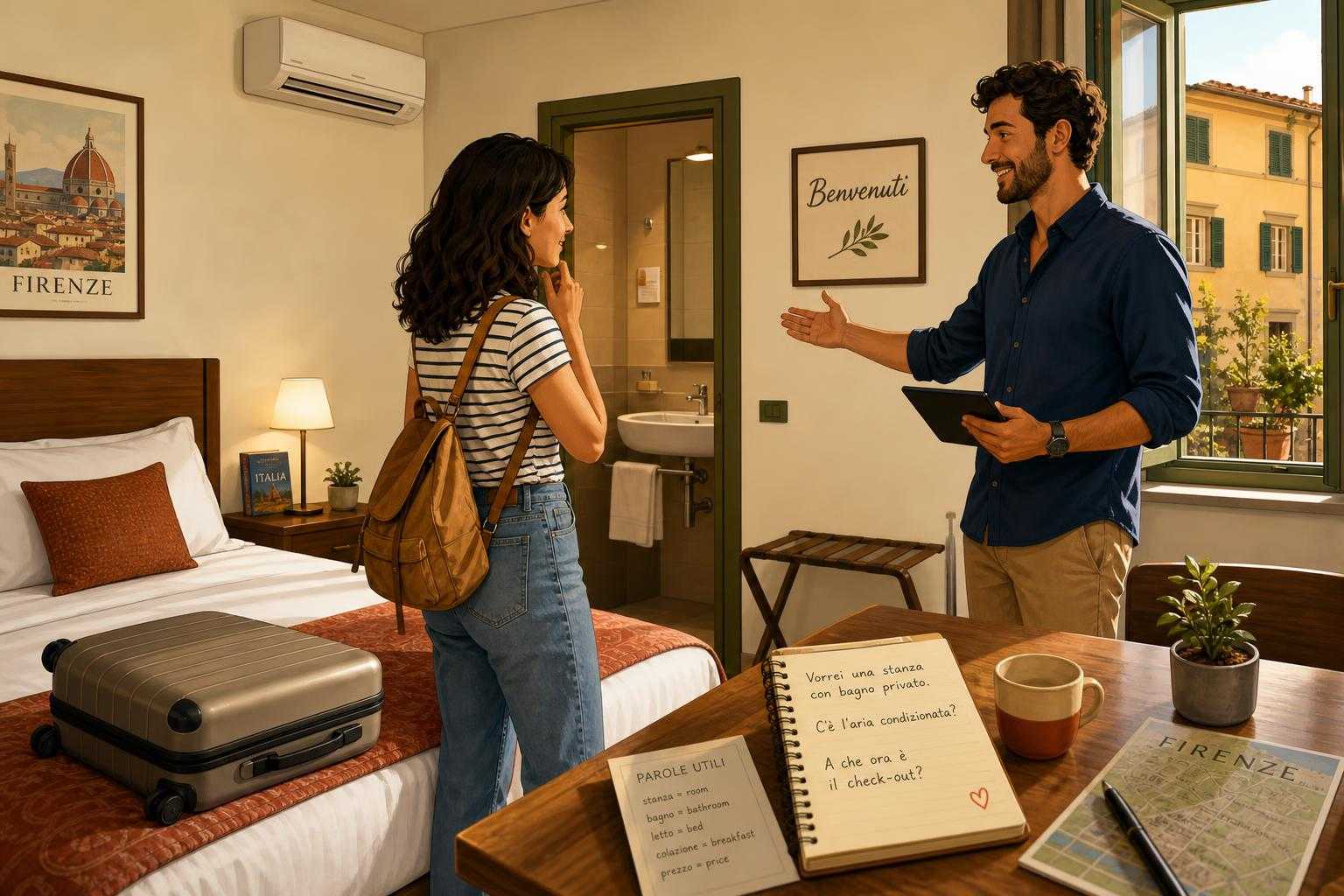
After check-in, you may need to ask about the room, Wi-Fi, breakfast, or small practical things during your stay. These phrases are useful in hotels, guesthouses, and Airbnbs because they are short, clear, and easy to reuse.
| Italian | English |
|---|---|
| C’è l’aria condizionata? | Is there air conditioning? |
| C’è il riscaldamento? | Is there heating? |
| Qual è la password del Wi-Fi? | What is the Wi-Fi password? |
| La colazione è inclusa? | Is breakfast included? |
| A che ora viene servita la colazione? | What time is breakfast served? |
| Dove viene servita la colazione? | Where is breakfast served? |
| C’è una cassaforte? | Is there a safe? |
| Posso avere un altro asciugamano? | Can I have another towel? |
| Posso lasciare qui i bagagli? | Can I leave my luggage here? |
If you want someone to explain how something works, you can say:
Può mostrarmi come funziona? – Can you show me how it works?
This works for the air conditioner, heating, shower, Wi-Fi, a key box, or a lock you cannot figure out.
A small tip: in many places, colazione means breakfast service, not necessarily a buffet you can walk into whenever you want. If the timing matters, ask the exact hours so you do not miss it
If you want more phrases for moving around Italy, this guide pairs well with your hotel vocabulary practice. Italian Phrases for Everyday Travel and Survival
For small problems, be direct and polite
If something is wrong, don’t wait too long to say it. In most cases, a calm, clear sentence helps the staff fix the issue faster than a long explanation.
- Non funziona. — It doesn’t work.
- La doccia non funziona. — The shower isn’t working.
- Non c’è acqua calda. — There’s no hot water.
- La camera è troppo fredda. — The room is too cold.
- La finestra non si chiude bene. — The window doesn’t close properly.
- C’è troppo rumore. — There is a lot of noise.
- Può aiutarmi, per favore? — Can you help me, please?
If you need help right away, add “per favore” to soften the request: “Può aiutarmi, per favore?” — Can you help me, please? That keeps the tone polite even when the problem is annoying.
Late check-out and other final-day phrases
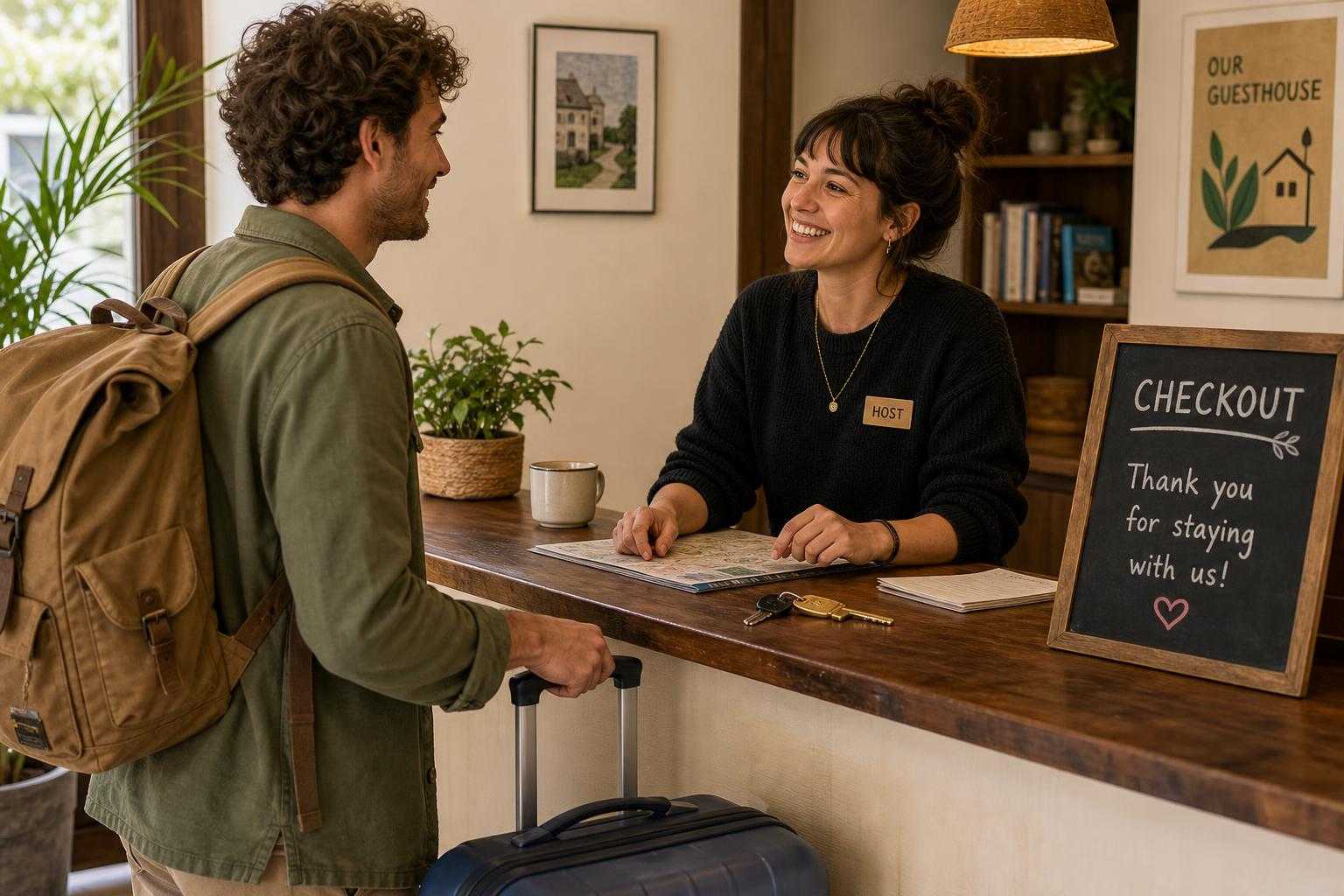
On your last day, you may need a little extra time to pack, store your luggage, or ask about payment. These phrases cover the most common situations at departure.
- Possiamo fare il check-out più tardi? — Can we check out later?
- Posso lasciare qui i bagagli? — Can I leave my bags here?
- Dove lascio le chiavi? / Le lascio le chiavi? — Where should I leave the keys?
- Grazie per tutto. — Thank you for everything.
If the answer is no, don’t take it personally. Many places have strict schedules, but they may still be able to suggest a luggage drop-off or a nearby café where you can wait comfortably.
Phrases for Airbnbs and guesthouses
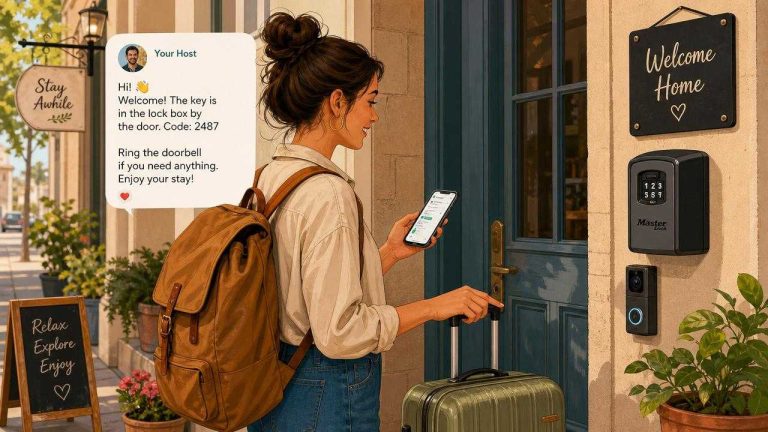
Airbnbs and small guesthouses often work a little differently from hotels. You may not meet someone at a reception desk, and you might need to use a code, find a key box, or follow self check-in instructions. These phrases are useful when the arrival process is not obvious.
Qual è il codice per entrare? — What is the code to get in?
- Come funziona il self check-in? — How does self check-in work?
- Dove trovo le chiavi? — Where do I find the keys?
- Il Wi-Fi non funziona. — The Wi-Fi isn’t working.
- Non riesco ad aprire la porta. — I can’t open the door.
- A che ora devo lasciare la camera? — What time do I need to leave the room?
For example, if you arrive and cannot get inside, you can keep it very simple: Scusi, non riesco ad aprire la porta. Può aiutarmi? — Sorry, I can’t open the door. Can you help me?
These phrases are especially useful in messages to a host. You do not need a long explanation. A short, clear sentence is usually enough.
A simple phrase formula you can reuse anywhere
When you don’t know the exact sentence, build one from a few easy parts: greeting, request, and polite ending. For example: “Buongiorno, posso avere… per favore?” That structure works for towels, Wi‑Fi details, extra keys, or nearly anything else you need.
If you can ask for the thing you need in one short sentence, you’re already communicating well.
A quick phrase cheat sheet
| Situation | Italian | English |
|---|---|---|
| Check in | Ho una prenotazione. | I have a reservation. |
| Wi‑Fi | Qual è la password del Wi‑Fi? | What is the Wi‑Fi password? |
| Breakfast | La colazione è inclusa? | Is breakfast included? |
| Late check-out | È possibile fare il check-out più tardi? | Can I checkout a little later? |
| Problem | Non funziona. | It doesn’t work. |
You do not need perfect Italian to handle accommodation confidently. If you can greet politely, ask one clear question, and describe a problem simply, you can manage most check-in situations with ease. Practice these phrases a few times before your trip, and you’ll feel much more comfortable once you arrive.