Italian Phrases for Museums, Tickets, and Guided Tours
If you’re visiting museums in Italy, a few simple Italian phrases can make the whole experience smoother. Whether you need tickets, want to check opening hours, or are trying to understand a guided tour option, these phrases will help you ask clearly and confidently.
If you want a broader travel phrase refresh before your museum visit, take a look at Italian Phrases for Everyday Travel and Survival. Italian Phrases for Everyday Travel and Survival
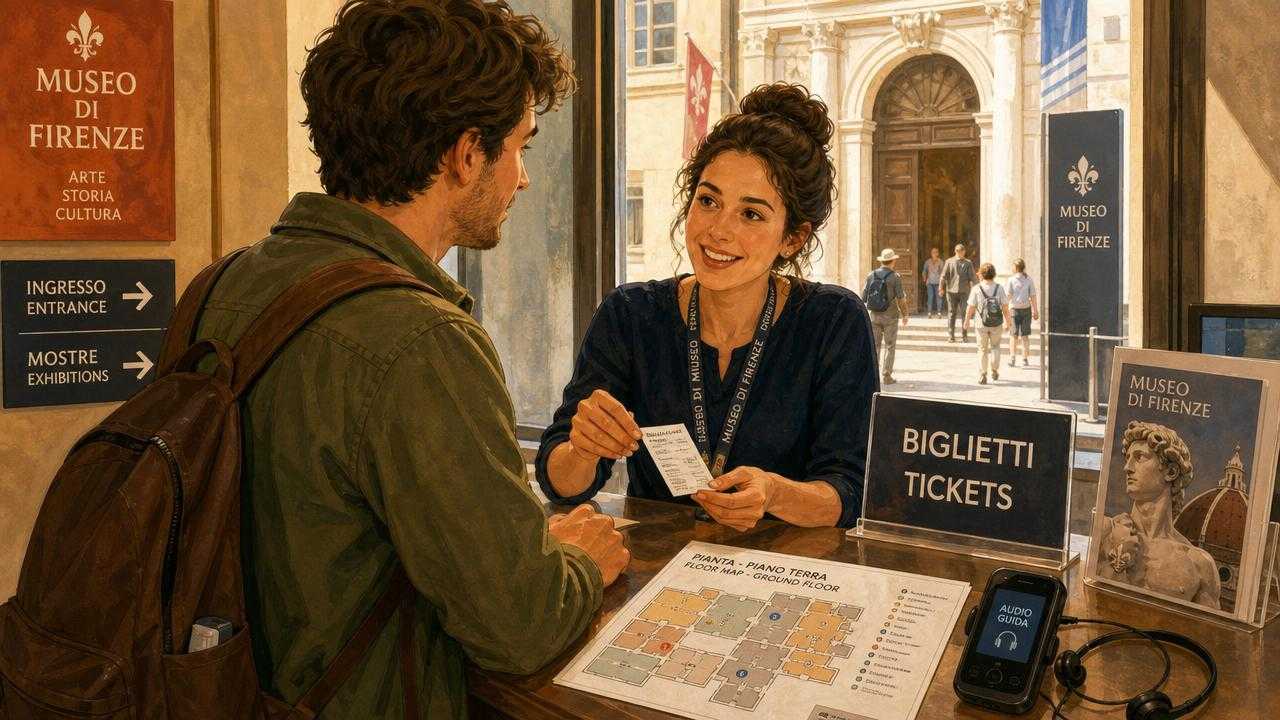
Buying Tickets at the Museum
At the ticket desk, keep it simple. You can ask for the number of tickets, check the price, and ask whether there is a reduced ticket before you pay.
| Italian phrase | English |
|---|---|
| Un biglietto, per favore. | One ticket, please. |
| Due biglietti, per favore. | Two tickets, please. |
| Quanto costa l’ingresso? | How much is admission? |
| Un biglietto intero, per favore. | One full-price ticket, please. |
| C’è un biglietto ridotto? | Is there a reduced ticket? |
| C’è uno sconto per studenti? | Is there a student discount? |
| Posso pagare con la carta? | Can I pay by card? |
| Accettate la carta? | Do you take card? |
Biglietto intero means a full-price ticket. Biglietto ridotto means a reduced ticket. You may see it for students, young people, seniors, or other categories, depending on the museum.
Booking, Timed Entry, and Special Exhibitions
For popular museums, you may need to book ahead or enter at a specific time. Some tickets also include special exhibitions, while others only cover the main collection. These phrases help you check before you buy or join the wrong line.
| Italian phrase | English |
|---|---|
| Ho una prenotazione. | I have a reservation. |
| Ho prenotato online. | I booked online. |
| Serve la prenotazione? | Do I need a reservation? |
| Bisogna prenotare? | Do you need to book? |
| Serve un biglietto con fascia oraria? | Do I need a timed-entry ticket? |
| Devo stampare il biglietto? | Do I need to print the ticket? |
| Questo biglietto include la mostra temporanea? | Does this ticket include the temporary exhibition? |
| C’è un biglietto combinato? | Is there a combined ticket? |
Fascia oraria means a time slot. You may see this when a museum asks you to choose an entry time online.
Opening Hours and Practical Questions
Before you queue up, it’s smart to check the schedule. These phrases help you confirm when the museum opens, whether it closes for lunch, and if there are any special restrictions that day.
| Italian phrase | English |
|---|---|
| A che ora apre? | What time does it open? |
| A che ora chiude? | What time does it close? |
| È aperto oggi? | Is it open today? |
| L’ingresso è gratuito la prima domenica del mese? | Is admission free on the first Sunday of the month? |
| C’è una visita guidata oggi? | Is there a guided tour today? |
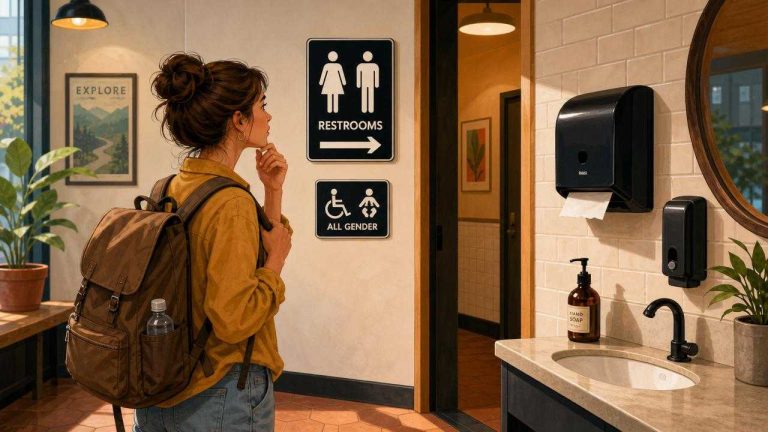
| Dove sono i bagni? | Where are the bathrooms? |
At the Entrance: Lines, Bags, and Photo Rules
Before you enter, staff may check your ticket, direct you to the right line, or ask you to leave a large bag at the cloakroom. Museums can also have strict photo rules, especially around flash, video, or temporary exhibitions.
| Italian phrase | English |
|---|---|
| È questa la fila per entrare? | Is this the line to enter? |
| Dove devo entrare? | Where should I enter? |
| Devo mostrare il biglietto qui? | Do I need to show the ticket here? |
| Devo lasciare lo zaino? | Do I need to leave my backpack? |
| Dov’è il guardaroba? | Where is the cloakroom? |
| Posso portare questa borsa? | Can I bring this bag? |
| Si possono fare foto? | Are photos allowed? |
| Senza flash? | Without flash? |
| È permesso filmare? | Is filming allowed? |
Guardaroba is the cloakroom or bag-drop area. In many museums, large backpacks are not allowed in the galleries.
Audio Guides and Guided Tours
Museums may offer an audio guide, a guided tour, or a self-guided visit. If you are not sure what is included, ask before you start.
| Italian phrase | English |
|---|---|
| C’è un’audioguida? | Is there an audio guide? |
| L’audioguida è in inglese? | Is the audio guide in English? |
| Dove si ritira l’audioguida? | Where do I pick up the audio guide? |
| Ci sono visite guidate in inglese? | Are there guided tours in English? |
| Quanto dura la visita guidata? | How long does the guided tour last? |
| A che ora inizia il tour? | What time does the tour start? |
| Preferisco visitare il museo liberamente. | I’d prefer to visit the museum at my own pace. |
What Staff or Guides Might Say
It also helps to recognize a few short phrases you might hear from museum staff or a tour guide. You do not need to understand every word. Often, one key phrase tells you what to do next.
| Italian phrase you might hear | English |
|---|---|
| Il tour inizia tra dieci minuti. | The tour starts in ten minutes. |
| Seguitemi, per favore. | Please follow me. |
| Da questa parte. | This way. |
| Il biglietto va mostrato all’ingresso. | The ticket needs to be shown at the entrance. |
| L’audioguida si ritira qui. | You pick up the audio guide here. |
| Non si possono fare foto. | Photos are not allowed. |
| Solo senza flash. | Only without flash. |
| La sala è chiusa. | The room is closed. |
| La visita finisce qui. | The tour ends here. |
Useful Phrases Inside the Museum
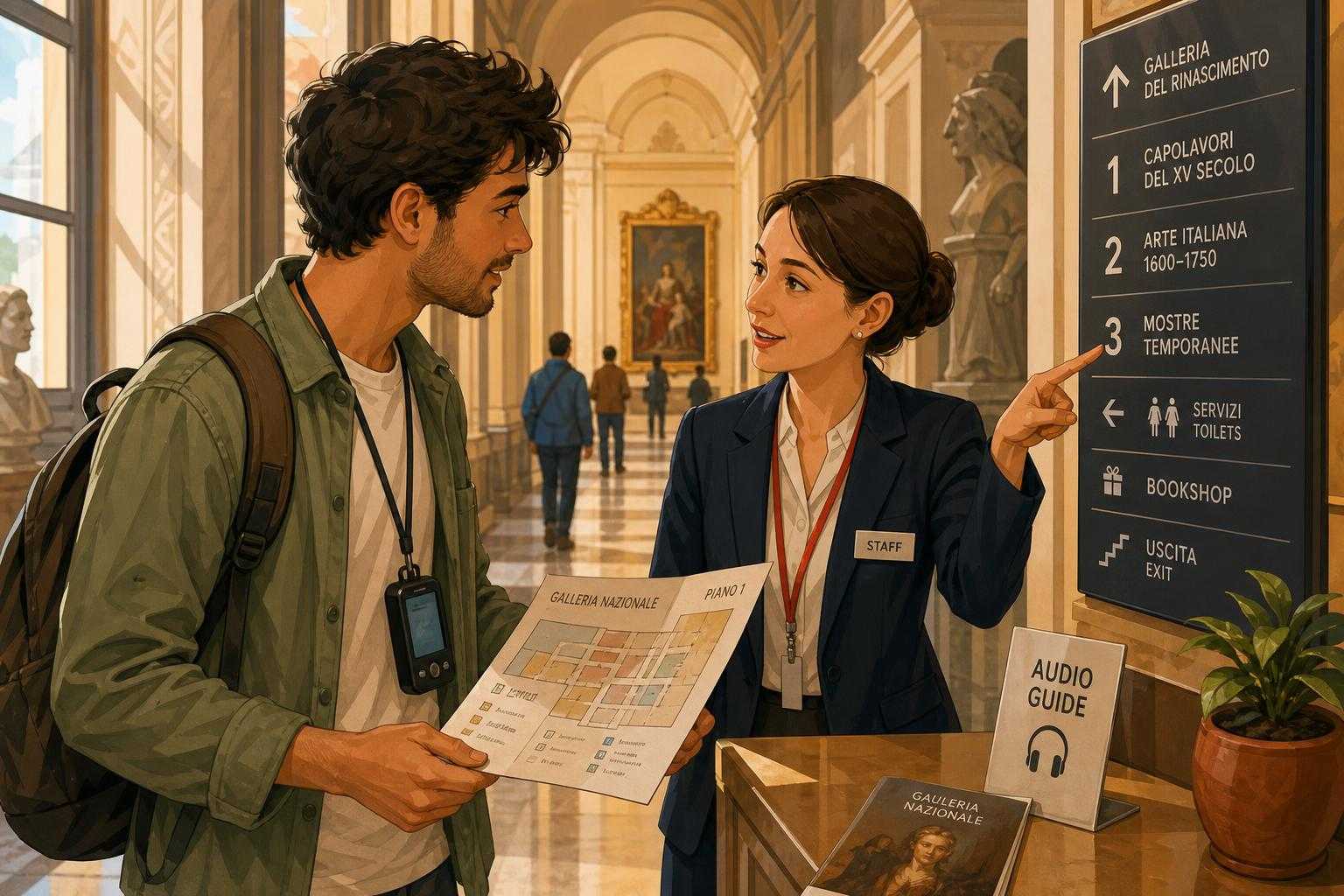
Once you’re inside, you may want help finding a gallery, understanding labels, or asking basic questions about the collection. These phrases are practical for real museum moments, not just textbook dialogues.
- Dove sono le sale dei dipinti? — Where are the painting galleries?
- Dov’è l’uscita? — Where is the exit?
- Si possono fare foto? — Are photos allowed?
- Non capisco questo testo. — I don’t understand this text.
- Può ripetere, per favore? — Can you repeat, please?
- Mi può aiutare? — Can you help me?
In many museums, staff members are used to helping international visitors. Use a polite tone, especially when asking about photo rules, closed rooms, or staff-only areas.
Talking About Art and Sightseeing
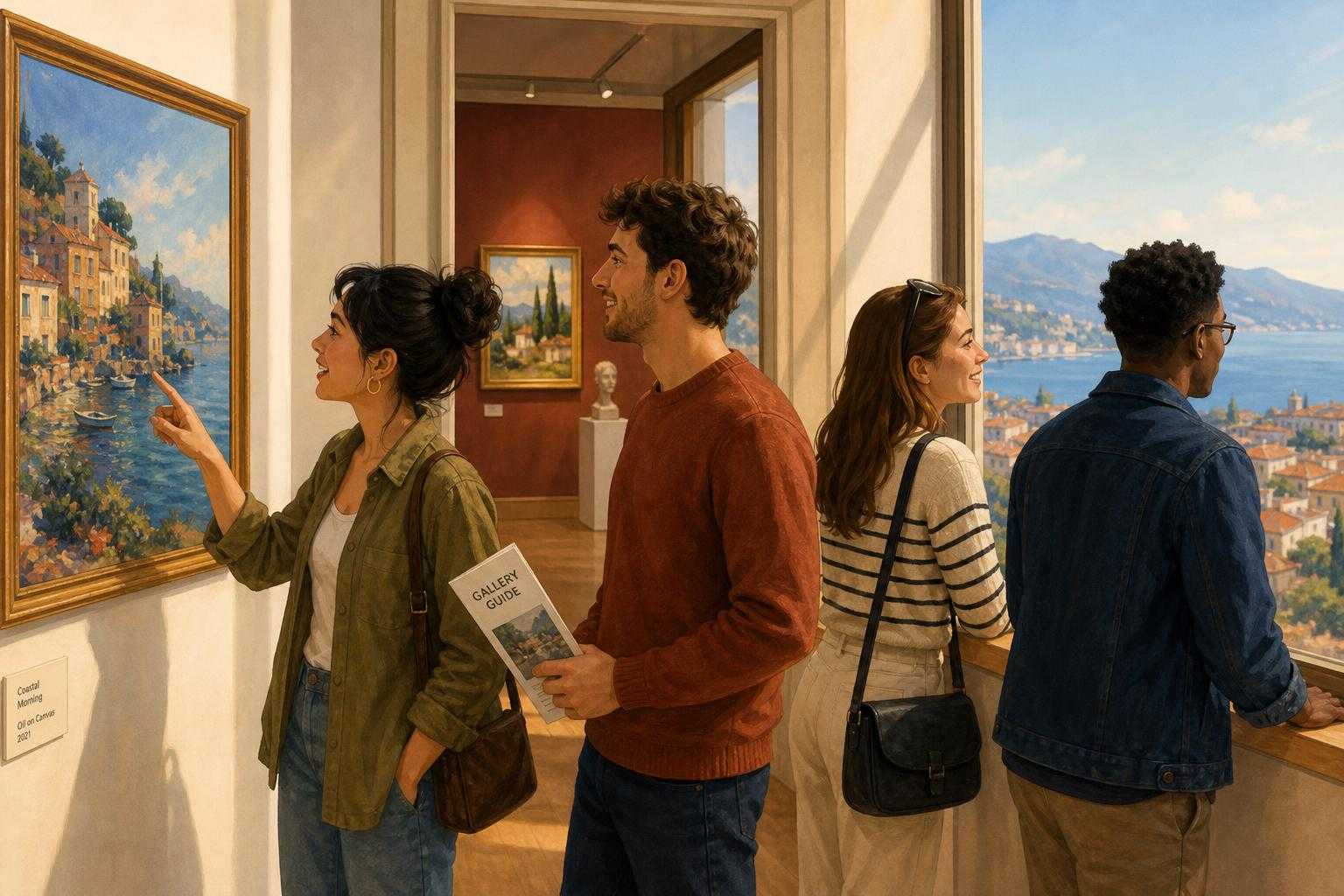
If you want to comment on what you see, a few simple expressions can help you sound natural without trying to say too much. These are great for art galleries, historic sites, and scenic viewpoints.
- Che bello! — How beautiful!
- Mi piace molto. — I like it a lot.
- È interessante. — It’s interesting.
- Che vista! — What a view!
- È un capolavoro. — It’s a masterpiece.
- Dov’è la prossima sala? — Where is the next room?
Quick Phrase Pairings to Remember
| Situation | Italian phrase | English |
|---|---|---|
| Buying a ticket | Un biglietto, per favore. | One ticket, please. |
| Showing a booking | Ho una prenotazione. | I have a reservation. |
| Asking about timed entry | Serve un biglietto con fascia oraria? | Do I need a timed-entry ticket? |
| Asking about photos | Si possono fare foto? | Are photos allowed? |
| Asking for help | Mi può aiutare, per favore? | Can you help me, please? |
A good museum conversation does not need long sentences. In fact, short and clear usually sounds more natural. If you can ask for tickets, check hours, and request a guide, you are already covering the most important situations.
For more everyday travel language you can use across Italy, check out Italian Everyday Expressions to Sound Local. Italian Everyday Expressions to Sound Local
Final Tip: Keep It Short and Clear
You do not need perfect Italian to enjoy museums in Italy. A short phrase, spoken slowly and politely, is usually enough to buy a ticket, ask about a tour, check a rule, or get help from staff.
Before your visit, choose five phrases to practice out loud. Start with the ones for tickets, opening hours, photo rules, audio guides, and help. Even if you only remember a few, they can make museum visits in Italy feel much easier.