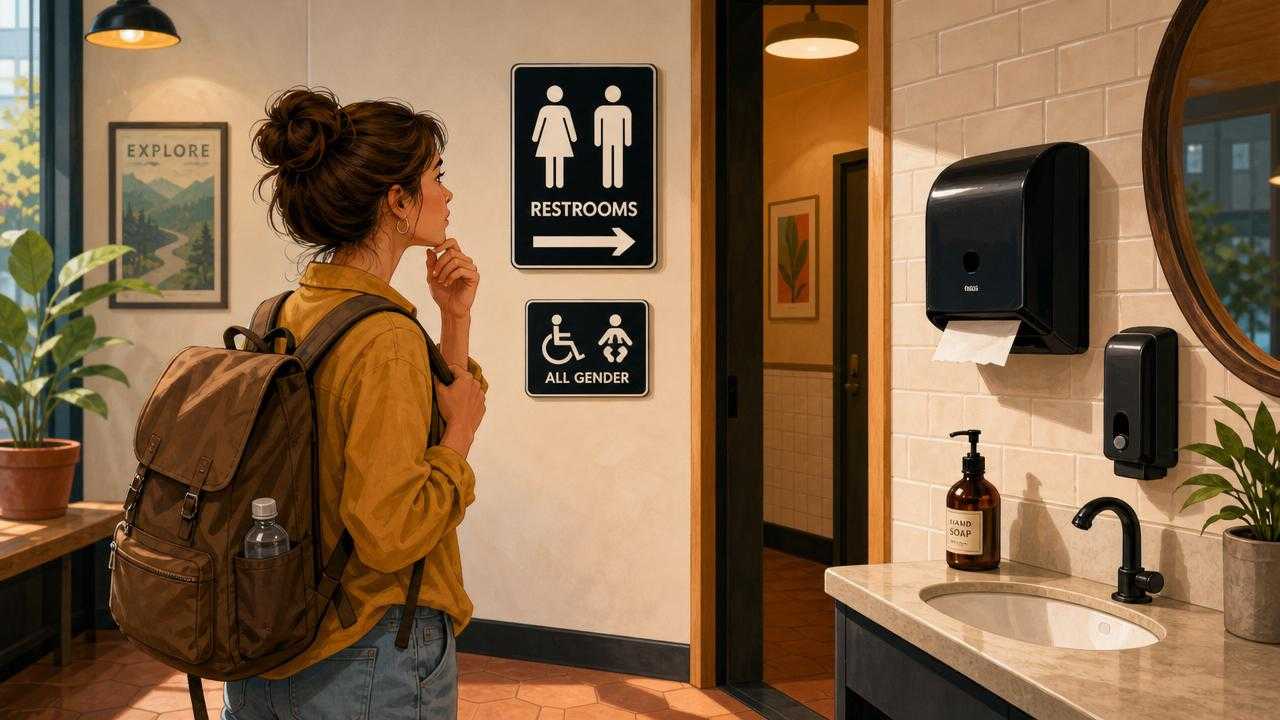
Italian Phrases for Bathrooms, Toilets, and Everyday Facilities
You know that moment when you need the bathroom, a bit of soap, or a place to wash your hands, and you do not want to overthink your Italian? This phrase pack gives you the small, practical lines that help you ask clearly, understand the answer, and keep moving without stress.
If you want a broader set of useful travel phrases, you may also like this guide to Italian Phrases for Everyday Travel and Survival
Ask Where the Bathroom Is
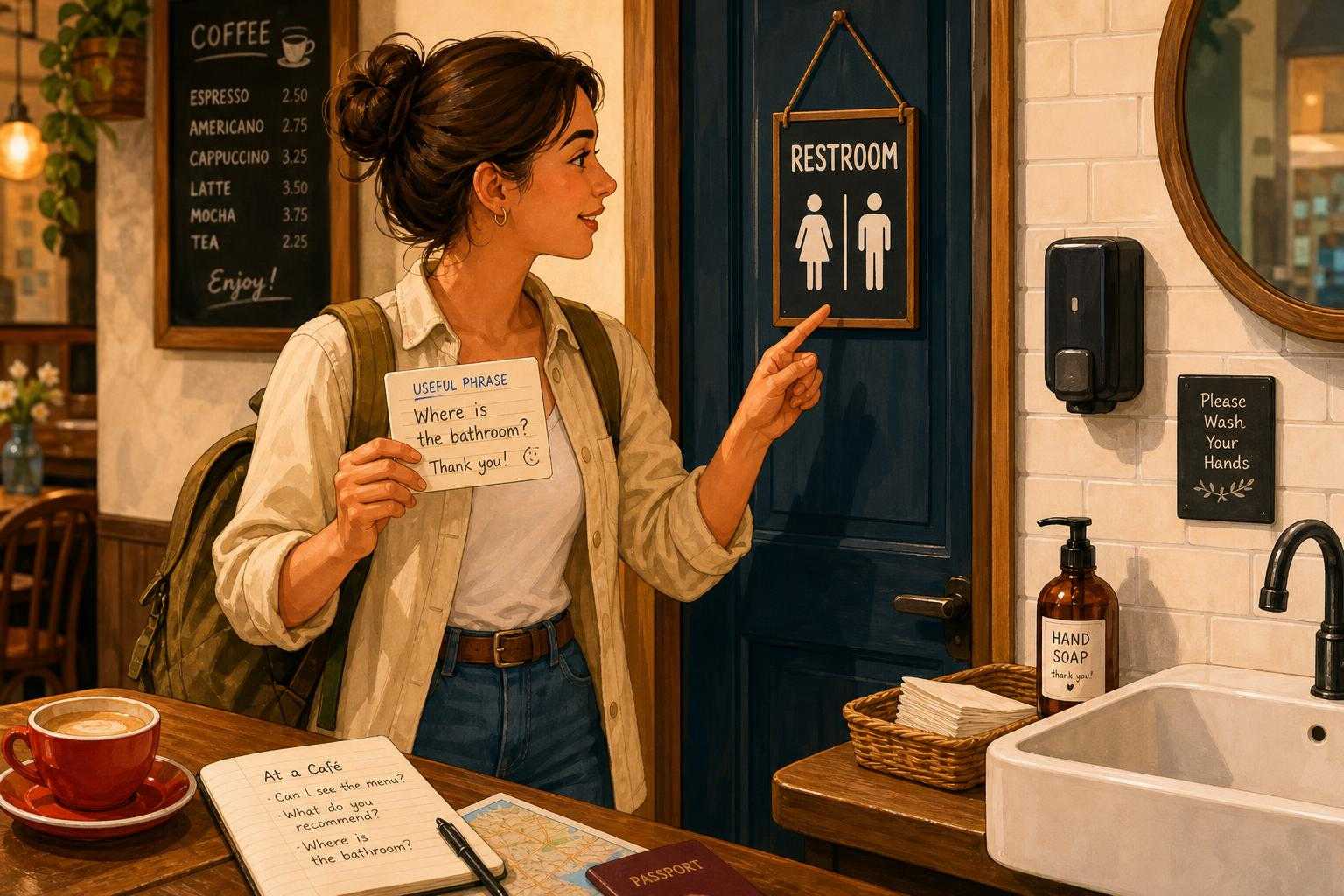
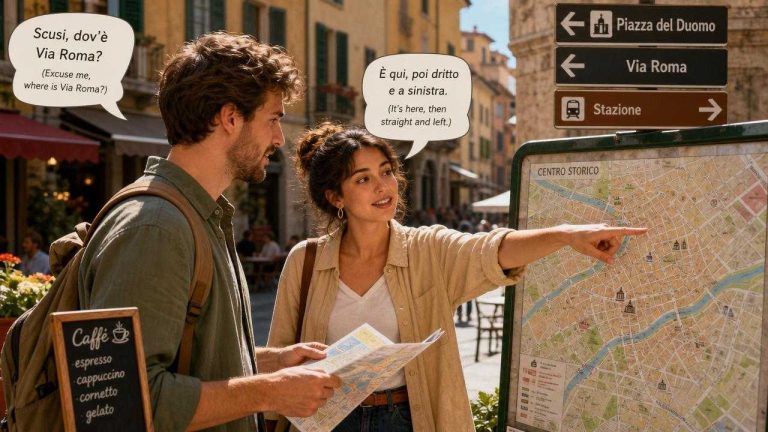
The most useful phrase is simple and direct: “Dov’è il bagno?” It means “Where is the bathroom?” and works in most everyday situations, from cafes to train stations. If you want to sound a little more polite, you can say “Scusi, dov’è il bagno?”
In some places, especially restaurants or homes, you may also hear “toilette” or “servizi.” Do not worry about choosing the perfect word every time. If you say “bagno,” people will understand you quickly in most travel situations.
The safest phrase to learn is:
- Scusi, dov’è il bagno? — Excuse me, where is the bathroom?
Use this in cafés, restaurants, shops, hotels, stations, and museums. It is polite, short, and natural.
You can also say the shorter version when the situation is already clear:
- Dov’è il bagno? — Where is the bathroom?
Both phrases are useful, but if you only remember one, make it Scusi, dov’è il bagno?
Can I Use the Bathroom?
In many places, asking where the bathroom is will be enough. But in cafés, bars, restaurants, and small shops, it can be more natural to first ask if you can use it. Some bathrooms are only for customers. You do not need a complicated sentence. A simple, polite question is usually enough.
- Posso usare il bagno? — Can I use the bathroom?
- Posso usare il bagno, per favore? — Can I use the bathroom, please?
- Il bagno è solo per i clienti? — Is the bathroom only for customers?
- Devo ordinare qualcosa? — Do I need to order something?
If you are in a café or bar, Devo ordinare qualcosa? sounds more natural than “Do I need to buy something?” because you are usually asking whether you need to order a coffee, water, or something small.
A very useful full sentence is:
- Scusi, posso usare il bagno, per favore? — Excuse me, can I use the bathroom, please?
It is polite, short, and works well with staff in most everyday situations.
Understand the Answer (Directions)
After you ask where the bathroom is, the answer may be very quick. You do not need to understand every word. Listen for the direction words.
- È in fondo a destra. — It’s at the end on the right.
- È in fondo a sinistra. — It’s at the end on the left.
- È al piano di sopra. — It’s upstairs.
- È al piano di sotto. — It’s downstairs.
- È dietro l’angolo. — It’s around the corner.
- Deve scendere le scale. — You need to go down the stairs.
- Deve salire le scale. — You need to go up the stairs.
The most useful words to catch are destra for “right,” sinistra for “left,” in fondo for “at the end,” sopra for “upstairs,” and sotto for “downstairs.”
If you miss the answer, you can keep it simple:
- Scusi, può ripetere? — Sorry, can you repeat that?
Bathroom Signs You Might See
Sometimes you will not need to ask anyone. You just need to understand the sign on the door or near the entrance.
- Bagno — Bathroom
- Toilette — Toilet / restroom
- Servizi — Restrooms / facilities
- Uomini — Men
- Donne — Women
- Occupato — Occupied
- Libero — Free / vacant
- Fuori servizio — Out of order
- Guasto — Broken / not working
- Solo clienti — Customers only
For speaking, bagno is usually the safest word to remember. For signs, you may also see toilette or servizi. If you see solo clienti, it means the bathroom is only for customers.
Ask for Soap, Paper, or Basic Supplies
Once you are inside, the next practical need is often a missing supply. These are the kinds of short requests that can make a big difference: soap, paper, tissue, or a way to dry your hands.
| Italian | English |
|---|---|
| C’è sapone? | Is there soap? |
| C’è carta igienica? | Is there toilet paper? |
| Ha della carta? | Do you have some paper? |
| Posso avere dei fazzoletti? | May I have some tissues? |
If you are speaking to staff, a short “Per favore” or “Scusi” makes the request feel smoother. You do not need a long explanation. In everyday Italian, brief and polite is usually best.
Say Something Is Missing or Not Working
Sometimes the problem is not finding the bathroom. It is that something is missing, broken, or not working. These phrases help you explain the problem without needing a long sentence.
- Non c’è sapone. — There’s no soap.
- Non c’è carta igienica. — There’s no toilet paper.
- Il bagno è occupato. — The bathroom is occupied.
- Il bagno è fuori servizio. — The bathroom is out of order.
- La porta non si chiude. — The door doesn’t close.
- L’acqua non funziona. — The water isn’t working.
A useful pattern here is Non c’è…, which means “There isn’t…” or “There’s no…”
- Non c’è sapone. — There’s no soap.
- Non c’è carta igienica. — There’s no toilet paper.
If you are telling staff, you can start with Scusi:
- Scusi, non c’è sapone. — Sorry, there’s no soap.
- Scusi, l’acqua non funziona. — Sorry, the water isn’t working.
Useful Polite Questions and Responses
In public places, polite phrasing helps a lot. Even when the request is simple, adding a soft opener makes you sound more natural and less abrupt. These formulas are easy to reuse anywhere from a museum to a café.
- Mi scusi, può aiutarmi? — Excuse me, can you help me?
- Posso usare il bagno, per favore? — Can I use the bathroom, please?
- Dove devo andare? — Where should I go?
- È qui vicino? — Is it nearby?
- Grazie, ho capito. — Thanks, I understand.
Mini Cheat Sheet for Fast Recall
If you only memorize five phrases from this post, make them these. They cover the most common situations: finding the bathroom, checking for supplies, and asking for help without sounding stiff.
- Scusi, posso usare il bagno? — Excuse me, can I use the bathroom?
- Dov’è il bagno? — Where is the bathroom?
- Mi scusi, può aiutarmi? — Excuse me, can you help me?
- Scusi, può ripetere? — Sorry, can you repeat that?
A Simple Way to Sound More Natural
One easy habit can make these phrases feel much more natural: start with “Scusi” or “Mi scusi,” then ask the question directly, then end with “per favore” if it fits. That pattern is useful well beyond bathrooms, and it is one of the best beginner-friendly habits to build early.
For a broader tip on everyday Italian phrasing, see How to Sound More Natural in Italian Without Learning Advanced Grammar
Quick Recap
Public bathrooms and basic facilities do not need a huge vocabulary. If you can ask where the bathroom is, request soap or paper, and understand a simple direction, you are already prepared for most real travel moments.
Keep the phrases short, polite, and repeatable. The more you use them, the faster they will come to mind when you actually need them.