French Etiquette Phrases for Polite Everyday Interactions
If you want to handle everyday interactions politely in French, you do not need long scripts. Start with a greeting, make one clear request, add “please,” and finish with “thank you” or “goodbye.”
A simple pattern is enough for many travel situations:
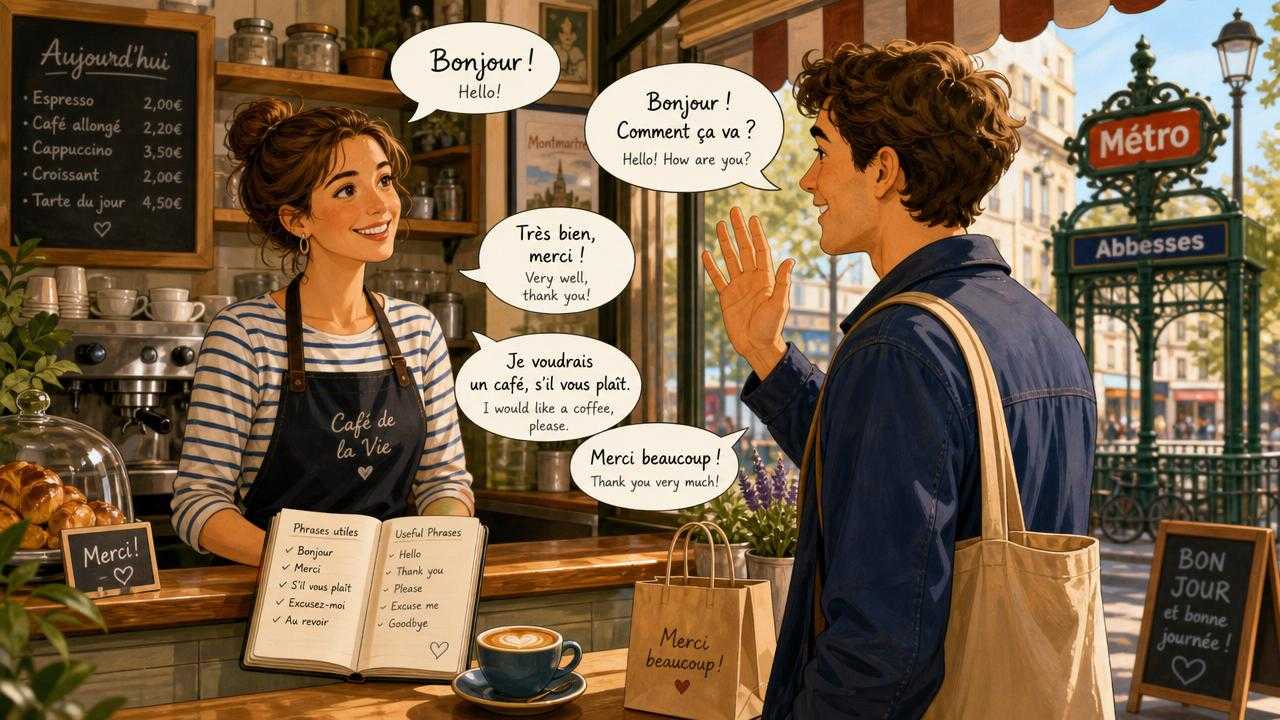
- Bonjour. Un café, s’il vous plaît. Merci. Au revoir.
- Hello. A coffee, please. Thank you. Goodbye.
You can use the same basic rhythm in cafés, bakeries, shops, hotels, stations, and museums.
A simple polite pattern for French
Polite French often starts with a few small words used in the right order. For travellers, the most useful pattern is: say hello, make your request, say please, then thank the person. You can use this pattern in many everyday situations without needing a long sentence.
| French | English |
|---|---|
| Bonjour. | Hello. |
| Bonsoir. | Good evening. |
| S’il vous plaît. | Please. |
| Merci. | Thank you. |
| Au revoir. | Goodbye. |
| Bonne journée. | Have a good day. |
| Bonne soirée. | Have a good evening. |
Starting an interaction
Use Bonjour. during the day and Bonsoir. in the evening. If you are not sure which one to use, Bonjour. is usually safe earlier in the day.
In France, say hello before asking for something or starting a question. Use Bonjour. during the day and Bonsoir. in the evening, especially when you enter a shop, café, bakery, hotel, or ticket office. A quick hello first makes the exchange feel more natural and polite.
| French | English | Use it when… |
|---|---|---|
| Bonjour. | Hello. | Entering a shop, café, hotel, bakery, or ticket office. |
| Bonsoir. | Good evening. | Entering a restaurant, hotel, or shop in the evening. |
| Bonjour, excusez-moi. | Hello, excuse me. | Getting someone’s attention politely. |
| Bonjour, madame. | Hello, ma’am. | Speaking politely to a woman. |
| Bonjour, monsieur. | Hello, sir. | Speaking politely to a man. |
You do not have to use madame or monsieur every time, but they are common in polite service situations.
Asking for help politely
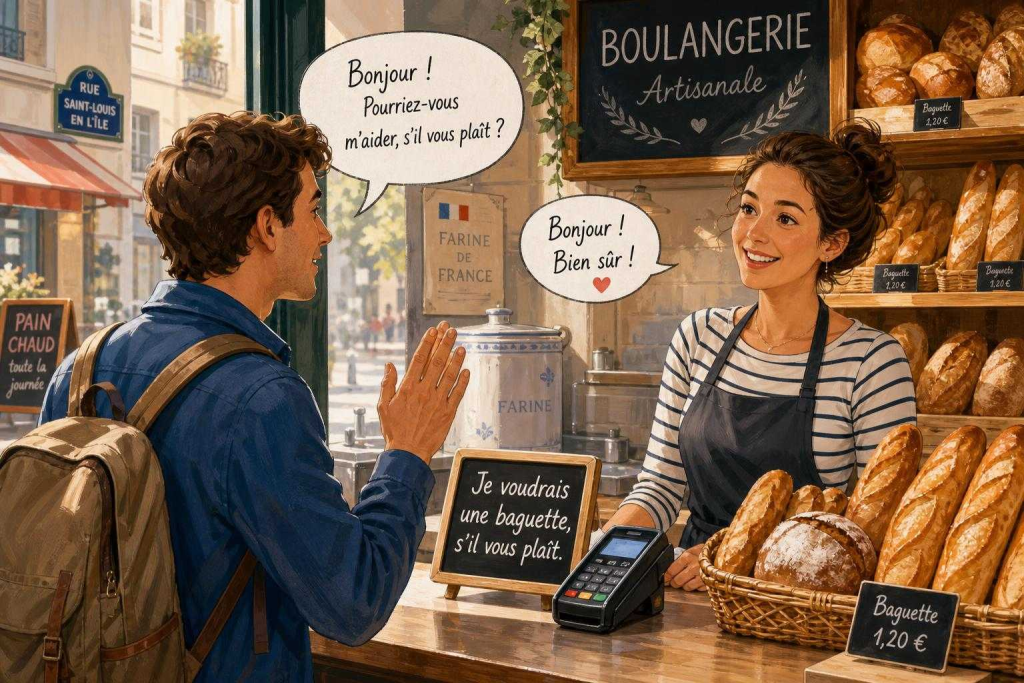
When you need help, start with a greeting or a soft attention phrase. This is useful when asking for directions, finding a product, or getting help at a hotel or station. A short polite opener can make even a very basic question sound more natural.
| French | English | Use it when… |
|---|---|---|
| Excusez-moi. | Excuse me. | Getting someone’s attention. |
| Je peux vous poser une question ? | Can I ask you a question? | Asking a stranger or staff member for help. |
| Vous pouvez m’aider, s’il vous plaît ? | Can you help me, please? | Asking for simple help. |
| Vous pourriez m’aider, s’il vous plaît ? | Could you help me, please? | A slightly softer, more polite version. |
| Où est la sortie ? | Where is the exit? | Finding your way out. |
| Où sont les toilettes ? | Where are the toilets / restrooms? | Asking for the bathroom. |
| Où est la gare ? | Where is the station? | Asking for a location. |
For a beginner, Vous pouvez m’aider, s’il vous plaît ? is a useful all-purpose phrase. It is simple, polite, and easy to reuse.
Ordering, buying, and paying
In cafés, bakeries, markets, and small shops, you usually do not need a long sentence. A greeting plus one clear request is enough. If you can point to what you want, a short phrase like “that, please” is often the easiest option.
| French | English | Use it when… |
|---|---|---|
| Un café, s’il vous plaît. | A coffee, please. | Ordering one coffee. |
| Je voudrais un café, s’il vous plaît. | I’d like a coffee, please. | A slightly more complete request. |
| Je vais prendre ça, s’il vous plaît. | I’ll take that, please. | Pointing to something in a bakery, market, or shop. |
| Ça, s’il vous plaît. | That, please. | A short version when pointing. |
| L’addition, s’il vous plaît. | The bill, please. | Asking for the bill in a restaurant. |
| C’est tout, merci. | That’s all, thank you. | Finishing an order. |
Je voudrais… sounds a little more polished.
Je vais prendre… is very natural when ordering food, coffee, or something from a counter.
Ça, s’il vous plaît. is useful when you can point.
Short payment phrases
Payment conversations are usually quick, so it helps to know a few short replies. These phrases let you answer clearly when staff ask how you want to pay, whether you need a bag, or whether you want anything else. You can keep your answer short and still sound polite.
| French | English |
|---|---|
| Par carte, s’il vous plaît. | By card, please. |
| En espèces, s’il vous plaît. | In cash, please. |
| Oui, s’il vous plaît. | Yes, please. |
| Non merci. | No, thank you. |
| Ça ira, merci. | That’s okay, thanks. |
| C’est tout, merci. | That’s all, thank you. |
Ça ira, merci. is useful when someone offers extra help and you want to politely say, “I’m okay, thanks.”
When you do not understand
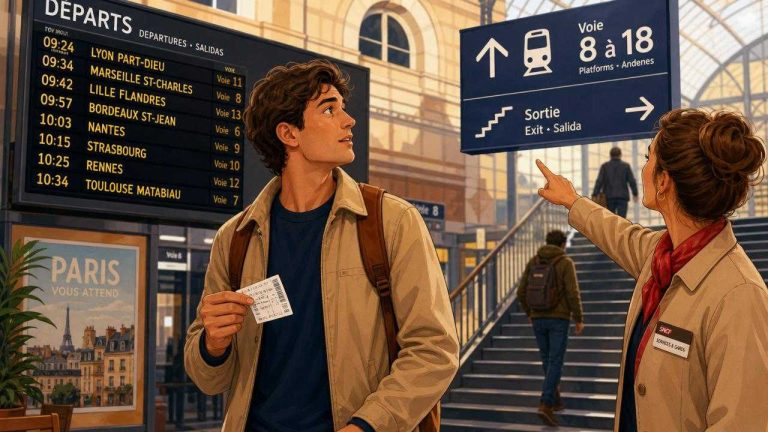
Even if you start the conversation well, the reply may be too fast or too difficult. These phrases help you stay calm and polite when you miss something. They are especially useful at stations, hotel desks, ticket counters, and busy cafés.
| French | English |
|---|---|
| Je ne parle pas très bien français. | I don’t speak French very well. |
| Je ne comprends pas. | I don’t understand. |
| Vous pouvez répéter, s’il vous plaît ? | Can you repeat that, please? |
| Plus lentement, s’il vous plaît. | More slowly, please. |
| Vous parlez anglais ? | Do you speak English? |
A polite way to ask for English is:
Bonjour, excusez-moi. Vous parlez anglais ?
Hello, excuse me. Do you speak English?
Starting with Bonjour. makes the question sound less abrupt.
Apologies and polite replies

Small apologies are useful in crowded places, on public transport, and in shops. You do not need to explain much. A simple word like Pardon. is often enough when you bump into someone, need to pass, or interrupt briefly.
| Situation | French | English |
|---|---|---|
| You bump into someone | Pardon. | Sorry. |
| You need to pass through | Pardon. | Excuse me. |
| You want someone’s attention | Excusez-moi. | Excuse me. |
| Someone offers help, but you are only looking | Je regarde seulement, merci. | I’m just looking, thanks. |
| Someone offers something and you want it | Oui, s’il vous plaît. | Yes, please. |
| Someone offers something and you do not want it | Non merci. | No, thank you. |
| You want to say everything is okay | Ça ira, merci. | That’s okay, thanks. |
Ending the interaction naturally
Many everyday French interactions end with a simple thank-you and goodbye. You do not need a special closing sentence. Choose the phrase that fits the time of day, then leave it there.
| French | English | Use it when… |
|---|---|---|
| Merci. | Thank you. | A quick, simple thanks. |
| Merci beaucoup. | Thank you very much. | A warmer thank-you. |
| Au revoir. | Goodbye. | A standard polite goodbye. |
| Bonne journée. | Have a good day. | Leaving during the day. |
| Bonne soirée. | Have a good evening. | Leaving in the evening. |
| À tout à l’heure. | See you later. | Only if you will see the person again later the same day. |
A natural closing after paying might be:
Merci, bonne journée.
Thank you, have a good day.
Or, in the evening:
Merci, bonne soirée.
Thank you, have a good evening.
Short examples you can practice
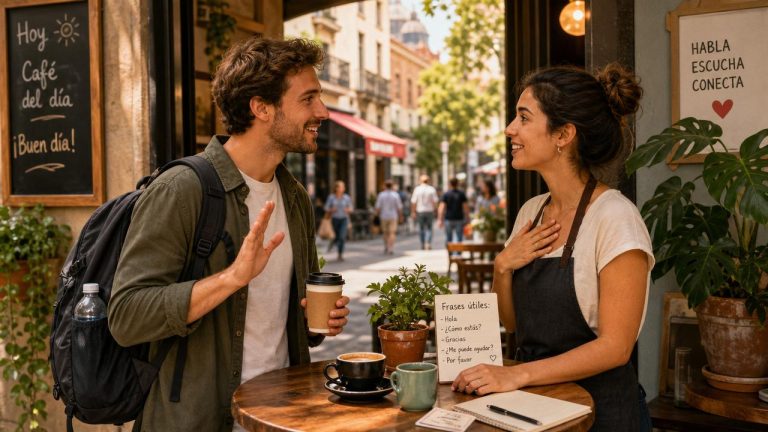
It helps to practise full mini-exchanges, not just single phrases. These examples show how the polite pattern works from start to finish. Read the French side out loud a few times so the rhythm feels familiar before you travel.
In a café
| French | English |
|---|---|
| Traveller: Bonjour. Un café, s’il vous plaît. | Traveller: Hello. A coffee, please. |
| Staff: Bien sûr. | Staff: Of course. |
| Traveller: Merci. | Traveller: Thank you. |
| Staff: Bonne journée. | Staff: Have a good day. |
| Traveller: Merci, au revoir. | Traveller: Thank you, goodbye. |
Asking for help
| French | English |
|---|---|
| Traveller: Bonjour, excusez-moi. | Traveller: Hello, excuse me. |
| Traveller: Vous pouvez m’aider, s’il vous plaît ? | Traveller: Can you help me, please? |
| Staff: Oui, bien sûr. | Staff: Yes, of course. |
| Traveller: Où sont les toilettes ? | Traveller: Where are the toilets / restrooms? |
| Staff: Au fond, à droite. | Staff: At the back, on the right. |
| Traveller: Merci beaucoup. | Traveller: Thank you very much. |
Quick reference
This is the short list to practice first. These phrases cover greetings, requests, payment, apologies, and goodbyes. You can use them in many different travel situations.
| French | English |
|---|---|
| Bonjour. | Hello. |
| Bonsoir. | Good evening. |
| S’il vous plaît. | Please. |
| Merci. | Thank you. |
| Excusez-moi. | Excuse me. |
| Pardon. | Sorry / excuse me. |
| Vous pouvez m’aider, s’il vous plaît ? | Can you help me, please? |
| Je voudrais… | I’d like… |
| Je vais prendre… | I’ll have / I’ll take… |
| C’est tout, merci. | That’s all, thank you. |
| Non merci. | No, thank you. |
| Au revoir. | Goodbye. |
| Bonne journée. | Have a good day. |
| Bonne soirée. | Have a good evening. |
You do not need perfect French to be polite. In most everyday situations, a simple Bonjour., one clear request, s’il vous plaît, and merci will help you communicate clearly. Practice a few of these phrases out loud before your trip, and they will feel much easier when you need them.