French Phrases for Museums, Tickets, and Tours
If you’re visiting a museum in France, a few simple French phrases can make the whole experience smoother. You’ll be able to buy tickets, ask about opening hours, follow tour instructions, and handle small questions without feeling stuck.
At the ticket desk: tickets and prices
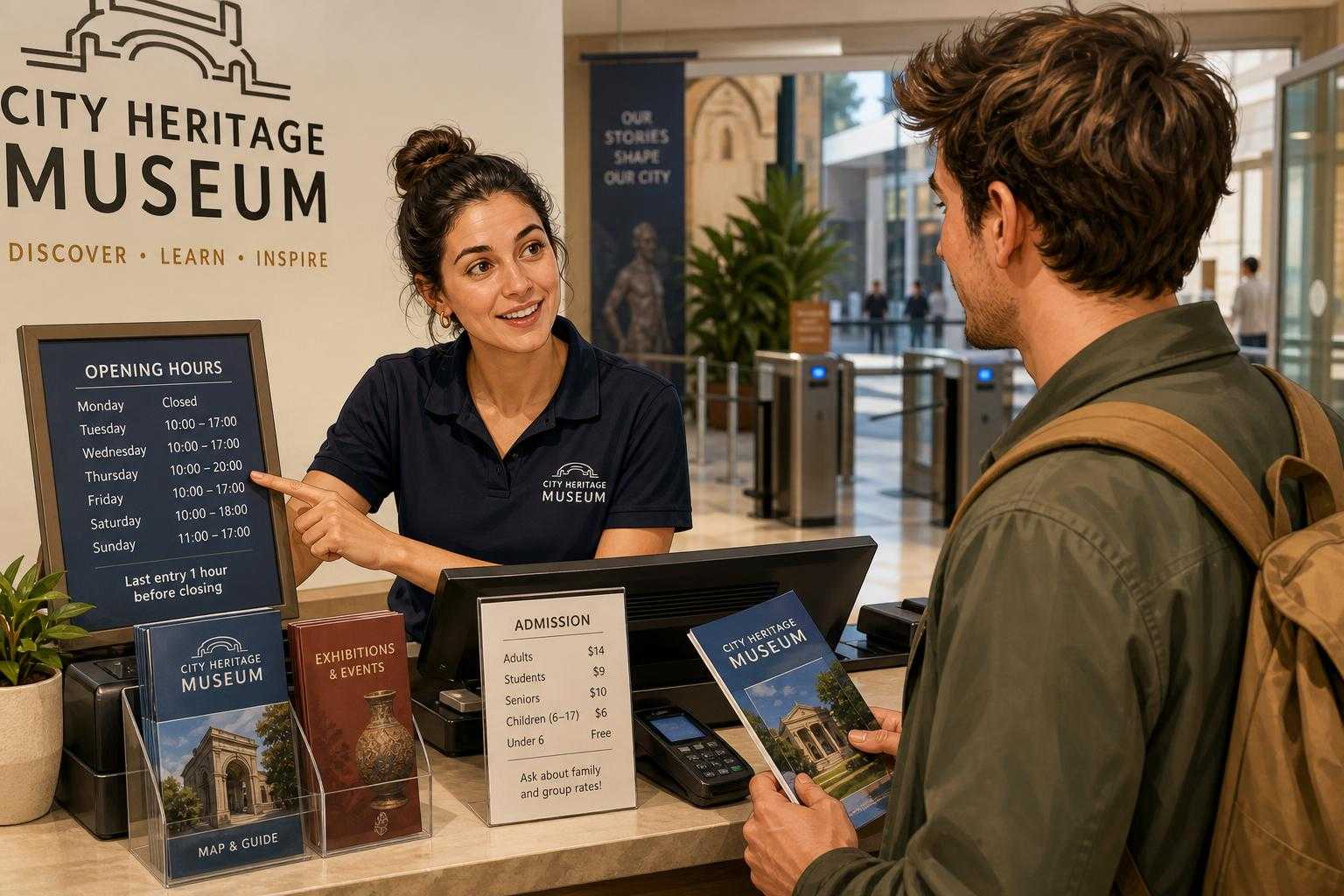
At the entrance, the goal is usually simple: say what you want and keep the exchange short. These phrases work well whether you’re buying one ticket or asking about prices for a group.
| French | English |
|---|---|
Un billet, s’il vous plaît. | One ticket, please. |
| Deux billets, s’il vous plaît. | Two tickets, please. |
| Combien coûte l’entrée ? | How much is admission? |
| Il y a un tarif réduit ? | Is there a reduced rate? |
| Où est la billetterie ? | Where is the ticket office? |
| Il faut réserver ? | Do you need to book? |
| J’ai une réservation. | I have a booking. |
| C’est complet ? | Is it sold out? |
If you want to sound a little more natural, start with Bonjour, then make the request. That is enough for most ticket-desk situations.
Paying for your ticket
Some museums let you buy a ticket at the desk, but popular exhibitions may need a booking or timed entry. These phrases help you ask about payment, reservations, and whether there are still tickets available.
| French | English |
|---|---|
| Je peux payer par carte ? | Can I pay by card? |
| Par carte, s’il vous plaît. | By card, please. |
| En espèces. | In cash. |
| Vous prenez la carte ? | Do you take card? |
| Il faut réserver ? | Do you need to book? |
| J’ai une réservation. | I have a booking. |
| C’est complet ? | Is it sold out? |
| Il reste des places pour aujourd’hui ? | Are there any spots left for today? |
| C’est pour quelle heure ? | What time is it for? |
Use par carte for “by card” and en espèces for “in cash.” If you have booked online, J’ai une réservation is the simplest phrase to use at the ticket desk.
Opening hours, photos, and entry rules
Museum schedules can change for holidays, special exhibitions, or late openings, so it helps to know how to ask before you go in. These phrases are especially useful if you’re planning a day of sightseeing.
- À quelle heure ouvrez-vous ? — What time do you open?
- À quelle heure fermez-vous ? — What time do you close?
- Le musée est ouvert aujourd’hui ? — Is the museum open today?
- Est-ce qu’il y a des salles fermées aujourd’hui ? — Are any rooms closed today?
- Peut-on prendre des photos ? — Can you take photos?
If you want more survival-style phrases for getting around as a traveler, you may also like this guide. French Phrases for Everyday Survival (With Audio)
Audio guides, maps, and tours
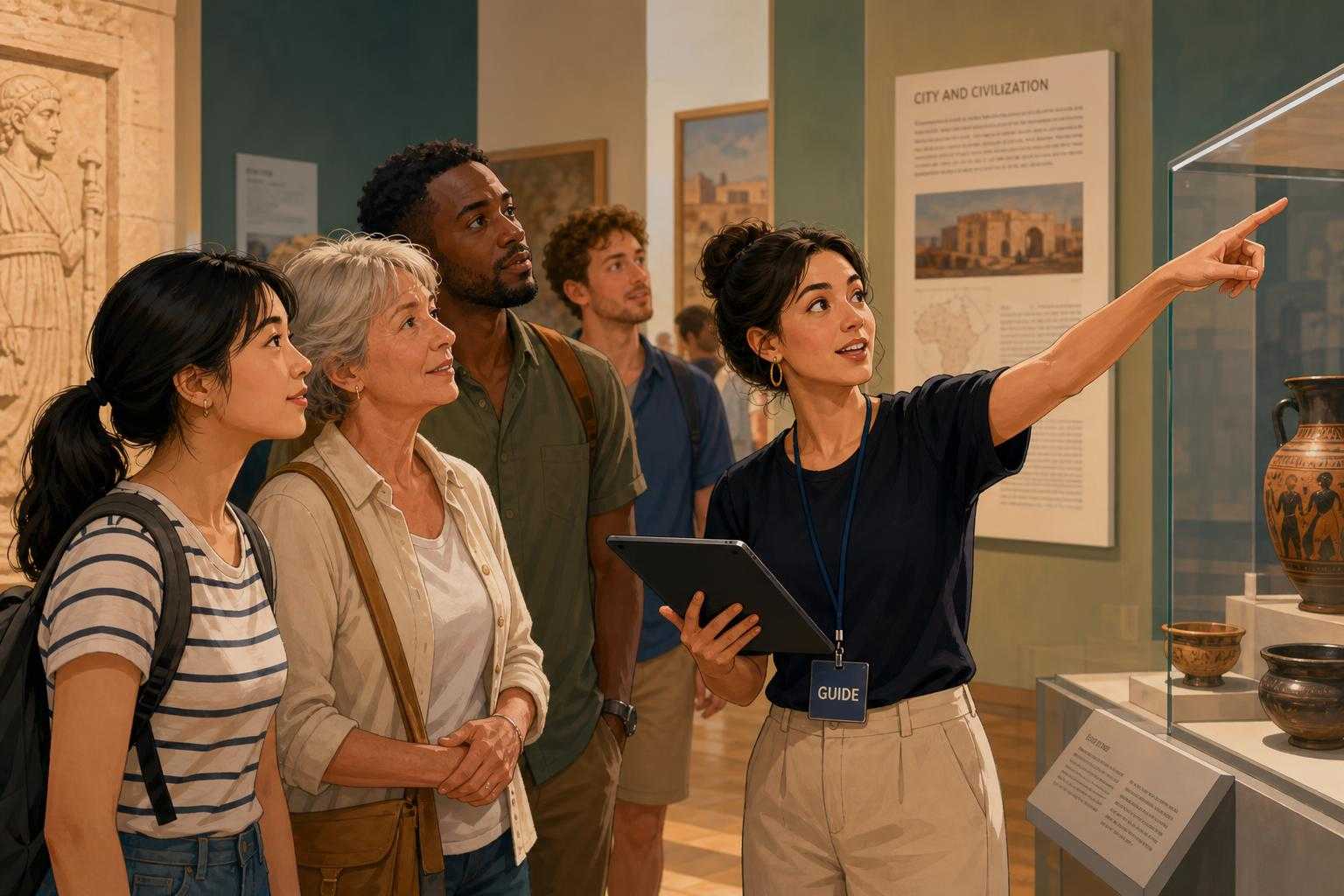
Once you have your ticket, you may want a map, an audio guide, or a guided tour. These phrases are useful before you start walking around.
| French | English |
|---|---|
| Vous avez un plan du musée ? | Do you have a museum map? |
| Il y a un audioguide en anglais ? | Is there an audio guide in English? |
| Où peut-on prendre un audioguide ? | Where can we get an audio guide? |
| Il y a une visite guidée en anglais ? | Is there a guided tour in English? |
| À quelle heure commence la visite ? | What time does the tour start? |
| Où commence la visite guidée ? | Where does the guided tour start? |
| La visite dure combien de temps ? | How long does the tour last? |
| C’est compris dans le billet ? | Is it included in the ticket? |
You may also hear short instructions from a guide. You do not need to understand every word. Listen for practical phrases about where to go, when to wait, and what not to touch.
| French | English |
|---|---|
| Suivez-moi. | Follow me. |
| Par ici. | This way. |
| On va commencer. | We’re going to start. |
| Merci de rester avec le groupe. | Please stay with the group. |
| Attendez ici. | Wait here. |
| Avancez, s’il vous plaît. | Please move forward. |
| Ne touchez pas les œuvres. | Do not touch the artworks. |
| On se retrouve ici dans dix minutes. | We’ll meet back here in ten minutes. |
| Vous avez des questions ? | Do you have any questions? |
A useful word to recognize is œuvres. In a museum, it usually means artworks or works on display.
Common things you may hear on a tour
You do not need to understand every word to get the idea. Look for repeated instructions about staying together, moving along, not touching objects, and meeting at a certain point.
- Ne touchez pas. — Do not touch.
- Merci de parler doucement. — Please speak quietly.
- On se retrouve à l’entrée. — We’ll meet back at the entrance.
- Attendez ici. — Wait here.
- Avancez, s’il vous plaît. — Please move forward.
Finding your way inside the museum
A museum visit often includes small practical questions: where the restroom is, whether a bag must be checked, or where to find the exit. These are easy wins for your French confidence.
| French | English |
|---|---|
| Où sont les toilettes ? | Where are the restrooms? |
| Où est le vestiaire ? | Where is the cloakroom? |
| Il y a des casiers ? | Are there lockers? |
| La sortie, c’est par où ? | Which way is the exit? |
| Je cherche l’exposition sur Monet. | I’m looking for the exhibition about Monet. |
| Pouvez-vous m’aider ? | Can you help me? |
In many museums, vestiaire means cloakroom and casiers means lockers. These are useful words if you have a large bag.
A quick mini-dialogue you can copy
Here is a simple exchange you can reuse at many museums. Read it aloud a few times so the rhythm feels familiar.
| French | English |
|---|---|
| You: Bonjour. Un billet, s’il vous plaît. | Hello. One ticket, please. |
| Attendant: Bien sûr. Vous payez par carte ou en espèces ? | Of course. Are you paying by card or cash? |
| You: Par carte, merci. | By card, thank you. |
| You: À quelle heure commence la visite ? | What time does the tour start? |
| Attendant: Elle commence à quatorze heures. C’est par ici. | It starts at 2:00 p.m. It’s this way. |
Quick checklist before you go in
You do not need to memorize every phrase in this post. Before you walk into a museum, focus on the phrases that help you buy a ticket, pay, ask about photos, and find your way around.
| Situation | French | English |
|---|---|---|
| Buying a ticket | Un billet, s’il vous plaît. | One ticket, please. |
| Paying | Par carte, s’il vous plaît. | By card, please. |
| Asking about photos | Peut-on prendre des photos ? | Can we take photos? |
| Asking about an audio guide | Il y a un audioguide en anglais ? | Is there an audio guide in English? |
| Finding the bathroom | Où sont les toilettes ? | Where are the restrooms? |
| Finding the exit | La sortie, c’est par où ? | Which way is the exit? |
| Getting help | Pouvez-vous m’aider ? | Can you help me? |
Practice the first three out loud before you arrive. That is usually enough to get through the ticket desk. You can keep the rest handy for when you are already inside.