At a Mexico City Market: How to Ask, Choose, and Pay in Spanish
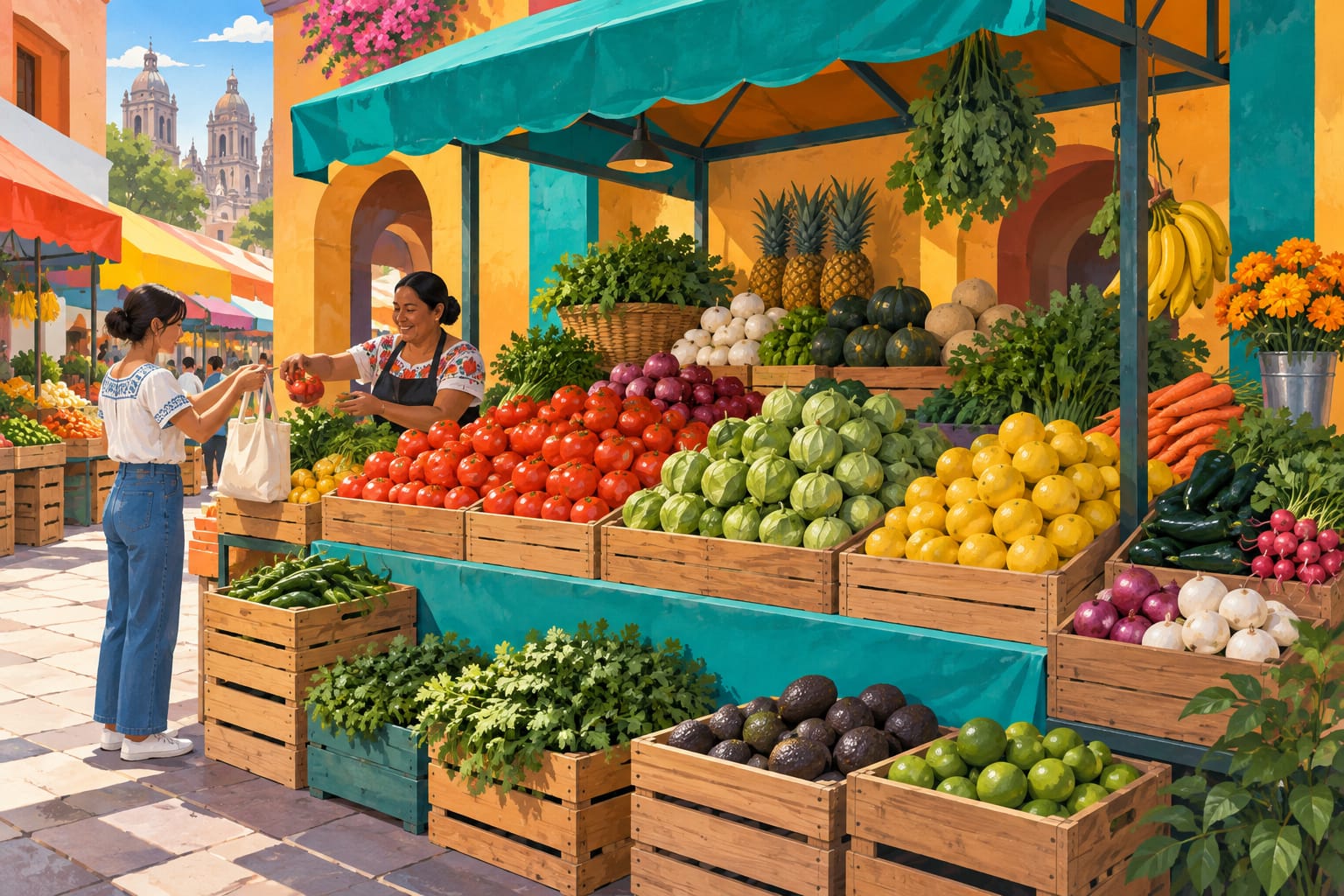
At a produce stall in Mexico City, you can buy what you need with four moves: greet the vendor, check the price and unit, ask for a quantity, and confirm the total. Keep the exchange short enough that you can hear the reply. The Spanish below fits a produce purchase; another stall may work differently.
Start with “Buenas. ¿A cómo está el kilo de jitomate?” (“Hello. How much is a kilo of red tomatoes?”). Once you hear the price, ask for the amount you want. If the answer runs past you, ask the vendor to say it again or show you the price.
A market phrase card
These examples use everyday Mexican Spanish. Jitomate means the red tomato in Mexico City; the Academia Mexicana de la Lengua notes that names differ elsewhere in Mexico. Say the amount and unit together, so nobody has to guess what you mean.
| Say this | Meaning | When |
|---|---|---|
| Buenas. | Hello. | Open the exchange. |
| ¿A cómo está el kilo de jitomate? | How much is a kilo of red tomatoes? | Ask for the unit price. |
| ¿Me da medio kilo, por favor? | Could I have half a kilo, please? | Choose an amount. |
| ¿Cuánto es en total? | How much is it altogether? | Check the final price. |
| ¿Acepta tarjeta? | Do you take cards? | Ask before relying on a card. |
| No entendí. ¿Me lo puede repetir más despacio? | I didn’t understand. Could you repeat it more slowly? | Repair a missed answer. |
First, look at the unit behind the price
Mexico City’s public markets include many kinds of stalls. At a produce stall, a price may be for a kilo, a piece, or a bundle. Check the unit before you decide. “¿Es por kilo o por pieza?” asks, “Is that per kilo or per piece?” For a bunch of herbs, you can point and ask “¿Cuánto cuesta el manojo?” (“How much is the bunch?”).
You can ask a price and buy without negotiating. A question about cost doesn’t begin a bargaining contest. If the price doesn’t suit you, say “Gracias, voy a seguir viendo” (“Thanks, I’ll keep looking”) and move on. Don’t assume every vendor or item has the same approach to price.
Choose the produce and the amount
When you’re ready, name the item and amount in one sentence: “¿Me da medio kilo de jitomate, por favor?” (“Could I have half a kilo of red tomatoes, please?”). For a piece, use “¿Me da dos aguacates, por favor?” (“Could I have two avocados, please?”). If you want fruit for today, ask “¿Tiene unos maduros para hoy?” (“Do you have some ripe ones for today?”). Let the vendor answer before reaching across the stall.
Two small sound checks help. The j in jitomate has a breathy sound, closer to the h in “house” than the English j. In medio kilo, the stress falls on ME and KI. Listen to a Mexico City speaker before recording these lines; the site’s Colombian Spanish audio is a different variety.
What the vendor may ask
You might hear “¿Cuánto le doy?” (“How much should I give you?”), “¿Algo más?” (“Anything else?”), or “Son cuarenta pesos” (“That’s forty pesos”). The number is only an example, not a current market price. For “Anything else?”, “No, gracias. Eso es todo” means “No, thanks. That’s everything.”
Here is a short practice exchange. Swap the item and quantity before you use it at a stall:
| Speaker | Spanish | Meaning |
|---|---|---|
| You | Buenas. ¿A cómo está el kilo de jitomate? | Hello. How much is a kilo of red tomatoes? |
| Vendor | A cuarenta pesos el kilo. | Forty pesos per kilo. |
| You | ¿Me da medio kilo, por favor? | Could I have half a kilo, please? |
| Vendor | Claro. ¿Algo más? | Sure. Anything else? |
| You | No, gracias. ¿Cuánto es en total? | No, thanks. How much is it altogether? |
| Vendor | Son veinte pesos. | That’s twenty pesos. |
Those numbers make the arithmetic easy for practice. Prices change by stall and day; listen to the vendor’s actual total. If you miss it, say “No entendí. ¿Me lo puede repetir más despacio?” If speech still doesn’t work, try “¿Me puede mostrar el precio?” (“Could you show me the price?”).
Pay and close the exchange
Ask “¿Acepta tarjeta?” before you count on paying by card. If you have cash, wait for the total and check your change. Finish with “Gracias, que tenga buen día” (“Thank you, have a good day”).
For a wider set of greetings and repair phrases, see the Spanish travel phrase guide. For this purchase, practise the price question, “medio kilo,” and the repeat request until you can say them without reading.