
French Greetings and Small Talk for Travel
If you only learn a few French phrases before a trip, start with greetings and small talk. These are the short exchanges that help you sound polite with hosts, neighbors, shopkeepers, and other travelers. In this guide, you will get the phrases that actually come up, plus simple ways to keep the conversation going.
Start with the basic greetings
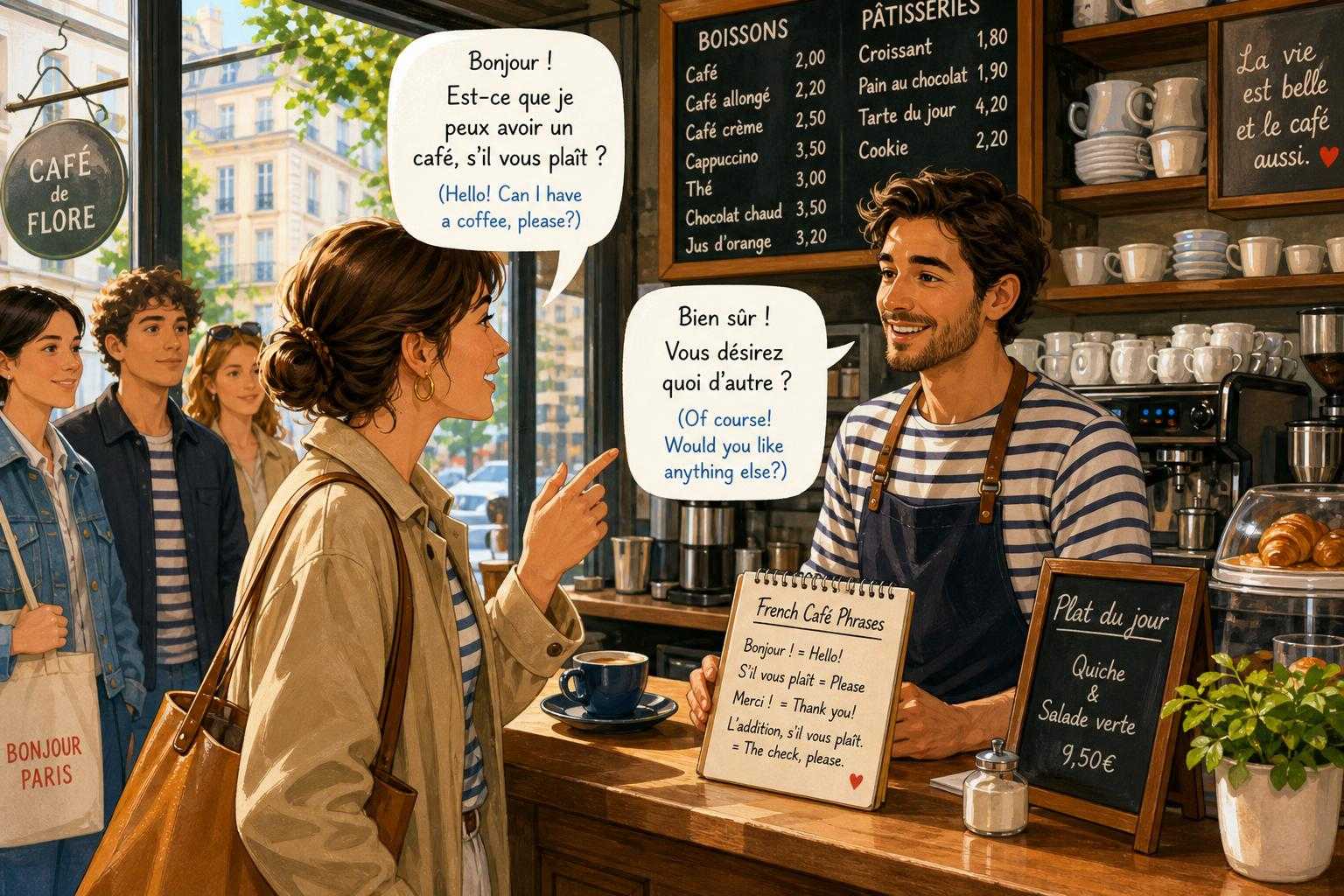
French greetings are simple, and using them well matters. A quick hello before asking a question makes the exchange feel smoother and more natural.
| French phrase | English meaning | When to use it |
|---|---|---|
| Bonjour | Hello / Good morning | Safe in most daytime situations |
| Bonsoir | Good evening | Use in the evening |
| Salut | Hi / Bye | Informal with people you know |
| Au revoir | Goodbye | Standard, polite goodbye |
| Merci | Thank you | Very common in every situation |
| S’il vous plaît | Please | Polite with strangers and service staff |
For travel, bonjour is the safest default. In shops, cafés, and hotels, it usually does the job. Save salut for people you know or for very casual situations.
Simple openers for real travel situations
Once you have said hello, it helps to have one short opener ready. These are the kinds of lines you can use with hosts, neighbors, or people you meet while waiting in line.
| French phrase | English meaning | Use |
|---|---|---|
| Ça va ? | How are you? / You good? | Very common, informal |
| Comment ça va ? | How’s it going? | Friendly and common |
| Comment allez-vous ? | How are you? | More formal or polite |
| Enchanté(e). | Nice to meet you. | Use when meeting someone new |
| Je suis content(e) de vous rencontrer. | I’m happy to meet you. | Polite and friendly |
| Je m’appelle… | My name is… | Useful for introductions |
A small but useful note: comment allez-vous ? sounds a bit more formal than comment ça va ?. If you are unsure, comment ça va ? is the easier one to remember.
If you want more core phrases for getting through daily errands, see this related guide: French Phrases for Everyday Survival (With Audio)
Keep the conversation going

You do not need long sentences to keep a small conversation alive. A few short follow-up phrases can help you respond naturally and show interest.
| French phrase | English meaning | Why it helps |
|---|---|---|
| Et vous ? | And you? | Perfect after answering a question |
| Oui. | Yes. | Simple, natural reply |
| Non. | No. | Short and clear |
| D’accord. | Okay. | Shows you understand |
| Ah bon ? | Oh really? | Good for reacting with interest |
| C’est sympa ! | That’s nice! | Friendly, positive reaction |
If someone says they are from the area, you can reply with Ah bon ? or C’est sympa !. These are easy, natural reactions that keep things warm without sounding forced.
Useful mini-exchanges you can copy
Here are a few short exchanges that fit real travel encounters. You can use them almost as-is.
| Situation | French | English |
|---|---|---|
| Meeting a host | Bonjour, enchanté(e). | Hello, nice to meet you. |
| Answering a greeting | Ça va, merci. Et vous ? | I’m fine, thanks. And you? |
| Meeting a neighbor | Bonjour. Je m’appelle… | Hello. My name is… |
| Ending a chat | Au revoir, bonne journée ! | Goodbye, have a nice day! |
| Casual thanks | Merci beaucoup. | Thank you very much. |
A simple pattern to remember
A very practical pattern is: greeting + name + small question. For example: Bonjour, je m’appelle Marie. Et vous ? This works well in many everyday introductions.
Polite phrases that sound natural
Politeness in French is often about using the right register, not memorizing a lot of special grammar. These short phrases are enough for most travel encounters.
| French phrase | English meaning | Best use |
|---|---|---|
| S’il vous plaît | Please | With strangers, staff, or anyone you do not know |
| Merci | Thanks | Everyday politeness |
| Merci beaucoup | Thank you very much | A warmer thank you |
| Pardon | Sorry / Excuse me | To get attention or apologize lightly |
| Excusez-moi | Excuse me | Polite when approaching someone |
| Bonne journée | Have a nice day | Friendly goodbye during the day |
For shops, cafés, and hotels, a short bonjour plus s’il vous plaît and merci is already enough to sound considerate.
A few reactions for everyday small talk
When someone talks to you, a friendly reaction is often enough. You do not need a full answer every time.
- Oui, merci. — Yes, thanks.
- Pas mal. — Not bad.
- Très bien. — Very good.
- Ça va bien. — I’m doing well.
- Je ne parle pas très bien français. — I don’t speak French very well.
That last phrase is especially useful if you want to lower expectations kindly. Most people will then slow down, switch to simpler language, or help you move the exchange forward.
Quick recap
If you remember only a few things, make them these: say bonjour, use merci and s’il vous plaît, and keep one follow-up ready like et vous ?. That is enough to handle many friendly travel encounters with confidence.