Japanese for a Kyoto Tea Workshop: Watch, Ask, and Make Matcha
In a Kyoto matcha workshop, watch the teacher prepare a bowl before you pick up a whisk. If you aren’t sure which tool is yours, ask この茶筅を使ってもいいですか。 Kono chasen o tsukatte mo ii desu ka? — “May I use this tea whisk?” It gives the teacher a chance to show you the right one.
These polite, standard Japanese lines follow an introductory session such as Kyoto Yoshitsugu’s matcha trial course. Its site describes a 45-minute visit: an Urasenke teacher prepares and serves tea, then guests try making their own. This article is a practice guide, not a transcript of that teacher or a booking guide. Check the current session details with the venue before you go.
Four lines for the workshop
Keep these lines beside the bowl. The first lets the teacher know you’re new; the others help you handle the tools and a missed demonstration.
| Japanese and pronunciation | Meaning |
|---|---|
| 初めてです。よろしくお願いします。 Hajimete desu. Yoroshiku onegai shimasu. | It’s my first time. Please guide me. |
| この茶筅を使ってもいいですか。 Kono chasen o tsukatte mo ii desu ka? | May I use this tea whisk? |
| もう一度見せてください。 Mō ichido misete kudasai. | Please show me again. |
| こうですか。 Kō desu ka? | Like this? |
The bar over ō in mō and kō means you hold that vowel longer. Romanization helps you start, but it can’t replace hearing a teacher speak. This page has no inline audio because a suitable Japanese voice and the resulting clips haven’t been checked by ear.
Know which kind of tea session you booked
Kyoto Yoshitsugu calls this a trial course, with an introduction to tea-ceremony etiquette and a chance to prepare matcha yourself. It isn’t the same commitment as ongoing instruction in chadō, the way of tea. The Urasenke school publishes progressive guides to tea procedures and guest practice; a first workshop gives you a small, guided part of that work. Follow the teacher’s sequence instead of treating a phrase card as a set of universal ceremony rules.
A tea workshop also differs from buying a ready-made bowl at a temple or café. Kyoto’s official visitor service points out that some places serve matcha without a tea ceremony. Check whether your booking includes watching a demonstration, preparing tea, or only drinking it.
Watch first, then ask about a tool
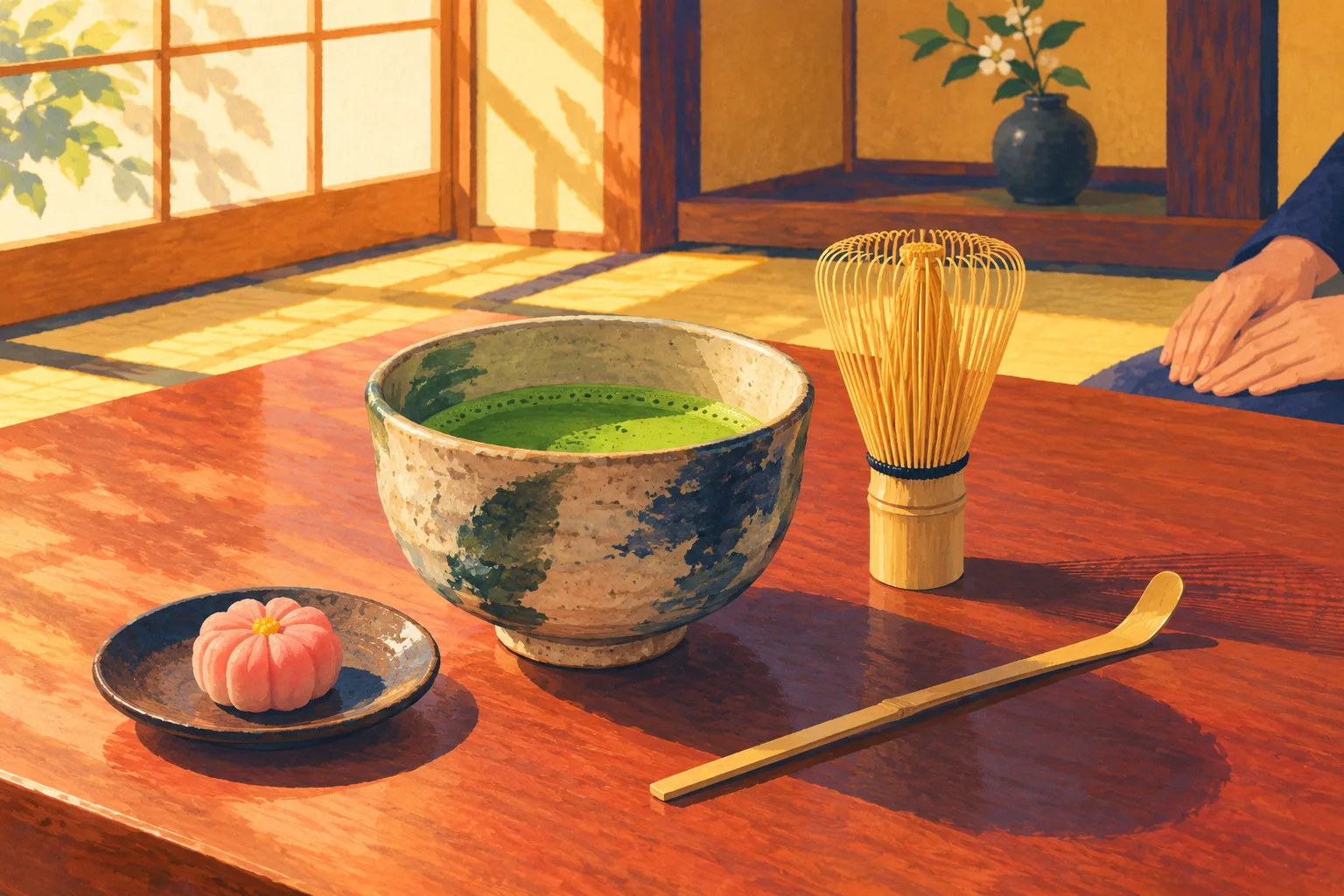
Three nouns help at the table: 茶碗 chawan is the tea bowl, 茶筅 chasen is the bamboo whisk, and 茶杓 chashaku is the scoop for powdered tea. Urasenke’s tea-utensil guide names these tools and explains the whisk’s job. You don’t need every tool name to join in; point to the one you mean.
Before picking up a whisk or bowl that the teacher hasn’t handed to you, point and ask この茶筅を使ってもいいですか。 The Japan Foundation’s lesson on asking permission models the same V-te mo ii desu ka pattern with an object. はい、どうぞ。 Hai, dōzo is a possible “Yes, go ahead”; wait for the teacher’s actual answer or gesture.
Follow the demonstration
Watch the teacher use the whisk before trying to copy the movement. If you missed the motion, say すみません。もう一度見せてください。 Sumimasen. Mō ichido misete kudasai. — “Sorry. Please show me again.” A Japanese government training dialogue uses that exact request after a practical demonstration. Your teacher can show the motion again, at a pace that suits the class.
When it’s your turn, try the movement and ask こうですか。 Kō desu ka? — “Like this?” The Japan Foundation uses the same short check after someone shows how to handle food. Let your teacher correct the grip or pace; don’t assume one whisking count or bowl position works across classes and tea schools.
A short exchange to practise
This imagined exchange follows a demonstration and tool handover. It shows possible replies, not a script Kyoto Yoshitsugu promises to use.
- You: 初めてです。よろしくお願いします。 Hajimete desu. Yoroshiku onegai shimasu. — It’s my first time. Please guide me.
- Teacher: こちらの茶碗を使ってください。 Kochira no chawan o tsukatte kudasai. — Please use this bowl.
- You: この茶筅を使ってもいいですか。 Kono chasen o tsukatte mo ii desu ka? — May I use this whisk?
- Teacher: はい、どうぞ。 Hai, dōzo. — Yes, go ahead.
- You: すみません。もう一度見せてください。 Sumimasen. Mō ichido misete kudasai. — Sorry. Please show me again.
- Teacher: はい。こうです。 Hai. Kō desu. — Yes. Like this.
- You: こうですか。 Kō desu ka? — Like this?
- Teacher: はい、そうです。 Hai, sō desu. — Yes, that’s it.
- You: ありがとうございます。 Arigatō gozaimasu. — Thank you.
When you miss the answer
If the words come too fast, say もう少し、ゆっくり言ってください。 Mō sukoshi, yukkuri itte kudasai. — “Please say it a little more slowly.” The Japan Foundation’s beginner lesson teaches that request. For a hand movement, ask to see it again and point to the whisk: a slower spoken explanation may still leave the motion unclear.
Thank the teacher with ありがとうございます。 Arigatō gozaimasu. A Kyoto Japanese speaker review of the complete practice exchange remains pending. Before a real class, practise asking before touching the whisk and asking to see the movement again. For another Kyoto encounter with staff-facing Japanese and a question about permission, see our Kyoto temple visit guide.