Ordering Breakfast in Beijing: Mandarin for a Fast Counter
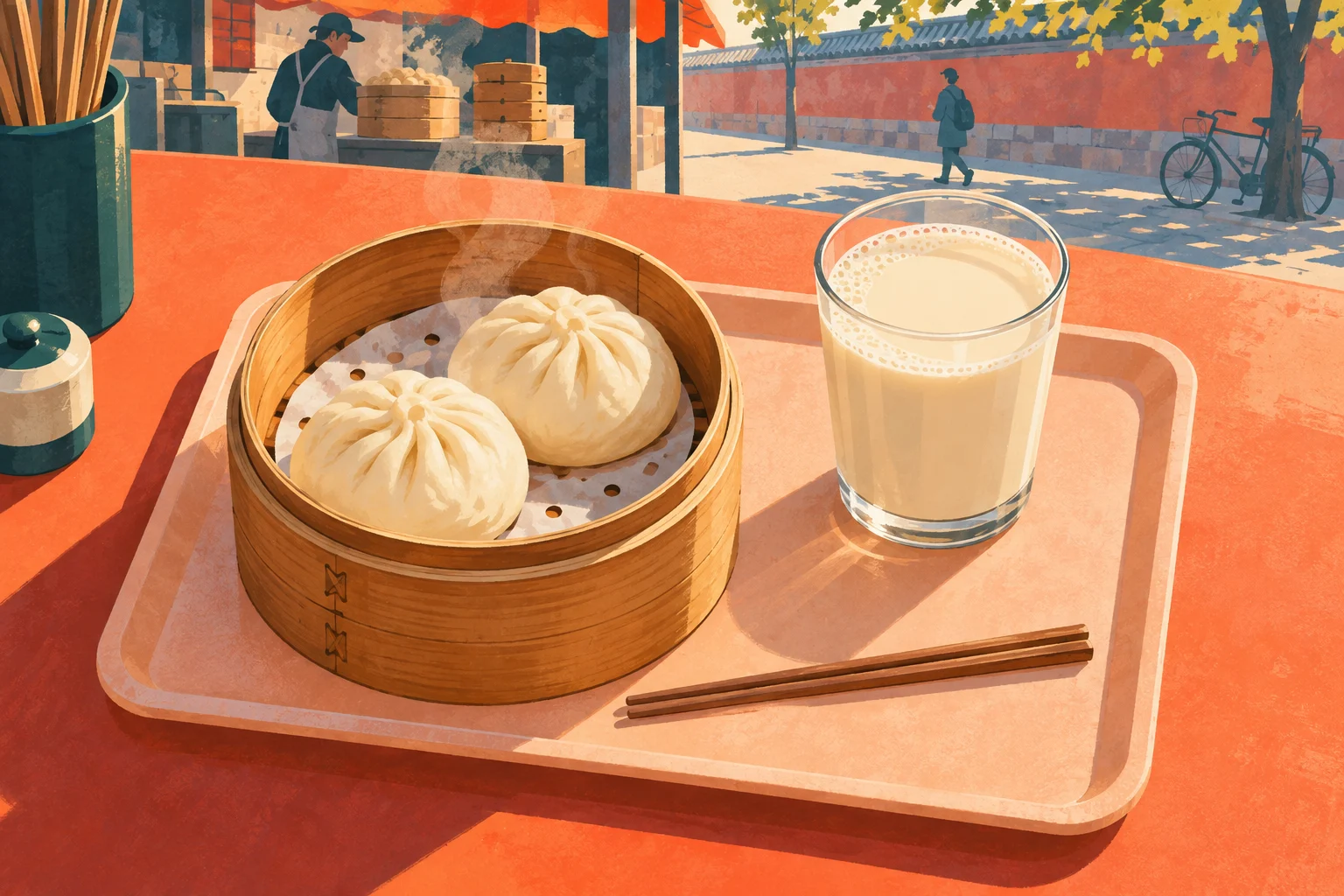
At a busy Beijing breakfast counter, get your order out in one line: 我要两个包子,一杯豆浆。 Wǒ yào liǎng ge bāozi, yì bēi dòujiāng. That asks for two steamed buns and a cup of soy milk. Then listen for the question about eating there or taking it away.
The four lines to keep on your phone
- 你好。 Nǐ hǎo. — Hello.
- 我要两个包子,一杯豆浆。 Wǒ yào liǎng ge bāozi, yì bēi dòujiāng. — I’d like two steamed buns and a cup of soy milk.
- 带走。 Dàizǒu. — To take away.
- 一共多少钱? Yígòng duōshao qián? — How much is it altogether?
These are standard mainland Mandarin examples, written in simplified characters. Beijing has many ways of speaking, and counter staff may use shorter wording. You can say the complete line even when the reply comes back fast.
Choose what you can see
Point to the buns as you say 包子 bāozi. The word names a steamed filled bun; it doesn’t tell you what’s inside. 豆浆 dòujiāng is soy milk. A 2025 Beijing Daily report carried by the city’s tourism site describes buns and soy milk at a Beijing breakfast counter. Stock and fillings still depend on the stall in front of you.
In 两个包子 liǎng ge bāozi, 两 liǎng is the form of “two” used before a counting word, and 个 ge does that counting job here. 一杯豆浆 yì bēi dòujiāng means one cup of soy milk. Keep the numbers clear; a finger gesture can back them up.
Answer the takeaway question
Staff may ask 在这里吃还是带走? Zài zhèlǐ chī háishi dàizǒu? — “Eat here or take away?” Both the question and the short replies appear in Rosetta Stone’s Mandarin course material.
- 在这里吃。 Zài zhèlǐ chī. — Eat here.
- 带走。 Dàizǒu. — Take away.
If the stall only hands out food to go, you won’t hear that question. If it has seats, you may. Don’t wait for it before ordering; add 带走 to your order when you already know your answer.
Ask the total, then check how to pay
Ask 一共多少钱? Yígòng duōshao qián? for the total. If you don’t know which payment method the counter takes, ask 怎么付款? Zěnme fùkuǎn? — “How do I pay?” Pointing at the displayed amount can help you confirm what you heard.
Beijing’s visitor payment guidance says mobile payment is common and merchants must accept RMB cash. That doesn’t guarantee your foreign card or phone wallet will work at a particular stall. Check your payment setup before you join the queue.
A short exchange at the counter
- You: 你好,我要两个包子,一杯豆浆。 Nǐ hǎo, wǒ yào liǎng ge bāozi, yì bēi dòujiāng. — Hello, I’d like two steamed buns and a cup of soy milk.
- Staff: 在这里吃还是带走? Zài zhèlǐ chī háishi dàizǒu? — Eat here or take away?
- You: 带走。 Dàizǒu. — Take away.
- Staff: 一共十八块。 Yígòng shíbā kuài. — Eighteen yuan altogether.
- You: 怎么付款? Zěnme fùkuǎn? — How do I pay?
The price in this practice exchange is an invented example, not a current price for a Beijing breakfast. You may hear 块 kuài for yuan in everyday speech. Read the amount shown at the counter before paying.
If you miss the reply
Say 不好意思,请说慢一点。 Bù hǎoyìsi, qǐng shuō màn yìdiǎn. — “Sorry, please speak a little more slowly.” The slower-speech request also appears in New Zealand’s Chinese-language assessment guide. For a number, you can also show the screen and ask the staff member to point.
For pronunciation, keep the tone marks with each pinyin line when you practise. Bāo stays high and level; zi is light. Liǎng dips before the short ge. Listen to a mainland Mandarin speaker say your order before the trip, and ask them to check your tones.
Start with the order and the takeaway answer. Once those come easily, practise the staff question aloud and answer it without reading. For another food-counter exchange in traditional characters, see our Taipei night-market Mandarin guide; its setting and script differ from this Beijing example.