Finding Your Way in Shanghai: Mandarin for Metro Exits and Addresses
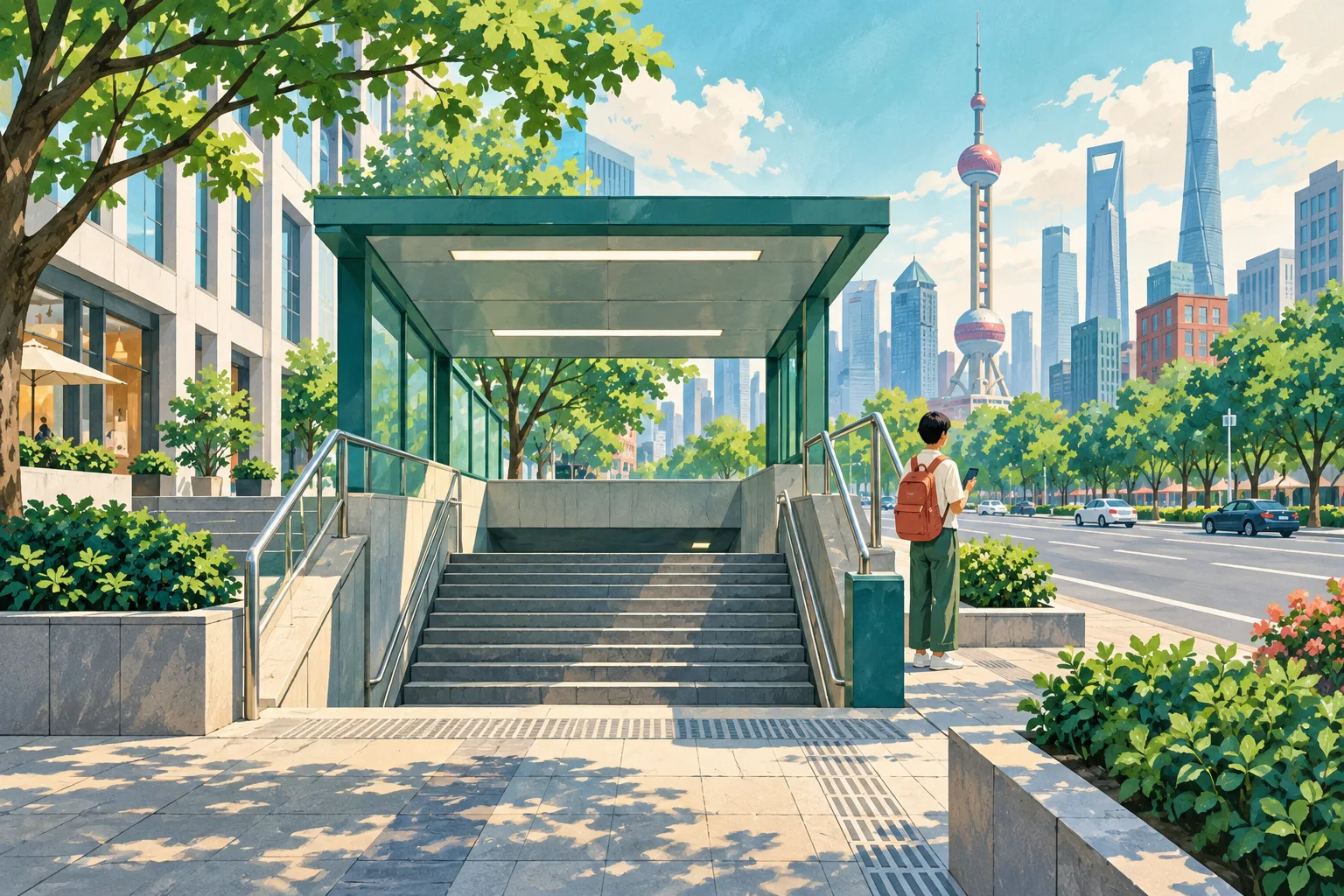
For Shanghai Museum East, the museum directs visitors to Metro Line 2, 上海科技馆站, and Exit 8. The station name means Shanghai Science and Technology Museum; your destination is 上海博物馆东馆, Shanghai Museum East. Keep both names on your phone so you can check the train and the exit without mixing up the two museums.
These examples use standard mainland Mandarin in simplified characters, with tone-marked pinyin. They help you ask a station worker or a passerby a short question; read the live signs and your route map too.
Five lines to keep on your phone
Start with 请问 qǐngwèn (“excuse me” or “may I ask”) when you stop someone for directions. Point to the station name or address as you speak.
| Say this | Meaning |
|---|---|
| 请问,这是二号线吗? Qǐngwèn, zhè shì èr hào xiàn ma? | Excuse me, is this Line 2? |
| 这趟车到上海科技馆站吗? Zhè tàng chē dào Shànghǎi Kējìguǎn Zhàn ma? | Does this train go to Shanghai Science and Technology Museum station? |
| 去上海博物馆东馆,从几号口出? Qù Shànghǎi Bówùguǎn Dōngguǎn, cóng jǐ hào kǒu chū? | Which exit should I use for Shanghai Museum East? |
| 请问,这是世纪大道吗? Qǐngwèn, zhè shì Shìjì Dàdào ma? | Excuse me, is this Century Avenue? |
| 不好意思,可以说慢一点吗? Bù hǎoyìsi, kěyǐ shuō màn yìdiǎn ma? | Sorry, could you speak a little more slowly? |
Match the line and the station
Shanghai Museum East’s current directions name Line 2, 上海科技馆站, and Exit 8. On a metro sign, 2号线 èr hào xiàn means Line 2; 站 zhàn means station. Check the train’s destination and station list before boarding: finding Line 2 alone doesn’t tell you which direction to ride.
If a platform or train label leaves you unsure, ask 这趟车到上海科技馆站吗? Zhè tàng chē dào Shànghǎi Kējìguǎn Zhàn ma? A brief 到 dào means “it does”; 不到 bú dào means “it doesn’t.” Look again at the display if you hear the second answer.
Ask for the exit before going upstairs
At 上海科技馆站, look for 出口 chūkǒu (“exit”) and 8号口 bā hào kǒu (“Exit 8”). The museum lists Exit 8 for visitors arriving on Line 2. Confirm it with staff if a passage is closed or the signs have changed.
This practice exchange follows the museum’s published route. The staff reply is an example, not a live service announcement:
| Exchange | Meaning |
|---|---|
| You: 请问,去上海博物馆东馆,从几号口出? Qǐngwèn, qù Shànghǎi Bówùguǎn Dōngguǎn, cóng jǐ hào kǒu chū? | Excuse me, which exit for Shanghai Museum East? |
| Staff: 从八号口出。 Cóng bā hào kǒu chū. | Use Exit 8. |
| You: 八号口,对吗? Bā hào kǒu, duì ma? | Exit 8, right? |
| Staff: 对。 Duì. | Right. |
Show the written address outside
Save this address from the museum’s Chinese visitor page: 上海市浦东新区世纪大道1952号 — No. 1952 Century Avenue, Pudong New Area, Shanghai. 世纪大道 Shìjì Dàdào is the road name; 1952号 identifies the building number. Show the complete Chinese address rather than trying to say the number over street noise.
The museum currently directs individual visitors to its B1 East Gate near 丁香路 Dīngxiāng Lù (Dingxiang Road). The formal Century Avenue address and the entrance you need aren’t the same instruction. If you’re outside and unsure, show the museum name and ask 请问,上海博物馆东馆怎么走? Qǐngwèn, Shànghǎi Bówùguǎn Dōngguǎn zěnme zǒu? — “Excuse me, how do I get to Shanghai Museum East?” The final 怎么走 zěnme zǒu asks how to reach the place you named.
If the reply comes too fast, use the slower-speech line in the first table. Then point at your saved map or the written address. Shanghai’s guide to Gaode Maps explains how its route view shows the station exit and the walk to a selected destination. Check the current route when you travel; an exit or passage may change.
What language this card covers
This is a standard Mandarin card, not a Shanghainese lesson. Shanghai’s city language overview describes local Wu speech and other varieties in daily life. Listen to the person helping you; don’t assume every reply will sound like the pinyin here.
The tone marks in èr hào xiàn and bā hào kǒu are pronunciation cues, not decoration. Keep the characters visible even if you practise the spoken line. There’s no inline audio here because an appropriate mainland Mandarin voice and its playback haven’t been checked by ear. For another short exchange in simplified characters, practise with our Beijing breakfast Mandarin guide.