Mandarin at a Singapore Hawker Centre: When It Helps and When It Doesn’t
At a Singapore hawker centre, the best opening is the language you and the person at the stall can both use. Mandarin can help at a Mandarin-speaking counter. English may be quicker at the next one. Watch the menu and listen to the greeting before you choose.
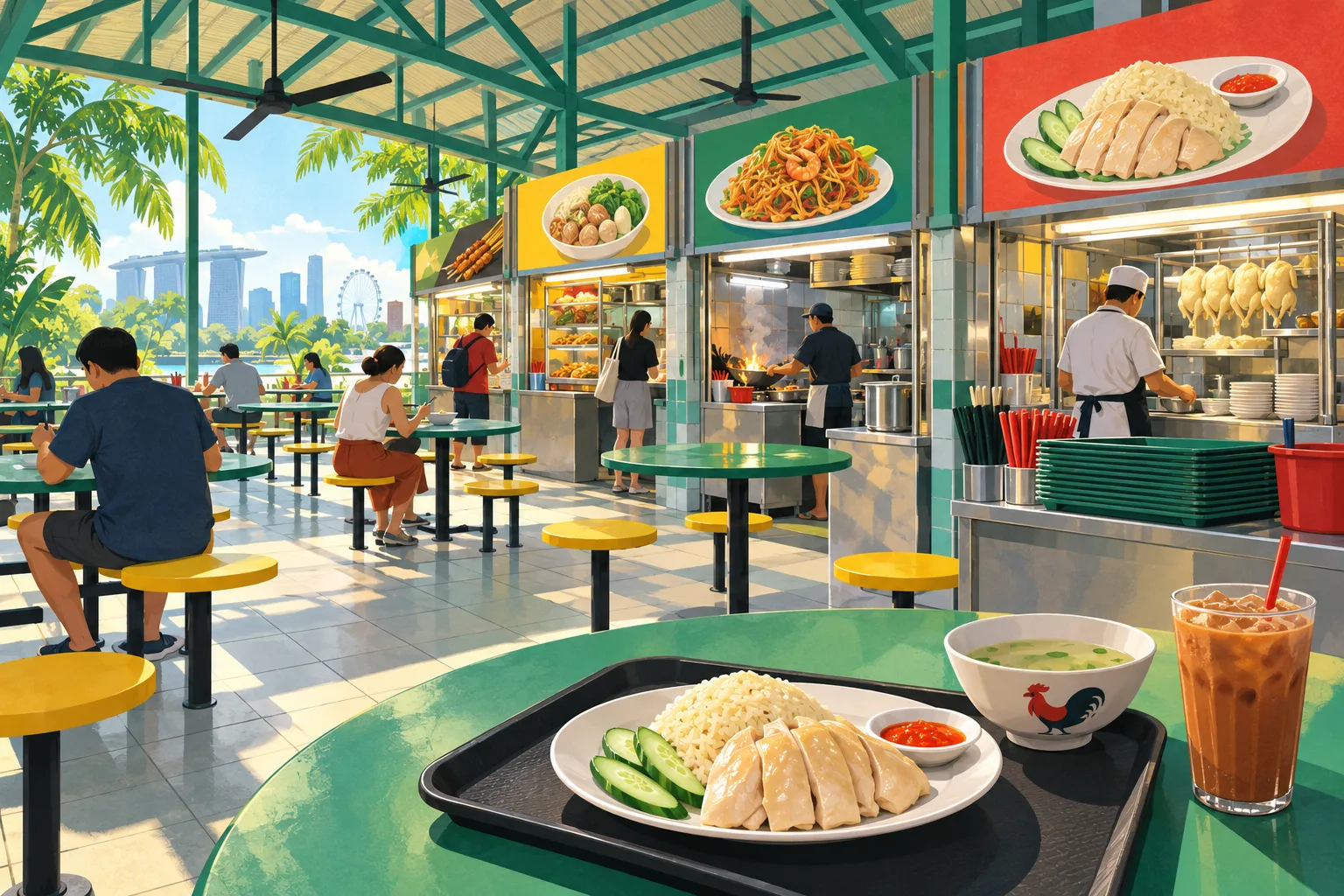
This card follows a chicken-rice order at Maxwell Food Centre. It gives you a short Singapore Mandarin exchange in simplified characters and tone-marked pinyin, then a way to switch when Mandarin doesn’t fit.
Six lines to keep on your phone
Use the Mandarin lines when the stallholder is speaking Mandarin with you. 请问 qǐngwèn is a polite way to start a question; 一份 yí fèn means one portion. The table uses short, ordinary requests rather than a formal restaurant script.
| Say this | Meaning |
|---|---|
| 请问,这个是什么? Qǐngwèn, zhège shì shénme? | Excuse me, what is this? Point to an item on the menu. |
| 我要一份鸡饭。 Wǒ yào yí fèn jīfàn. | I’d like one portion of chicken rice. |
| 在这里吃。 Zài zhèlǐ chī. | I’ll eat here. |
| 打包,谢谢。 Dǎbāo, xièxie. | Takeaway, thanks. |
| 不要辣椒,谢谢。 Bú yào làjiāo, xièxie. | No chilli, thanks. |
| 不好意思,可以说慢一点吗? Bù hǎoyìsi, kěyǐ shuō màn yìdiǎn ma? | Sorry, could you speak a little more slowly? |
Choose the language at the counter
Singapore has four official languages: Malay, Mandarin, Tamil and English. Its government guide for people moving to Singapore describes English as the default language spoken there. Chinese Singaporeans also speak other Chinese languages; the 2026 National Day Rally speech discusses both Mandarin and those languages. None of this tells you what an individual hawker prefers.
Read the menu, wait for the stallholder’s opening, and reply in a language you share. If you’re unsure, start in English: “Hi, one chicken rice, please.” If they speak Mandarin with you, use the lines above. If the reply comes in English, Malay, Tamil, Hokkien, Teochew, Cantonese or another language you don’t know, point to the dish and use English if it works for both of you. Don’t treat a person’s appearance or the food they cook as a language test.
The local Mandarin name for a hawker centre is 熟食中心 shúshí zhōngxīn, as recorded by Singapore’s Mandarin Council. Knowing the term helps you read about the place; you don’t need to announce it when you’re standing at a stall.
Order one plate, then answer the next question
Singapore’s tourism board identifies chicken rice at Maxwell Food Centre, so it’s a concrete dish for this practice scene. Check the stall’s current menu before ordering; the exchange below is an example, not a transcript from a particular hawker.
| Exchange | Meaning |
|---|---|
| You: 你好,我要一份鸡饭。 Nǐ hǎo, wǒ yào yí fèn jīfàn. | Hello, I’d like one chicken rice. |
| Hawker: 在这里吃,还是打包? Zài zhèlǐ chī, háishi dǎbāo? | Eating here or takeaway? |
| You: 在这里吃。不要辣椒,谢谢。 Zài zhèlǐ chī. Bú yào làjiāo, xièxie. | Eating here. No chilli, thanks. |
| Hawker: 好,稍等。 Hǎo, shāo děng. | All right, wait a moment. |
打包 dǎbāo is especially worth recognising: the Singaporean Mandarin Database includes packing a newly ordered meal to eat elsewhere among its meanings. If you want to take the food away, answer 打包,谢谢。 Dǎbāo, xièxie. The database gives 外帶 as a Taiwan term; our Taipei night market guide uses that different setting.
If the hawker asks 要辣椒吗? Yào làjiāo ma? — “Do you want chilli?” — answer 要,谢谢。 Yào, xièxie. for yes, or 不要,谢谢。 Bú yào, xièxie. for no. Point to the sauce if the question is unclear. For an allergy, don’t rely on this short exchange: show a carefully translated written note and confirm ingredients directly with the stall.
If the answer gets away from you
Say 不好意思,可以说慢一点吗? Bù hǎoyìsi, kěyǐ shuō màn yìdiǎn ma? and listen for one choice at a time. You can also point to the menu and ask 这个吗? Zhège ma? — “This one?” If English is easier for both of you, switch to it. At a busy counter, a clear order and a quick check help more than stretching out a language lesson.
Practise the contrast between zài zhèlǐ chī and dǎbāo, then the slower-speech question. The pinyin marks tones, so say the syllables aloud while looking at the characters. This card has no inline audio because a Singapore Mandarin voice and its playback haven’t been checked by ear. A Singapore Mandarin speaker review of the full exchange is still pending.