Eating at an Osaka Counter: Japanese for Today’s Special
At a lunch counter in Osaka, look for 日替わり定食 higawari teishoku: a set meal that changes by day. Ask what today’s dish is before you order. If there’s a line, check where it starts; after you eat, ask where to settle the bill if the payment point isn’t clear.
This is a counter-meal exchange in polite, standard Japanese. One Shin-Osaka restaurant’s own site lists a changing daily set meal and counter seats, but its dish and service routine can change. Read the board at the place you enter. The sample replies below are practice lines, not today’s menu at that restaurant.
Five lines to keep on your phone
| Japanese and pronunciation | Meaning and moment |
|---|---|
| どこに並べばいいですか。 Doko ni narabeba ii desu ka? | Where should I line up? Ask only if the queue isn’t clear. |
| 今日の日替わり定食は何ですか。 Kyō no higawari teishoku wa nan desu ka? | What’s today’s daily set meal? |
| この料理には何が入っていますか。 Kono ryōri ni wa nani ga haitte imasu ka? | What’s in this dish? Point to the dish or menu line. |
| これを一つお願いします。 Kore o hitotsu onegai shimasu. | One of this, please. Point to your choice. |
| お会計、お願いします。 Okaikei, onegai shimasu. | The bill, please. |
These are courteous lines for speaking to staff, not words you need to say in a local accent. The Japan Foundation’s restaurant lesson teaches the menu terms 日替わり (“changes daily”) and 定食 (“set meal”), plus the bill request. The dish, sides, and price depend on the day’s board.
Find the line, then ask about the special
Start by looking for a queue or a staff member directing seats. If you can’t tell where to wait, say すみません、どこに並べばいいですか。 Sumimasen, doko ni narabeba ii desu ka? (“Excuse me, where should I line up?”). A Japanese queue guide gives the same question for an unclear line. At a restaurant, follow the staff’s direction; there may be no line at all.
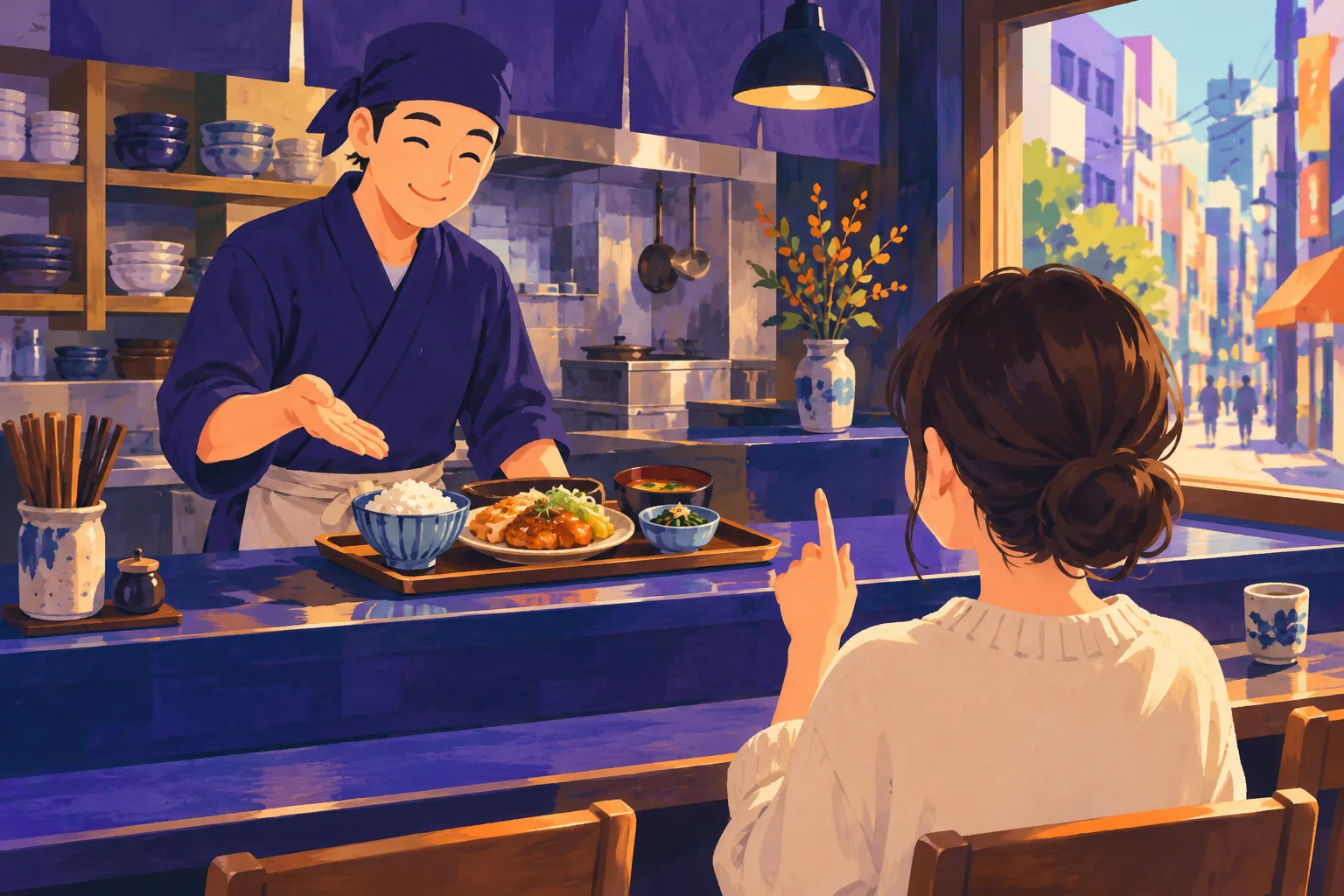
When you reach the counter or receive a menu, ask 今日の日替わり定食は何ですか。 Kyō no higawari teishoku wa nan desu ka? The short word higawari tells you the offering changes; it doesn’t name a specific dish. A reply may give a main ingredient or a dish name. Ask a second question before ordering if that answer leaves you unsure.
Check the contents, then order
Point to the meal and ask この料理には何が入っていますか。 Kono ryōri ni wa nani ga haitte imasu ka? The Japan Foundation’s ingredient lesson models 中に何が入ってますか (“What’s inside?”) and answers that name ingredients. If an ingredient could make you ill, have staff confirm the full ingredients and preparation in writing. This short question alone can’t establish that a meal is safe for an allergy.
Once you’ve chosen, point to the exact menu line and say これを一つお願いします。 Kore o hitotsu onegai shimasu. (“One of this, please.”) If the staff member asks ご注文、お決まりですか。 Gochūmon, okimari desu ka? (“Have you decided what to order?”), that order is your answer. The Japan Foundation’s restaurant dialogue uses the staff question; you don’t need to repeat its honorific wording back.
Hear both sides
Use this short exchange for practice. The fish dish is an example, not a current Osaka menu listing.
| At the counter | Meaning |
|---|---|
| You: 今日の日替わり定食は何ですか。 Kyō no higawari teishoku wa nan desu ka? | What’s today’s set meal? |
| Staff: 今日は魚の定食です。 Kyō wa sakana no teishoku desu. | Today it’s a fish set meal. |
| You: この料理には何が入っていますか。 Kono ryōri ni wa nani ga haitte imasu ka? | What’s in this dish? |
| Staff: 魚と野菜が入っています。 Sakana to yasai ga haitte imasu. | It has fish and vegetables. |
| You: これを一つお願いします。 Kore o hitotsu onegai shimasu. | One of this, please. |
Pay and handle a fast reply
When you’re ready to leave, say お会計、お願いします。 Okaikei, onegai shimasu. The Japan Foundation’s restaurant dialogue uses that request at a cashier. Some places bring a bill to you; others send you to a register or take payment earlier. Check the venue’s signs and follow the staff member rather than assuming one routine.
If you miss a dish name, ingredient, or total, say すみません。もう少し、ゆっくり言ってください。 Sumimasen. Mō sukoshi, yukkuri itte kudasai. (“Sorry. Please say it a little more slowly.”) The Japan Foundation’s beginner lesson teaches the slower-speech request. Show the menu line or written amount to make the repeat precise.
Hear Osaka speech without copying it
Osaka’s official visitor guide explains that local speech has words and nuances that differ from standard Japanese. You may hear おおきに ōkini as a thank-you, including when a restaurant sees a customer off. Recognise it as something you might hear; ありがとうございます arigatō gozaimasu is a clear, polite reply you can use yourself.
For pronunciation, keep the long vowels in kyō, ryōri, mō, and ōkini longer than the neighbouring short vowels. The romanization helps you read, but it doesn’t teach the whole rhythm. Listen to the Japan Foundation’s restaurant recordings before you practise with a speaker. This page has no inline recording because an Osaka Japanese voice and its playback haven’t yet been checked by ear.
Practise asking what today’s set meal is, listening for the dish, and pointing to your choice. If you’d like a different restaurant exchange, our Tokyo izakaya guide covers seating, ordering, and a bill request in a bar setting.