Mandarin for Chongqing Hot Pot: Heat, Ingredients, and Sharing a Table
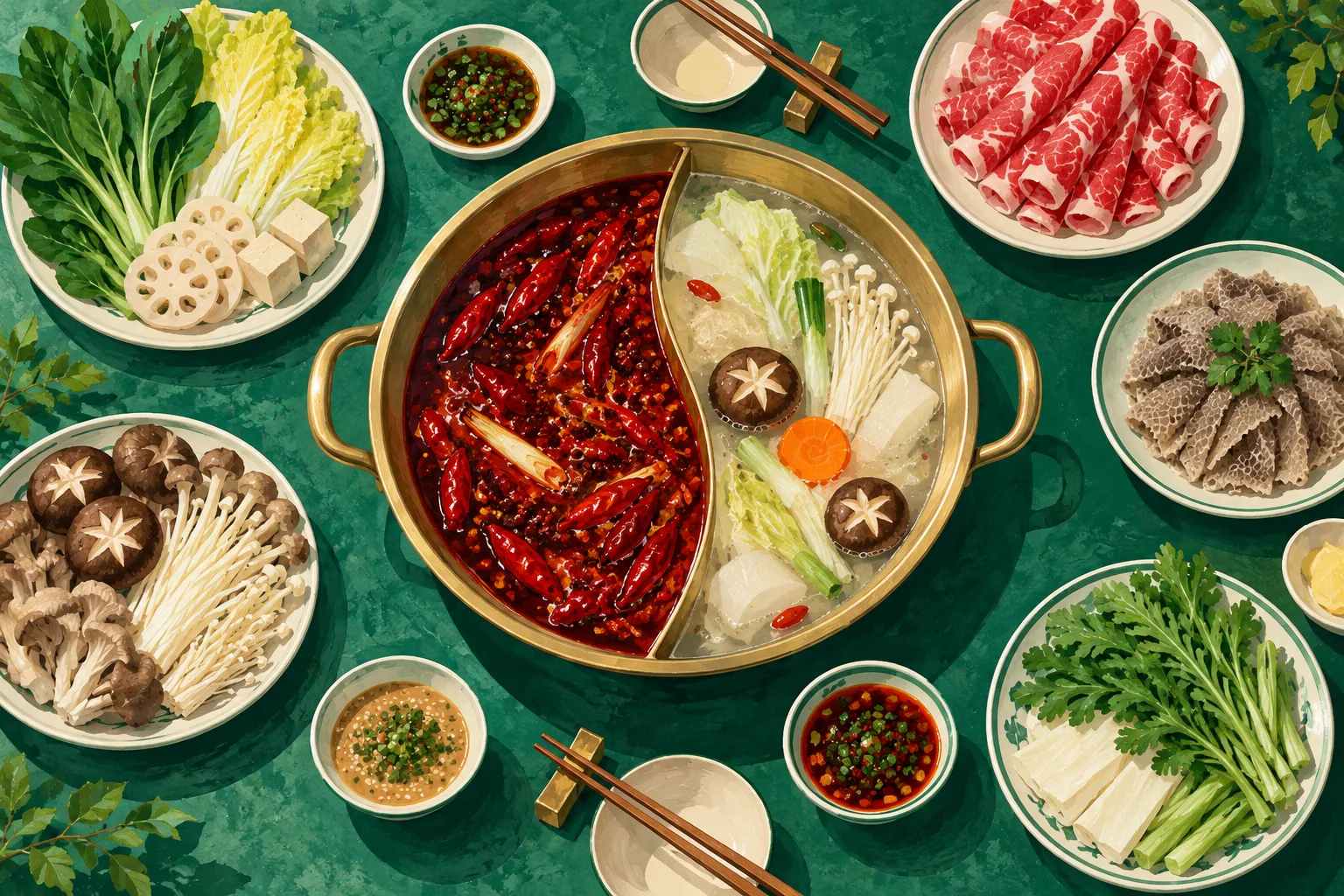
At a Chongqing hot pot table, choose the broth with your companions before ordering dishes to cook in it. If you want a divided pot, ask 请问,有鸳鸯锅吗? Qǐngwèn, yǒu yuānyāngguō ma? — “Excuse me, do you have a split pot?” Then check what each side contains. The lines here use standard mainland Mandarin in simplified characters, not Chongqing dialect.
Chongqing’s culture and tourism office describes red broth, split pots, heat choices and máodù (beef tripe) as part of the city’s hot pot offering. The exact broths, dishes and portions depend on the restaurant in front of you. Check its menu before you use the example order below.
Four lines for the table
These are polite staff-facing questions. Qǐngwèn opens a question; zhè fèn means “this portion” when you point to a dish on the menu.
| Say | Meaning |
|---|---|
| 请问,有鸳鸯锅吗? Qǐngwèn, yǒu yuānyāngguō ma? | Excuse me, do you have a split pot? |
| 红汤可以选微辣吗? Hóngtāng kěyǐ xuǎn wēilà ma? | Can we choose the low-chilli level for the red broth? |
| 这份够两个人吃吗? Zhè fèn gòu liǎng ge rén chī ma? | Is this portion enough for two people? |
| 这个要煮多久? Zhège yào zhǔ duōjiǔ? | How long should this cook? |
Choose the broth together
鸳鸯锅 yuānyāngguō is a divided pot with two broths. 红汤 hóngtāng is red broth; 清汤 qīngtāng is clear broth. A split pot lets tablemates choose different broths, but its pale side isn’t automatically vegetarian, free of chilli, or safe for an allergy. Ask 另一边是什么汤底? Lìng yì biān shì shénme tāngdǐ? — “What’s the broth on the other side?”
The tourism office lists 微辣 wēilà (lower chilli heat), 中辣 zhōnglà (medium) and 特辣 tèlà (extra hot). “Lower” is relative to the restaurant’s other choices; it doesn’t mean no chilli. 麻 má names the tingling, numbing effect associated with Sichuan pepper, while 辣 là names chilli heat. If a broth’s ingredients matter to you, ask 这个锅底有牛油吗? Zhège guōdǐ yǒu niúyóu ma? — “Does this broth base have beef tallow?” In this hot pot context, niúyóu means beef fat.
Order dishes for the shared pot
You order a broth and then dishes of uncooked ingredients. Point to the menu and say 我们要一份毛肚,一份蘑菇。 Wǒmen yào yí fèn máodù, yí fèn mógu. — “We’d like one portion of beef tripe and one portion of mushrooms.” 毛肚 is a named Chongqing hot pot ingredient; 一份 yí fèn is one portion, whose size the menu or staff must settle.
Before you add another plate for two people, ask 这份够两个人吃吗? A staff member might answer 够。 Gòu. (“Yes, it’s enough”) or 不够。 Bú gòu. (“No, it isn’t.”) That answer helps you decide whether to order more. Let your companions choose with you; you share the pot, but nobody has to take every ingredient.
Ask how long to cook it
Point to one uncooked plate and ask 这个要煮多久? Don’t memorise a universal number of seconds for tripe, meat or mushrooms: thickness and preparation change the answer. Chongqing’s market regulator advises diners to cook hot pot ingredients thoroughly, especially tripe and meat, and to let hot food cool before eating. Its food safety guidance also says to keep raw and cooked food separate and wait for broth to boil again after topping it up. Ask staff about the actual item and follow their cooking guidance.
For a serious allergy or strict food restriction, this phrase card can’t confirm a soup base or prevent contact between the two sides of a shared pot. Bring a carefully translated written note, check ingredients and preparation directly with staff, and choose another meal if they can’t confirm them.
A short exchange to practise
This is a practice conversation, not a transcript or a promise about a particular menu. The staff reply tells the diner to wait for the broth to boil and cook the food through; it doesn’t give a fixed cooking time.
- You: 请问,有鸳鸯锅吗? Qǐngwèn, yǒu yuānyāngguō ma? — Do you have a split pot?
- Staff: 有,红汤和清汤。 Yǒu, hóngtāng hé qīngtāng. — Yes, red broth and clear broth.
- You: 红汤可以选微辣吗? Hóngtāng kěyǐ xuǎn wēilà ma? — Can we choose the lower-chilli level for the red broth?
- Staff: 可以。您要点什么菜? Kěyǐ. Nín yào diǎn shénme cài? — Yes. What dishes would you like?
- You: 我们要一份毛肚,一份蘑菇。这份毛肚够两个人吃吗? Wǒmen yào yí fèn máodù, yí fèn mógu. Zhè fèn máodù gòu liǎng ge rén chī ma? — One portion of tripe and one of mushrooms. Is the tripe enough for two?
- Staff: 够。 Gòu. — Yes.
- You: 这个要煮多久? Zhège yào zhǔ duōjiǔ? — How long should this cook?
- Staff: 等锅开了再下。煮熟了再吃。 Děng guō kāi le zài xià. Zhǔ shú le zài chī. — Wait for the pot to boil before adding it. Cook it through before eating.
If you miss a reply
Say 不好意思,可以说慢一点吗? Bù hǎoyìsi, kěyǐ shuō màn yìdiǎn ma? — “Sorry, could you speak a little more slowly?” Point to the broth or dish you mean. If cooking time is still unclear, ask staff to show you when it’s ready rather than guessing.
The tone marks in yuānyāngguō, wēilà and máodù help you practise; a Chinese-language lesson on a municipal government site confirms the split-pot and heat terms. This article has no inline audio because a suitable mainland Mandarin voice hasn’t been checked by ear against this exchange. A Chongqing Mandarin speaker review of the full script remains pending.
Chongqing residents also use local speech, and a restaurant reply may sound different from these standard Mandarin lines. Practise the broth choice and the cooking-time question first; keep the characters on your phone for the menu. For another mainland Mandarin food order using yí fèn and a slower-speech request, see our Beijing breakfast counter guide.