
Japanese When Your Tokyo Train Changes or Stops
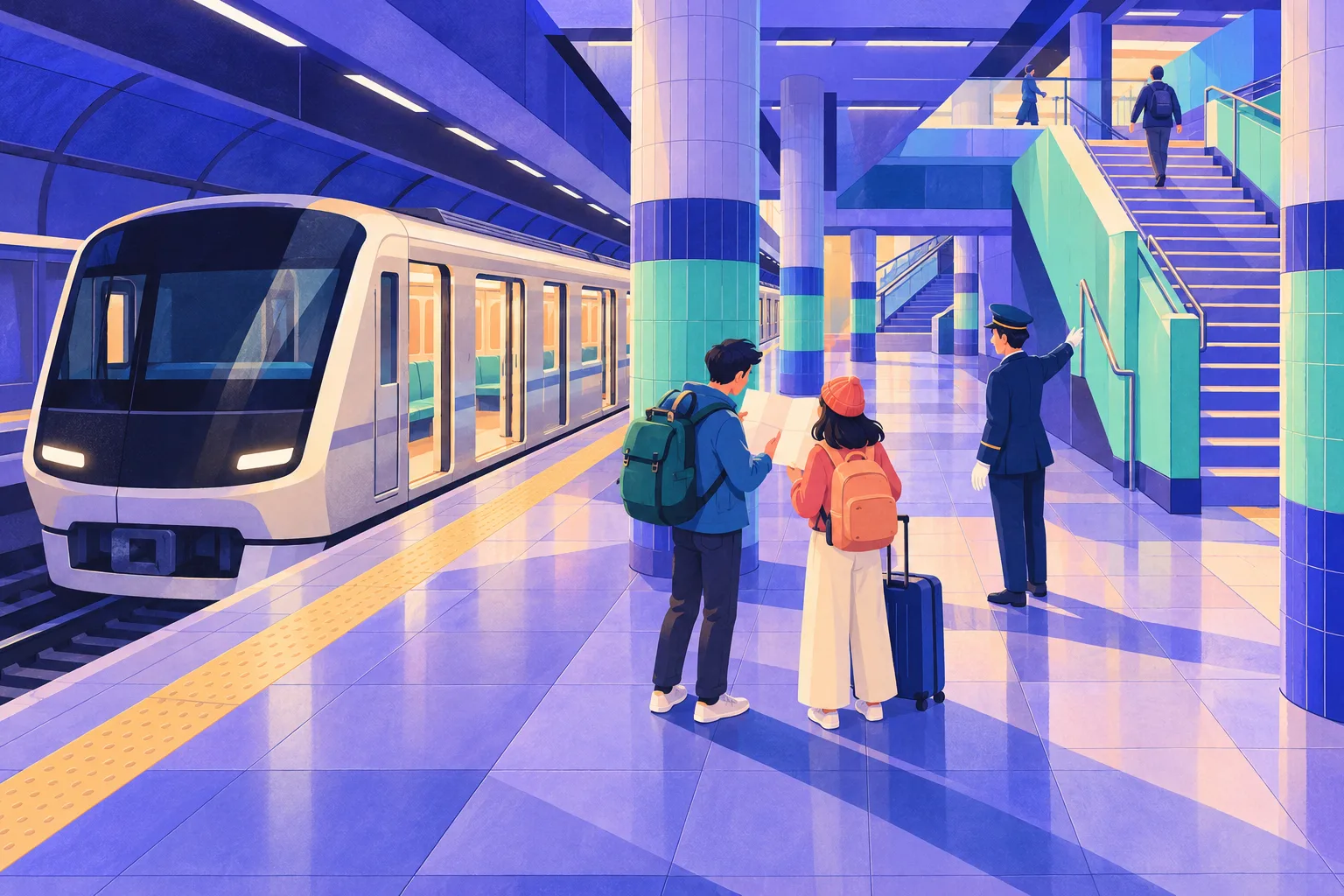
You’re at Tokyo Metro’s Ginza Station, bound for Ueno, when the train information changes. Check the line name first. Then find out whether trains are running late or have stopped, ask about another route, and confirm the direction and platform before you board.
This is a practice scene in polite standard Japanese, not a report of a current disruption. As checked on 22 October 2026, Tokyo Metro’s Ginza Line serves Ginza (G09) and Ueno (G16); its Hibiya Line also serves Ginza (H09) and Ueno (H18). Whether the Hibiya Line is a workable route on your day depends on its live service and the station’s directions.
Six lines to keep on your phone
Show the station names to a staff member as you speak. The romanization below helps you start the question; the Japanese script lets staff read it if the station is noisy.
| Japanese and how to say it | Meaning |
|---|---|
| すみません、上野に行きたいです。 Sumimasen, Ueno ni ikitai desu. | Excuse me, I’d like to go to Ueno. Start with your destination. |
| これは銀座線ですか。 Kore wa Ginza-sen desu ka? | Is this the Ginza Line? Point to the train or line display. |
| 銀座線は遅れていますか。 Ginza-sen wa okurete imasu ka? | Is the Ginza Line delayed? |
| 銀座線は運転を見合わせていますか。 Ginza-sen wa unten o miawasete imasu ka? | Is Ginza Line service suspended? |
| 日比谷線で上野に行けますか。 Hibiya-sen de Ueno ni ikemasu ka? | Can I get to Ueno on the Hibiya Line? |
| 上野方面は何番線ですか。 Ueno hōmen wa nan-bansen desu ka? | Which platform is for the Ueno direction? |
Read the change before you choose a route
Look for the line name and station code together. Tokyo Metro explains that a station code combines a letter for the line with a number, so Ginza’s G09 and H09 refer to different lines at the same station. The official subway map shows how the codes work.
遅延 (chien) means a delay. 運転見合わせ (unten miawase) means service has stopped for now on the stated line or section. A changed destination or a short-running train can also alter where a train takes you. Check the affected section and the train’s current destination, not just the line colour. Tokyo Metro says it may change train destinations when service is disrupted.
Tokyo Metro’s Ginza Line service page has current notices and a refresh control. As of 22 October 2026, Tokyo Metro says its site and Tokyo Metro my! app publish line-by-line operating information when a delay of at least five minutes occurs or is expected. The display can differ from conditions at the platform, so listen to staff and check again before boarding.
Ask about the other line, then the platform
In this Ginza-to-Ueno example, the Hibiya Line runs through both stations when service is normal. Ask 日比谷線で上野に行けますか。 before you follow its signs. If staff say it’s running, ask 日比谷線のホームはどこですか。 Hibiya-sen no hōmu wa doko desu ka? (“Where is the Hibiya Line platform?”). Once there, confirm 上野方面は何番線ですか。 The nan-bansen ending means “which numbered platform?”
Before stepping onto a train, you can ask この電車は上野に止まりますか。 Kono densha wa Ueno ni tomarimasu ka? (“Does this train stop at Ueno?”). This last check matters when a train’s destination has changed or staff have sent people to a different platform.
You may see 振替輸送 (furikae yusō), an arranged substitute route during some disruptions. Don’t read it as a promise of a free ride on any line. Tokyo Metro’s explanation says the operator announces when it offers substitute transport. Its fare FAQ says a trip paid from an IC card’s stored balance doesn’t qualify for that arrangement, while travel within the valid section of an IC commuter pass may. Show staff your ticket or pass and ask which route and fare apply before you leave the gate.
A short exchange with station staff
This example assumes staff have confirmed that the Hibiya Line is running. It doesn’t describe a live incident or promise a particular platform.
- You: すみません、上野に行きたいです。銀座線は運転を見合わせていますか。
Sumimasen, Ueno ni ikitai desu. Ginza-sen wa unten o miawasete imasu ka?
Excuse me, I’d like to go to Ueno. Is the Ginza Line suspended? - Staff: はい、今は運転を見合わせています。
Hai, ima wa unten o miawasete imasu.
Yes, service is suspended at the moment. - You: 日比谷線で上野に行けますか。
Hibiya-sen de Ueno ni ikemasu ka?
Can I get to Ueno on the Hibiya Line? - Staff: はい、日比谷線は動いています。あちらのホームです。
Hai, Hibiya-sen wa ugoite imasu. Achira no hōmu desu.
Yes, the Hibiya Line is running. The platform is over there. - You: ありがとうございます。上野方面は何番線ですか。
Arigatō gozaimasu. Ueno hōmen wa nan-bansen desu ka?
Thank you. Which platform is for Ueno?
When the reply goes past you
Ask すみません、もう一度ゆっくりお願いします。 Sumimasen, mō ichido yukkuri onegai shimasu. (“Sorry, once more, slowly, please.”) Then point to Ueno on the map and repeat the platform question. Say Ueno in three even beats; hold the long vowel in hōmen and mō. These spelling cues aren’t a substitute for hearing a Japanese speaker.
The Japan Foundation’s Irodori transport lesson teaches destination and platform questions, and its word list gives nan-bansen for “which platform.” For another short exchange with Japanese-speaking staff, see our Kyoto temple visit guide.
Practise the destination, the service question, and the platform question together. At the station, let the live notice and staff’s answer decide the route.