Spanish for a Salsa Class in Cali: Level, Steps, and Partner Comfort
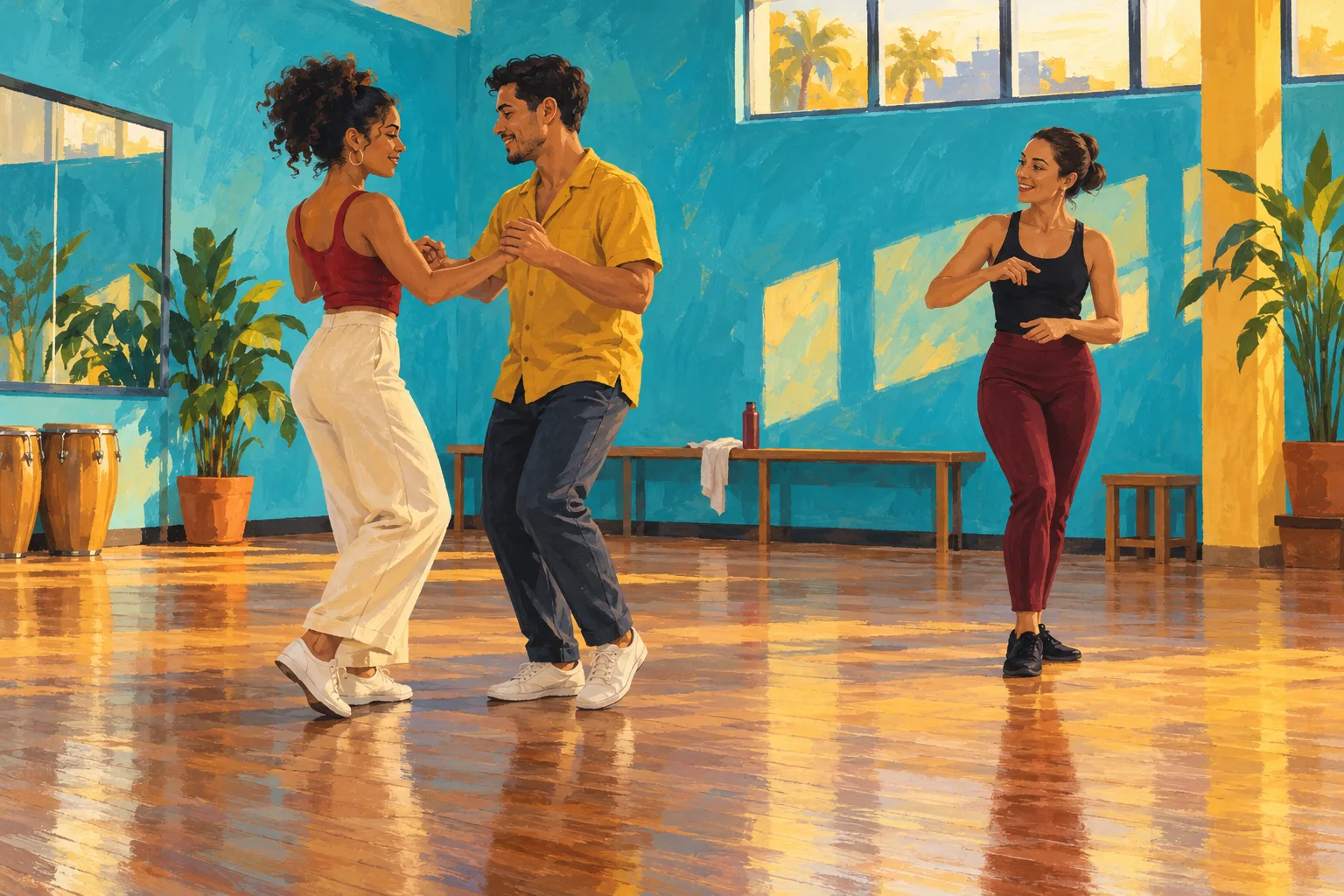
In a Cali salsa class, ask about the level before you join, then let the teacher show the first step. You can ask for a slower demonstration, count with the group and tell a partner what feels comfortable. These lines use everyday Colombian Spanish for a beginner class; a teacher may use different names or timing for the steps.
Cali’s tourism office describes salsa as part of the city’s living culture. A class is one way to learn from local dancers. The Cali academy Sondeluz describes a teaching sequence that moves from rhythm and counting to basic steps, turns and partner practice. Its terms conteo, pasos básicos and vueltas básicas guide the vocabulary here. The dialogue below is practice, not a record of a Sondeluz class.
Six lines to bring into the room
Use usted with a teacher you have just met: puede and podemos make clear, courteous requests. The partner question uses informal te for another student. Follow the form people use with you if the class has its own way of speaking.
| Say this | Meaning and moment |
|---|---|
| ¿Esta clase es para principiantes? | Is this class for beginners? Ask before joining. |
| ¿Empezamos con el paso básico? | Do we start with the basic step? Check the lesson’s starting point. |
| ¿Me lo puede mostrar otra vez, más despacio? | Could you show it to me again, more slowly? |
| ¿Podemos contar en voz alta? | Can we count out loud? |
| ¿Te parece bien practicar sin giros por ahora? | Is it okay with you to practise without turns for now? |
| Prefiero parar un momento. | I’d rather stop for a moment. Say this when you need a pause. |
Find a class at your level
Ask ¿Esta clase es para principiantes? before paying or stepping onto the floor. A teacher might say Sí, empezamos desde cero. (“Yes, we start from the beginning”) or Es de nivel intermedio. (“It’s intermediate level”). If it’s intermediate, ask ¿Tiene una clase de nivel básico? — “Do you have a beginner-level class?”
Check the style too. Salsapura’s Cali timetable names both salsa caleña and salsa en línea On1 as separate classes. Timetables change, so confirm the current level, style and place directly with the school. ¿Es salsa caleña o salsa en línea? asks which lesson you are joining without treating all salsa classes in Cali as the same.
Watch the step, then count with the teacher
When the group begins, listen for paso básico (“basic step”), conteo (“counting”) and vuelta (“turn”). These terms come from Sondeluz’s account of its teaching method; they don’t guarantee the exact move another teacher will show. Another Cali school, Musicarte, also says its salsa caleña course starts with basic steps and musical counting. Ask the person in front of you to demonstrate the step you need.
Say ¿Me lo puede mostrar otra vez, más despacio? while pointing to the step. Then ask ¿Podemos contar en voz alta? A teacher may count uno, dos, tres; cinco, seis, siete while the class moves. Sondeluz describes steps on count one and extra footwork around counts four and eight in its style. Let this teacher set the count; don’t force a memorised pattern onto a different exercise.
Check with your partner before a turn
Partner practice calls for a separate conversation. Ask ¿Te parece bien practicar sin giros por ahora? if you want to keep to the basic step. A partner may reply Sí, así está bien. (“Yes, that’s fine”) or Prefiero practicar por mi cuenta. (“I’d rather practise on my own”). Respect either answer. If you need to pause, say Prefiero parar un momento. and stop moving. Stop if your partner asks to stop, too.
Don’t assume that the roles in a pair describe gender. Ask the instructor how they organise the exercise, and tell them which part you want to practise. ¿Puedo practicar esta parte? means “Can I practise this part?”
Practise a two-way exchange
This example brings the questions together. It isn’t a promise about how a particular teacher runs their class.
- You: Buenas. ¿Esta clase es para principiantes? — Hello. Is this class for beginners?
- Teacher: Sí. Empezamos con el paso básico. — Yes. We start with the basic step.
- You: ¿Me lo puede mostrar otra vez, más despacio? — Could you show it to me again, more slowly?
- Teacher: Claro. Mire mis pies. ¿Contamos en voz alta? — Of course. Watch my feet. Shall we count out loud?
- You: Sí, por favor. — Yes, please.
- Partner: ¿Practicamos juntos? — Shall we practise together?
- You: Sí, pero sin giros por ahora. ¿Te parece bien? — Yes, but without turns for now. Is that okay with you?
- Partner: Sí, así está bien. — Yes, that’s fine.
If you miss the reply
Say Perdón, ¿me lo puede repetir más despacio? — “Sorry, could you repeat that more slowly?” The Instituto Cervantes’ learner descriptors give a slower repeat request as a basic way to repair a conversation. You can point to the movement and ask the teacher to show it again if the words still don’t land.
Stress bá in BÁ-si-co, ta in con-TE-o and pa in des-PA-cio. These written cues help you rehearse; they aren’t a recording of Cali speech. A Cali Spanish speaker hasn’t checked the full example exchange, and there’s no inline audio because a Colombian voice and its playback haven’t been checked by ear. Before class, rehearse the level question and the slower-demonstration request. For greetings beyond this class, see the Spanish travel phrase guide.