Italian Phrases for Airports, Boarding, and Finding Your Gate
If you can ask for your gate, understand a boarding announcement, and talk about your bag, airport Italian becomes much less stressful. This guide gives you the exact phrases you’re most likely to need at check-in, security, boarding, and baggage claim.
The most useful airport phrases first
At the airport, you do not need perfect Italian. You need short, polite phrases you can say quickly and understand when staff answer.
| Italian | English |
|---|---|
| Dov’è il gate? | Where is the gate? |
| A che ora inizia l’imbarco? | What time does boarding start? |
| Dov’è il banco check-in? | Where is the check-in desk? |
| Ho bisogno di aiuto, per favore. | I need help, please. |
| Il mio volo è in ritardo? | Is my flight delayed? |
| Dov’è il ritiro bagagli? | Where is baggage claim? |
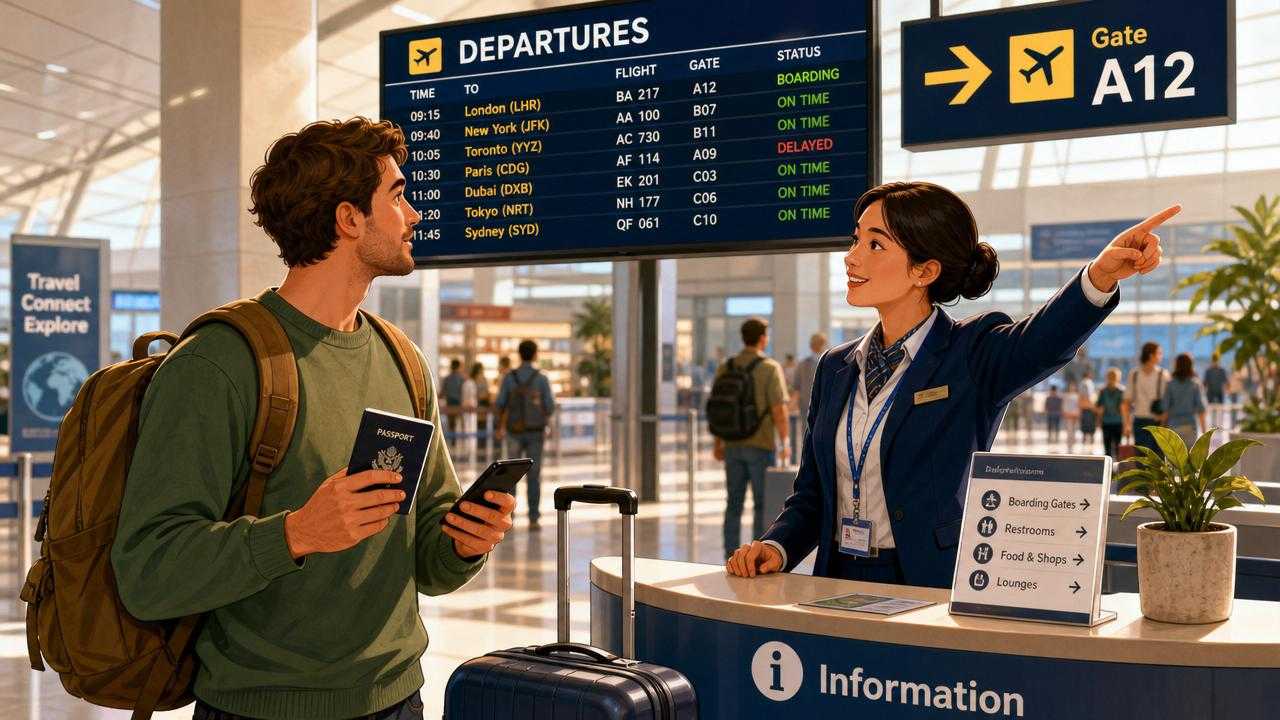
Airport signs often use a mix of Italian and English. You will see gate often, but you may also see porta d’imbarco, which means boarding gate.
Check-in, documents, and bags
When you approach the desk, start with Buongiorno or Buonasera, then keep your request simple. Italian airport staff are used to travellers, so a clear phrase is usually enough.
| Italian | English | When to use it |
|---|---|---|
| Buongiorno. | Good morning / Hello. | A polite opening during the day |
| Buonasera. | Good evening / Hello. | A polite opening later in the day |
| Dove posso fare il check-in? | Where can I check in? | When you need the right desk or line |
| Ho fatto il check-in online. | I checked in online. | If you already checked in before arriving |
| Ecco il passaporto. | Here is my passport. | When handing over your passport |
| Ecco la carta d’imbarco. | Here is my boarding pass. | At check-in, security, or the gate |
| Devo imbarcare un bagaglio. | I need to check a bag. | When you have checked luggage |
| Ho solo il bagaglio a mano. | I only have carry-on luggage. | When you are not checking a suitcase |
| Il mio bagaglio è in sovrappeso? | Is my bag overweight? | If you think your bag may be too heavy |
| Dove posso ritirare il bagaglio? | Where can I pick up my luggage? | When asking about baggage claim |
Bagaglio means luggage or baggage. Bagaglio a mano means carry-on luggage.
If you want more everyday travel vocabulary beyond airports, this guide is a great companion. Italian Phrases for Everyday Travel and Survival
Security and finding your gate
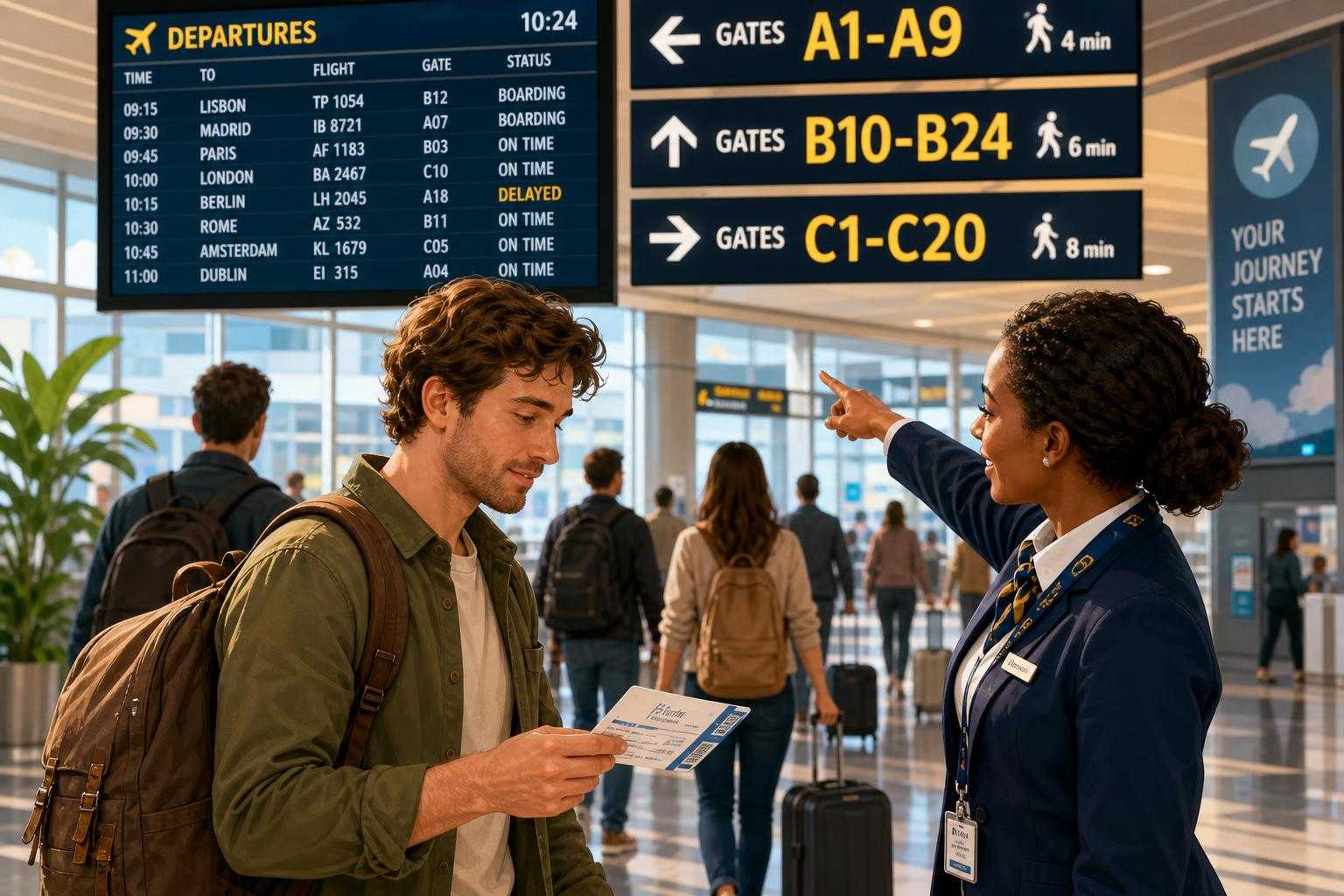
Once you are past check-in, the most useful phrases are about security, gates, and boarding. You do not need long sentences. Pointing to your boarding pass and asking one clear question is often enough.
| Italian | English |
|---|---|
| Dove sono i controlli di sicurezza? | Where is security? |
| Devo togliere le scarpe? | Do I need to take off my shoes? |
| Devo tirare fuori il computer? | Do I need to take out my laptop? |
| Dov’è il gate B12? | Where is gate B12? |
| Il mio volo parte da qui? | Does my flight leave from here? |
| L’imbarco è iniziato? | Has boarding started? |
| Quanto tempo manca all’imbarco? | How long until boarding? |
| Il gate è cambiato? | Has the gate changed? |
Computer is commonly used for laptop in everyday Italian. You may also hear portatile, which means laptop.
Useful words on airport signs
These words help you read signs and departure boards quickly.
| Italian | English |
|---|---|
| Partenze | Departures |
| Arrivi | Arrivals |
| Controlli di sicurezza | Security checks |
| Imbarco | Boarding |
| Ritiro bagagli | Baggage claim |
| Uscita | Exit |
| Informazioni | Information |
| Ritardo | Delay |
| Cancellato | Cancelled |
If you only remember three airport words, make them volo for flight, gate for gate, and imbarco for boarding.
What you might hear in announcements
Airport announcements can be hard to catch, even when you know some Italian. Listen first for your flight number, then for one key word like imbarco, ritardo, or gate.
| Italian you might hear | English meaning |
|---|---|
| Il volo AZ 123 è in ritardo. | Flight AZ 123 is delayed. |
| Il volo AZ 123 è in partenza dal gate B12. | Flight AZ 123 is departing from gate B12. |
| L’imbarco è iniziato. | Boarding has started. |
| Ultima chiamata per il volo AZ 123. | Last call for flight AZ 123. |
| Il gate è cambiato. | The gate has changed. |
| Il volo è stato cancellato. | The flight has been cancelled. |
A useful phrase for announcements is:
Mi scusi, può ripetere? — Excuse me, can you repeat that?
Use it when you miss part of a message in a busy terminal.
Polite Italian that helps at the airport
A small polite phrase makes airport Italian sound much better. You do not need a long sentence. Start with Scusi and then ask the question.
| Italian | English |
|---|---|
| Scusi, dov’è il gate B12? | Excuse me, where is gate B12? |
| Può aiutarmi, per favore? | Can you help me, please? |
| Mi può dire dov’è il banco informazioni? | Can you tell me where the information desk is? |
| Mi può scrivere il numero del gate? | Can you write down the gate number for me? |
| Non capisco bene. | I don’t understand well. |
| Parla inglese? | Do you speak English? |
| Grazie mille. | Thanks a lot. |
Scusi is the safest polite choice when speaking to one person you do not know. If you are speaking to more than one person, scusate is the plural form, but travellers can get by with scusi most of the time.
A quick mini-dialogue at the gate
Here is a realistic exchange you might have at the gate. Read it aloud once or twice so the rhythm feels familiar before your trip.
Passeggero: Scusi, è questo il gate per il volo AZ 123?
Staff: Sì, esatto. L’imbarco inizia tra dieci minuti.
Passeggero: Grazie. Dov’è la fila per l’imbarco prioritario?
Staff: È lì a sinistra.
Passenger: Excuse me, is this the gate for flight AZ 123?
Staff: Yes, that’s right. Boarding starts in ten minutes.
Passenger: Thank you. Where is the line for priority boarding?
Staff: It’s over there on the left.
Baggage, delays, and finding help fast
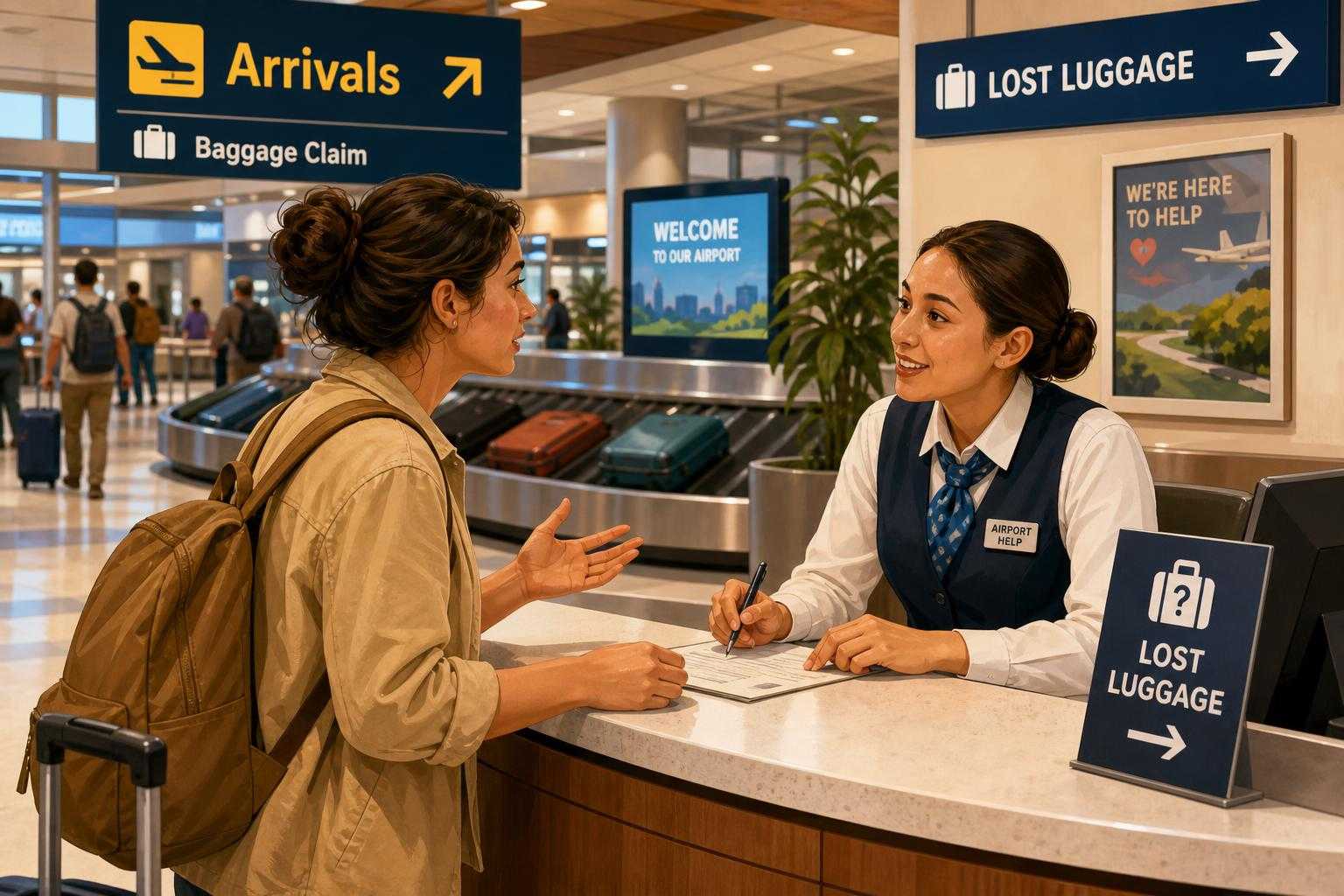
If something goes wrong, keep the sentence short. Give your flight number if you can, then use one clear phrase.
| Italian | English | When to use it |
|---|---|---|
| Il mio bagaglio non è arrivato. | My bag did not arrive. | At baggage claim |
| Dov’è l’ufficio oggetti smarriti? | Where is lost property? | For lost items |
| Dov’è l’ufficio bagagli smarriti? | Where is the lost baggage office? | For missing checked luggage |
| Ho perso la coincidenza. | I missed my connection. | If a delay made you miss another flight |
| Il mio volo è stato cancellato. | My flight was cancelled. | When asking for help after a cancellation |
| Dove devo andare per questo volo? | Where do I need to go for this flight? | When you are unsure where to go |
| Mi può aiutare con questo biglietto? | Can you help me with this ticket? | When showing your ticket or boarding pass |
For checked luggage, staff may ask for the baggage receipt or tag. You can say:
Ecco la ricevuta del bagaglio. — Here is the baggage receipt.
One simple phrase pattern to reuse
You can reuse this pattern in many airport situations:
Dove devo andare per [place or flight]? — Where do I need to go for [place or flight]?
| Italian | English |
|---|---|
| Dove devo andare per il gate B12? | Where do I need to go for gate B12? |
| Dove devo andare per il ritiro bagagli? | Where do I need to go for baggage claim? |
| Dove devo andare per il volo AZ 123? | Where do I need to go for flight AZ 123? |
This is useful when you are not sure which line, desk, or direction is right.
Keep these phrases handy
If you only memorize five phrases from this post, make them these:
| Italian | English |
|---|---|
| Dov’è il gate? | Where is the gate? |
| A che ora inizia l’imbarco? | What time does boarding start? |
| Il mio volo è in ritardo? | Is my flight delayed? |
| Ho solo il bagaglio a mano. | I only have carry-on luggage. |
| Ho bisogno di aiuto, per favore. | I need help, please. |
You do not need perfect Italian to get through an airport in Italy. A few short phrases can help you ask where to go, check your gate, understand the most important announcements, and get help if something changes. Practice a handful out loud before your trip, especially Dov’è il gate? and A che ora inizia l’imbarco? Those two phrases alone can make the airport feel much easier.