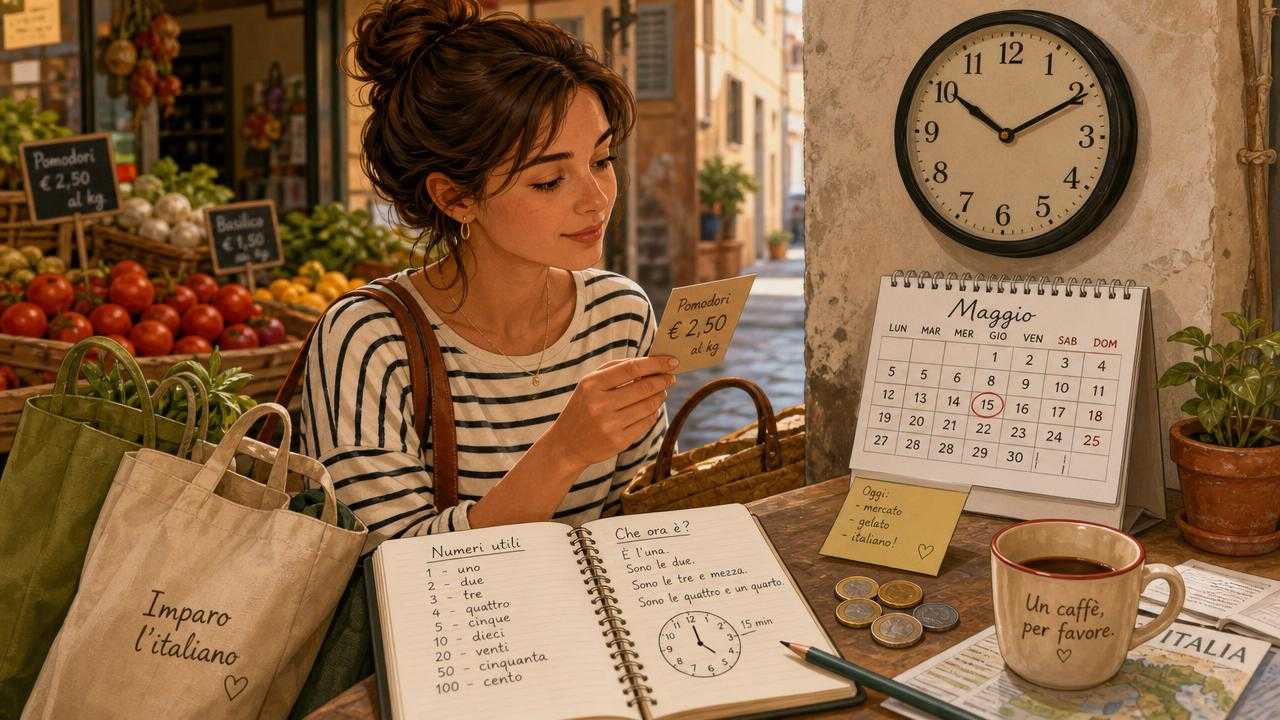
Italian Numbers, Prices, and Time: The Mini Phrase Pack You Actually Need
If you can recognize numbers, ask what something costs, and understand simple times, you can handle a surprising amount of everyday Italian. That helps with ordering, shopping, catching trains, buying tickets, and making simple plans.
You do not need every number or every time expression right away. Start with the phrases you are most likely to use while travelling.
Start with the numbers you’ll actually use
In real life, the most useful numbers are the ones you need for prices, room numbers, dates, tables, tickets, and times. Get comfortable with these first. The rest will be easier to pick up later.
| Italian | English |
|---|---|
| zero | zero |
| uno | one |
| due | two |
| tre | three |
| quattro | four |
| cinque | five |
| sei | six |
| sette | seven |
| otto | eight |
| nove | nine |
| dieci | ten |
| undici | eleven |
| dodici | twelve |
| quindici | fifteen |
| venti | twenty |
| trenta | thirty |
| cinquanta | fifty |
| cento | one hundred |
| mille | one thousand |
Prices can sound fast in Italian, especially at cafés, markets, and checkouts. Focus on catching the final number first. You do not need to understand every word around it.
Asking prices and paying
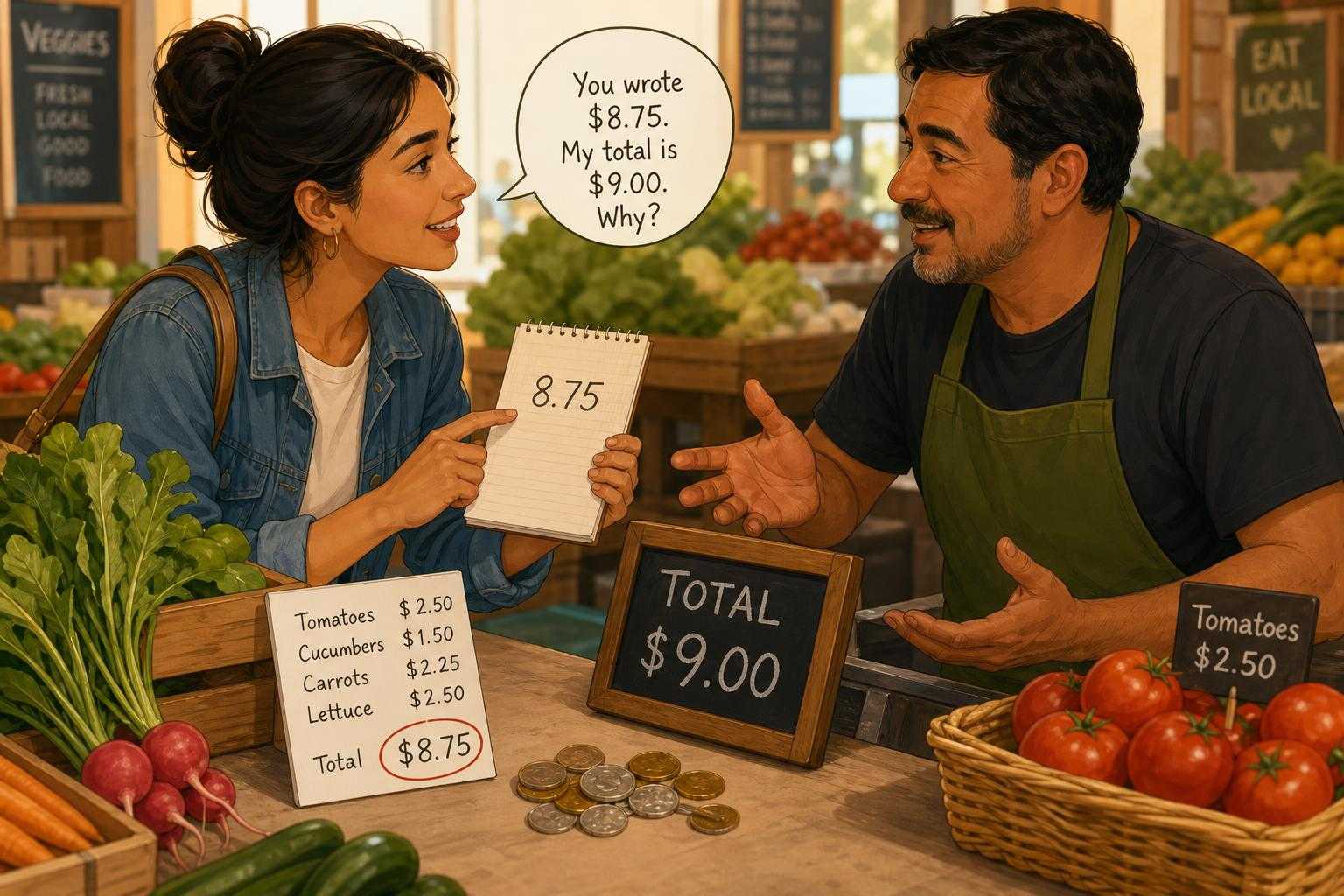
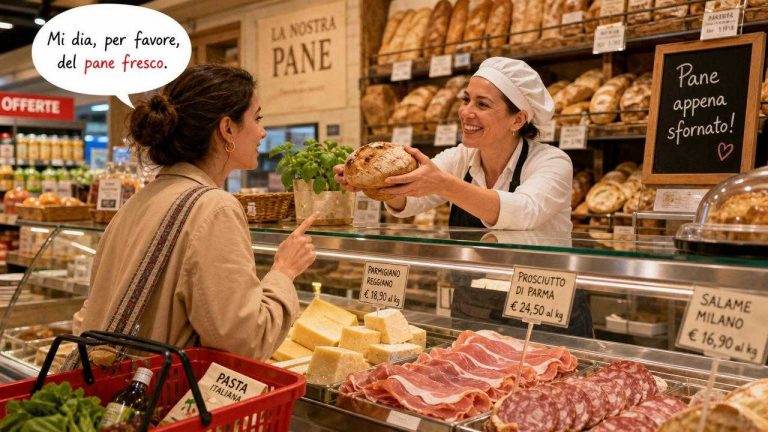
The most useful price phrase is simple: Quanto costa? It means “How much does it cost?” You can use it in shops, markets, cafés, ticket offices, and anywhere you want to check the price before deciding.
| Italian | English | When to use it |
|---|---|---|
| Quanto costa? | How much does it cost? | Best all-purpose price phrase |
| Quant’è? | How much is it? | Common at counters and cafés |
| Quanto viene in tutto? | How much is it altogether? | When buying more than one thing |
| È incluso? | Is it included? | Tickets, tours, hotels, menus |
| Posso pagare con la carta? | Can I pay by card? | Before paying |
| Con la carta, per favore. | By card, please. | Simple payment reply |
| In contanti. | In cash. | Simple payment reply |
| Va bene, grazie. | That’s fine, thank you. / Okay, thanks. | Accepting the price or option |
You may also hear these at the checkout.
| Italian you may hear | English meaning | Simple reply |
|---|---|---|
| Carta o contanti? | Card or cash? | Con la carta, per favore. |
| Sono dodici euro. | It’s twelve euros. | Va bene, grazie. |
| Sono venti euro in tutto. | It’s twenty euros altogether. | Con la carta, per favore. |
| Ha bisogno dello scontrino? | Do you need the receipt? | Sì, grazie. / No, grazie. |
If you want more phrases for stores, cafés, transport, and simple interactions, this pairs well with Italian Phrases for Everyday Travel and Survival
Asking about the time and schedule
For everyday travel, you mainly need to ask what time it is, understand when something starts, and check opening times or departures.
| Italian | English | When to use it |
|---|---|---|
| Che ora è? | What time is it? | Asking the current time |
| A che ora apre? | What time does it open? | Shops, museums, cafés |
| A che ora chiude? | What time does it close? | Shops, museums, attractions |
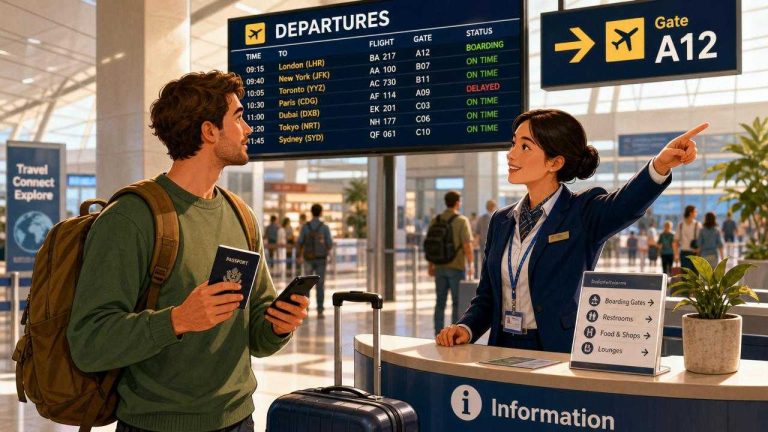
| A che ora parte? | What time does it leave? | Trains, buses, tours |
| A che ora arriva? | What time does it arrive? | Transport arrivals |
| È in orario? | Is it on time? | Trains, buses, flights |
| È in ritardo? | Is it delayed? | Transport delays |
Useful time replies:
| Italian | English |
|---|---|
| Alle tre. | At three o’clock. |
| Alle otto e mezza. | At 8:30. |
| Alle nove e un quarto. | At quarter past nine. |
| Alle nove e quindici. | At 9:15. |
| Tra cinque minuti. | In five minutes. |
| Fra mezz’ora. | In half an hour. |
Alle usually tells you when something happens.
- Alle otto. — At eight.
Tra or fra tells you how long from now.
- Tra dieci minuti. — In ten minutes.
Dates, days, and simple booking phrases
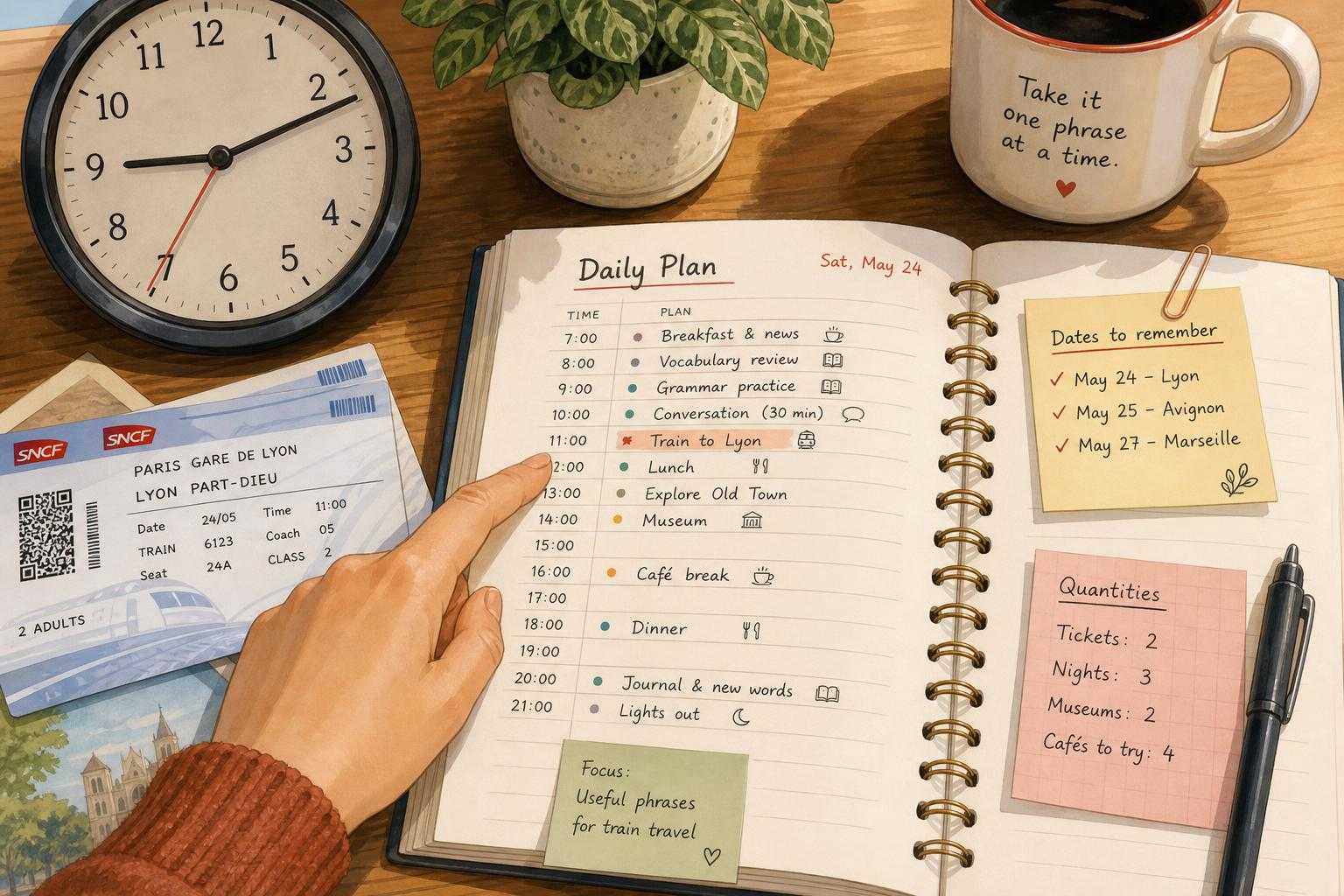
Illustrated planning scene for telling time, dates, and quantities in Italian
A simple visual reminder for times, dates, and small quantity phrases.
Dates are useful for bookings, travel plans, tickets, and forms. You do not need to master every rule right away. Start by recognizing the day, the month, and common phrases like oggi for today and domani for tomorrow.
| Italian | English |
|---|---|
| oggi | today |
| domani | tomorrow |
| ieri | yesterday |
| lunedì | Monday |
| venerdì | Friday |
| il dodici maggio | the 12th of May |
| per oggi | for today |
| per domani | for tomorrow |
| per venerdì | for Friday |
A small note: dates on tickets, signs, and forms may appear as numbers, such as 12 maggio. If you need to say the date out loud, il dodici maggio is a useful spoken version.
Quantities for tickets, tables, and bookings
Simple quantity phrases are useful when you are buying tickets, booking a table, or ordering for more than one person.
| Italian | English | When to use it |
|---|---|---|
| una persona | one person | Bookings and tickets |
| due persone | two people | Restaurants, hotels, tours |
| tre biglietti | three tickets | Museums, trains, attractions |
| un tavolo per due | a table for two | Restaurants |
| una notte | one night | Hotels and accommodation |
| due notti | two nights | Hotels and accommodation |
| solo andata | one way | Transport tickets |
| andata e ritorno | return / round trip | Transport tickets |
You may hear:
| Italian you may hear | English meaning | Simple reply |
|---|---|---|
| Per quante persone? | For how many people? | Per due persone. |
| Quanti biglietti? | How many tickets? | Due biglietti, per favore. |
| Per che giorno? | For which day? | Per domani. |
| A che ora? | At what time? | Alle otto. |
A quick mini table for time and money phrases
Use this as a fast reminder before a shop, café, station, museum, or booking desk.
| Situation | Useful Italian | What it means |
|---|---|---|
| Asking the price | Quanto costa? | How much does it cost? |
| Checking the total | Quanto viene in tutto? | How much is it altogether? |
| Paying by card | Con la carta, per favore. | By card, please. |
| Asking the time | Che ora è? | What time is it? |
| Asking opening time | A che ora apre? | What time does it open? |
| Asking departure time | A che ora parte? | What time does it leave? |
| Saying a time | Alle quattro. | At four o’clock. |
| Asking for two tickets | Due biglietti, per favore. | Two tickets, please. |
| Booking for two people | Per due persone. | For two people. |
Practice with real prices and times
A useful habit is to say prices and times out loud when you see them.
If a coffee costs €2.50, you can say:
- Due euro e cinquanta. — Two euros fifty.
If a train leaves at 8:30, you can say:
- Alle otto e mezza. — At 8:30.
If a museum opens at 10:00, you can say:
- Apre alle dieci. — It opens at ten.
This kind of practice is simple, but it makes the phrases feel more natural when you need them.
If you want more help with shopping situations, see Italian Shopping Phrases for Markets, Stores, and Small Purchases. For food counters, bakery orders, and supermarket basics, see Italian Phrases for Supermarkets, Bakeries, and Deli Counters.
Quick recap for shopping and daily plans
If you remember just a few things from this mini phrase pack, make them these.
| Italian | English |
|---|---|
| Quanto costa? | How much does it cost? |
| Quanto viene in tutto? | How much is it altogether? |
| Con la carta, per favore. | By card, please. |
| Che ora è? | What time is it? |
| A che ora apre? | What time does it open? |
| A che ora parte? | What time does it leave? |
| Due biglietti, per favore. | Two tickets, please. |
| Per due persone. | For two people. |
| Alle otto. | At eight. |
| Tra dieci minuti. | In ten minutes. |
You do not need to know every number in Italian to get through everyday situations. Start with prices, times, and simple quantities. Practice a few phrases out loud, especially the ones you will use for cafés, tickets, transport, and bookings. Clear, simple Italian is enough to keep the conversation moving.