
Everyday Italian Greetings and Small Talk for Beginners
If you want to sound friendlier in Italian fast, start with the small phrases you can use every day: hello, goodbye, please, thank you, and a few simple questions.
These are the phrases that help you start a conversation, respond politely, and leave without feeling stuck. You do not need long sentences. You just need a few natural phrases you can actually say.
Start with safe Italian greetings
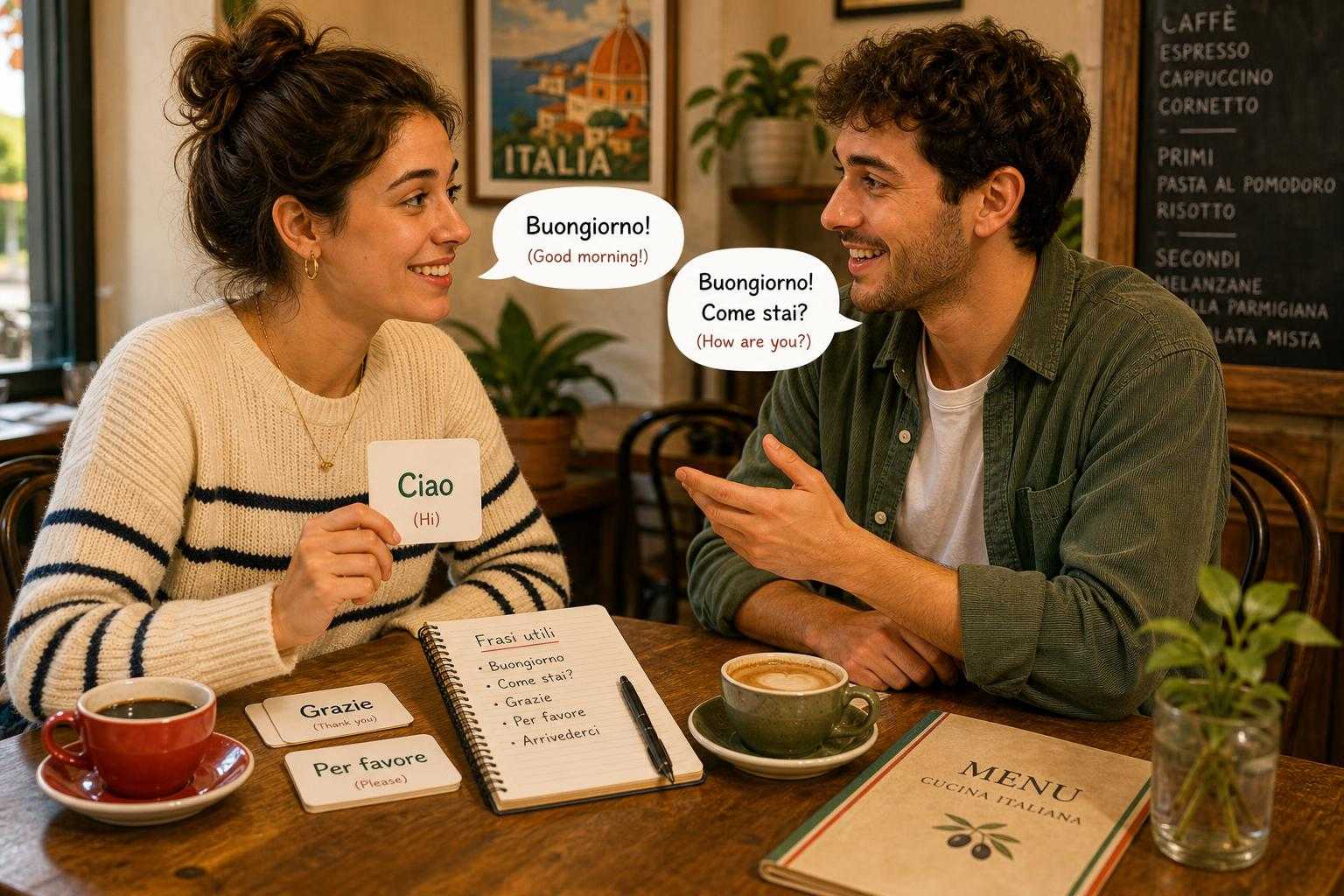
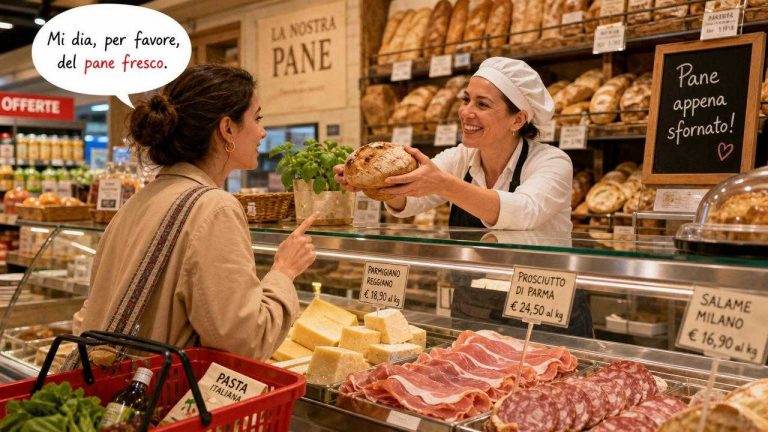
Practice the phrases in a real-world setting so they feel easier to use.
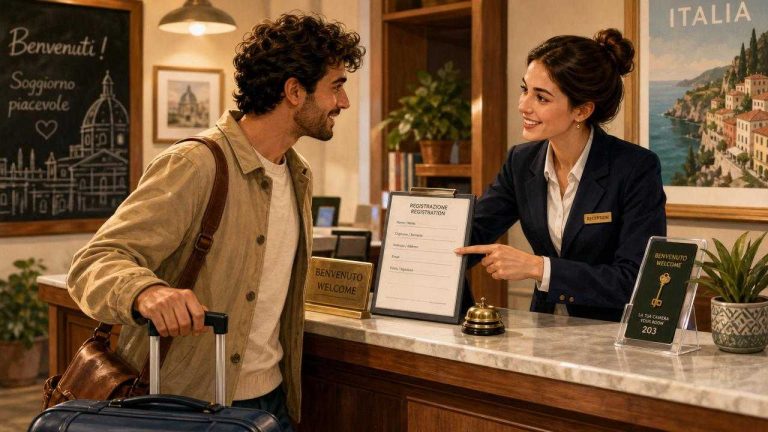
For most travel situations, it is better to start polite. Use these greetings in cafés, shops, hotels, museums, stations, restaurants, and anywhere you are speaking to someone you do not know.
| Italian phrase | English meaning | When to use it |
|---|---|---|
| Buongiorno | Good morning / good day | A safe polite greeting from morning until early afternoon |
| Buonasera | Good evening | Use from late afternoon or evening |
| Salve | Hello | Neutral and polite when you are not sure what to say |
| Arrivederci | Goodbye | Polite goodbye for staff, strangers, and formal situations |
| Buona giornata | Have a good day | Polite ending during the day |
| Buona serata | Have a good evening | Polite ending in the evening |
If you are not sure what to say, Buongiorno is usually the safest daytime greeting. In the evening, use Buonasera.
Salve is also useful. It is polite and neutral, especially when you are not sure whether the situation is formal or casual.
For more everyday phrases beyond greetings, see Italian Everyday Expressions to Sound Local.
Casual greetings with friends and peers
Ciao is one of the most common Italian words, but it is casual. Use it with friends, people your age, children, or someone you already have a friendly connection with.
| Italian phrase | English meaning | When to use it |
|---|---|---|
| Ciao | Hi / Bye | Casual and very common |
| A presto | See you soon | Friendly goodbye if you expect to meet again |
| A dopo | See you later | Use when you will see the person later the same day |
| Ci vediamo | See you | Casual, for people you know or expect to see again |
A simple rule: use Buongiorno, Buonasera, or Arrivederci with strangers and staff. Use Ciao when the situation feels casual.
Introducing yourself simply
A beginner introduction does not need to be complicated. Start with your name, then add Piacere.
| Italian phrase | English meaning | Note |
|---|---|---|
| Mi chiamo Anna. | My name is Anna. | The most useful beginner phrase |
| Sono Anna. | I’m Anna. | Short and natural |
| Piacere. | Nice to meet you. | Simple and very common |
| Piacere di conoscerti. | Nice to meet you. | Informal |
| Piacere di conoscerla. | Nice to meet you. | Formal |
A natural beginner pattern is:
Mi chiamo Anna. Piacere.
My name is Anna. Nice to meet you.
You can use your own name in the same pattern:
Mi chiamo [name]. Piacere.
My name is [name]. Nice to meet you.
Simple small talk questions
Small talk is easier when you know a few short questions. The main thing is to choose the right level of formality.
| Italian phrase | English meaning | When to use it |
|---|---|---|
| Come stai? | How are you? | Informal |
| Come sta? | How are you? | Formal |
| Tutto bene? | Everything good? | Friendly and casual |
| Come va? | How’s it going? | Casual and common |
| Di dove sei? | Where are you from? | Informal |
| Di dov’è? | Where are you from? | Formal |
| E tu? | And you? | Informal |
| E lei? | And you? | Formal |
Use Come stai? with friends, peers, or people you have been introduced to. With someone you do not know well, Come sta? is the polite version.
For quick service interactions, you usually do not need to ask “How are you?” A polite Buongiorno and Grazie are enough.
Simple answers you can use
It helps to memorize answers as well as questions. These are short and easy to reuse.
| Italian phrase | English meaning | When to use it |
|---|---|---|
| Bene, grazie. | Good, thanks. | Simple answer to “How are you?” |
| Sto bene, grazie. | I’m well, thanks. | Slightly fuller answer |
| Tutto bene, grazie. | Everything’s good, thanks. | Friendly and natural |
| Bene, grazie. E tu? | Good, thanks. And you? | Informal |
| Bene, grazie. E lei? | Good, thanks. And you? | Formal |
| Vengo dall’Australia. | I’m from Australia. | Natural travel answer |
| Sono australiano/a. | I’m Australian. | Use australiano if male, australiana if female |
| Sono in vacanza. | I’m on holiday. | Useful travel small talk |
| Sto imparando l’italiano. | I’m learning Italian. | Friendly and useful when you are trying |
If someone asks Di dove sei? or Di dov’è?, you can answer:
- Vengo dall’Australia.
- I’m from Australia.
You can replace Australia with another country:
| Italian phrase | English meaning |
|---|---|
| Vengo dal Canada. | I’m from Canada. |
| Vengo dagli Stati Uniti. | I’m from the United States. |
| Vengo dall’Inghilterra. | I’m from England. |
| Vengo dalla Nuova Zelanda. | I’m from New Zealand. |
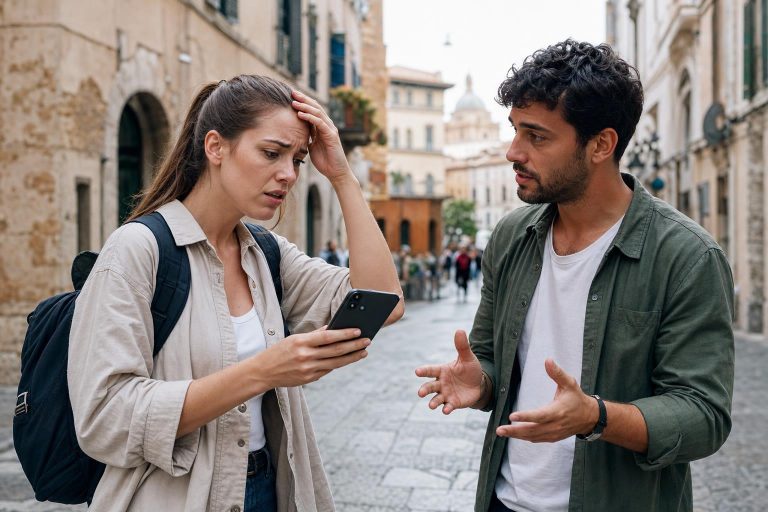
When the conversation moves too fast
This is one of the most useful beginner situations. You greet someone, they answer in Italian, and suddenly the conversation moves faster than you expected.
These phrases help you slow things down politely.
| Italian phrase | English meaning | When to use it |
|---|---|---|
| Scusi, non parlo molto italiano. | Excuse me, I don’t speak much Italian. | Polite and useful with strangers |
| Sto imparando l’italiano. | I’m learning Italian. | Friendly and encouraging |
| Può ripetere, per favore? | Can you repeat, please? | Polite/formal |
| Puoi ripetere, per favore? | Can you repeat, please? | Informal |
| Più lentamente, per favore. | More slowly, please. | Very useful for beginners |
| Parla inglese? | Do you speak English? | Polite/formal |
| Parli inglese? | Do you speak English? | Informal |
With staff or strangers, use Parla inglese? instead of Parli inglese? It is the polite form.
A very useful combination is:
- Scusi, non parlo molto italiano. Parla inglese?
- Excuse me, I don’t speak much Italian. Do you speak English?
A simple beginner conversation
Here is a short conversation you can practice out loud.
A: Buongiorno. Mi chiamo Anna.
B: Piacere, Anna.
A: Piacere. Come sta?
B: Bene, grazie. E lei?
A: Bene, grazie. Sto imparando l’italiano.
A: Good morning. My name is Anna.
B: Nice to meet you, Anna.
A: Nice to meet you. How are you?
B: Good, thanks. And you?
Good, thanks. I’m learning Italian.
You can make this more casual by changing Come sta? to Come stai? and E lei? to E tu?
Polite words for everyday Italian
These small words make short Italian phrases sound smoother and more polite.
| Italian phrase | English meaning | When to use it |
|---|---|---|
| Per favore | Please | Add to requests |
| Grazie | Thank you | Use often |
| Grazie mille | Thanks a lot | Friendly and common |
| Prego | You’re welcome / Here you go | You may hear it from staff |
| Scusi | Excuse me | Polite, useful with strangers |
| Scusa | Excuse me / sorry | Informal |
| Mi scusi | Excuse me / sorry | Polite, slightly fuller |
| Di niente | No problem / You’re welcome | Easy reply to grazie |
| Non c’è di che | Don’t mention it | Polite reply to grazie |
A simple habit is to start with Scusi when you need someone’s attention:
- Scusi, dov’è il bagno?
- Excuse me, where is the bathroom?
- Scusi, parla inglese?
- Excuse me, do you speak English?
Ending a conversation politely

A good ending keeps the exchange smooth. Choose the phrase that fits the situation.
| Italian phrase | English meaning | When to use it |
|---|---|---|
| Arrivederci | Goodbye | Safe and polite |
| Grazie, arrivederci | Thank you, goodbye | Very useful with staff |
| Buona giornata | Have a good day | Polite daytime ending |
| Buona serata | Have a good evening | Polite evening ending |
| Ciao, grazie | Bye, thanks | Casual |
| A presto | See you soon | Friendly, if you expect to meet again |
| A dopo | See you later | If you will see the person later that day |
For a shop, café, hotel, or museum, a simple Grazie, arrivederci is often perfect.
For more beginner survival phrases in real travel situations, see Italian Phrases for Everyday Travel and Survival.
Common beginner mistakes to avoid
Using Ciao in every situation
Ciao is useful, but it is not always the safest choice. With staff, strangers, or older people, start with Buongiorno or Buonasera.
Using informal questions with strangers
Parli inglese? is informal. With staff or someone you do not know, Parla inglese? is safer.
The same idea applies here:
| Informal | Formal | English meaning |
|---|---|---|
| Come stai? | Come sta? | How are you? |
| Di dove sei? | Di dov’è? | Where are you from? |
| E tu? | E lei? | And you? |
| Puoi ripetere? | Può ripetere? | Can you repeat? |
Translating English small talk too directly
Italian small talk can be short. You do not need to build long English-style sentences. A simple Buongiorno, grazie, or Arrivederci is often enough.
Forgetting the polite words
Per favore, grazie, and scusi make a big difference. Even very basic Italian sounds better when it is polite.
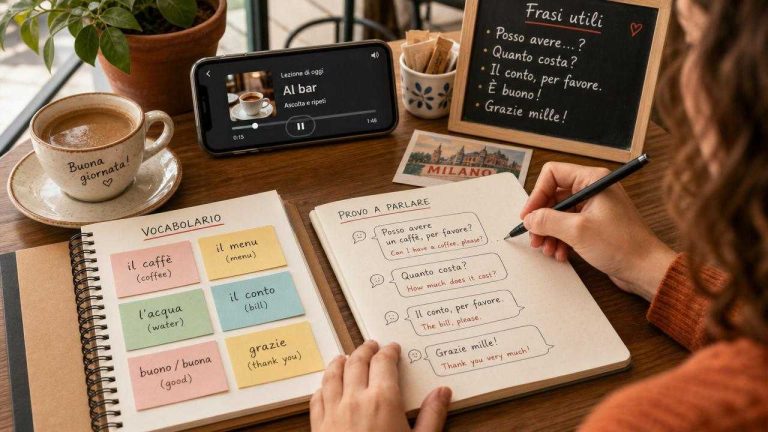
A simple practice plan
Start with a small set of phrases instead of trying to memorize everything at once.
| Practice goal | Phrases to learn |
|---|---|
| 3 greetings | Buongiorno, Buonasera, Ciao |
| 2 introduction phrases | Mi chiamo…, Piacere |
| 3 small talk phrases | Come sta?, Tutto bene?, Di dov’è? |
| 3 polite words | Scusi, per favore, grazie |
| 2 exit phrases | Arrivederci, Buona giornata |
Practice them as tiny dialogues:
- Buongiorno. Mi chiamo Anna. Piacere.
- Good morning. My name is Anna. Nice to meet you.
- Bene, grazie. E lei?
- Good, thanks. And you?
- Grazie, arrivederci.
- Thank you, goodbye.
Keep it simple and polite
You do not need perfect Italian to greet someone, introduce yourself, or handle a short conversation. A few polite phrases are enough for many everyday travel moments.
Start with Buongiorno, grazie, and arrivederci. Then add Mi chiamo…, Piacere, and one or two small talk questions. Practice them out loud before your trip, and they will feel much easier when you need them.
If you want to sound friendlier in Italian fast, start with the small stuff: hello, goodbye, thank you, and a few easy follow-up questions. These are the phrases that help you open a conversation, keep it going, and leave politely without feeling stuck.