How to Ask for Directions in Italian Without Feeling Lost
If you can ask for directions in Italian, getting around becomes much easier. You do not need perfect grammar to find a train station, a museum, or the nearest café. You just need a few reliable phrases and the confidence to use them.
The first phrases to know
When you stop someone on the street, start politely and keep your request simple. These are the safest phrases for beginners.
| Italian | English | Use it when… |
|---|---|---|
| Scusi. | Excuse me. / Sorry to interrupt. | You want to stop someone politely. |
| Mi può aiutare? | Can you help me? | You need help from a stranger or staff member. |
| Dov’è…? | Where is…? | You need to find a place. |
| Come arrivo a…? | How do I get to…? | You need directions. |
| Sto cercando… | I’m looking for… | You have a place name, street, or landmark. |
A useful pattern is to say what you need right away:
- Dov’è la stazione? — Where is the station?
- Sto cercando Piazza Navona. — I’m looking for Piazza Navona.
For more practical phrases you can use on the move, check out Italian Phrases for Everyday Travel and Survival. Italian Phrases for Everyday Travel and Survival
How to ask where something is

The phrase Dov’è…? is the simplest way to ask for a place. Just add the thing you need after it. You can use it for streets, landmarks, transport stops, or services.
| Italian | English |
|---|---|
| Dov’è la fermata dell’autobus? | Where is the bus stop? |
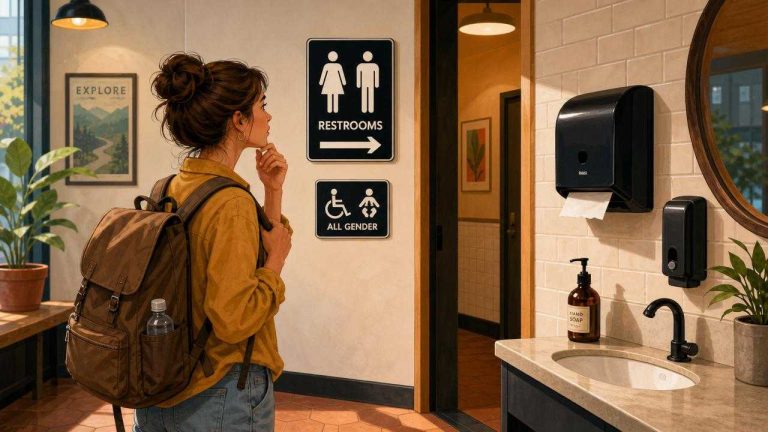
| Dove sono i bagni? | Where are the bathrooms? |
| Dov’è il museo? | Where is the museum? |
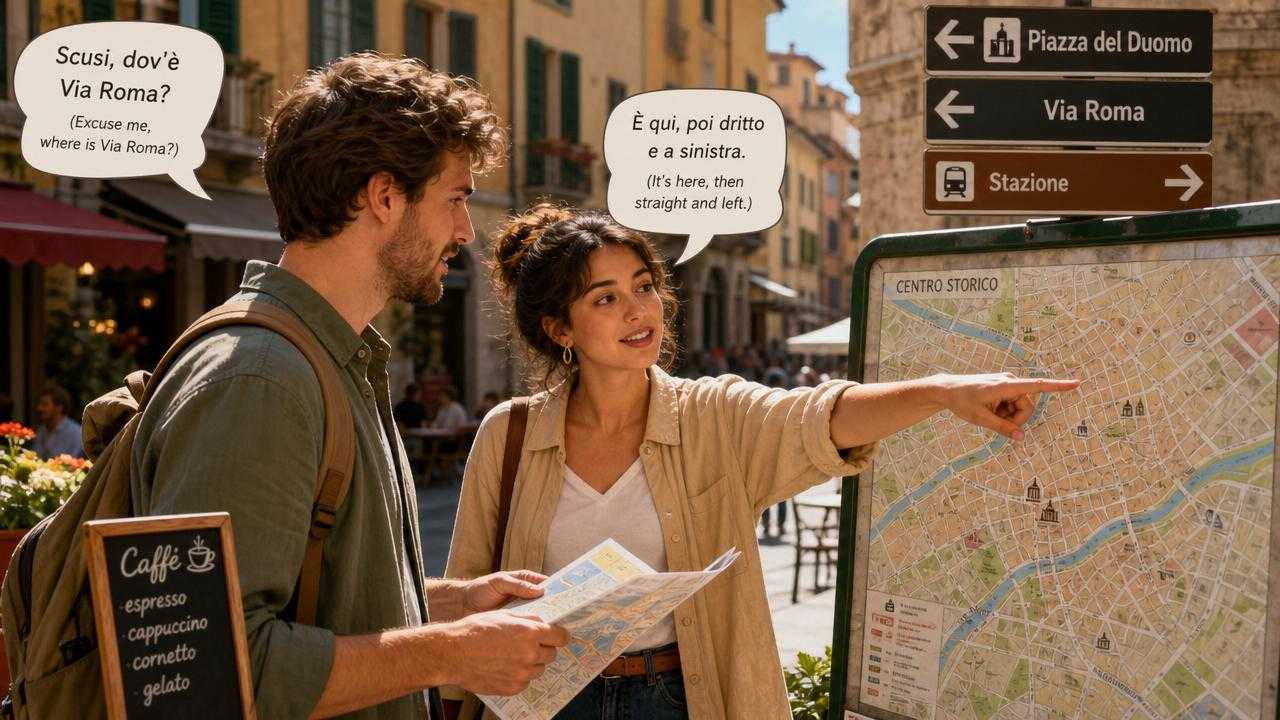
| Dov’è via Roma? | Where is Via Roma? |
| Dov’è l’ufficio turistico? | Where is the tourist office? |
If you are pointing at a map, a sign, or a place name on your phone, you can say:
- Dov’è questo posto? — Where is this place?
Another very useful phrase is:
- Me lo può indicare sulla mappa? — Can you show it to me on the map?
How to ask how to get somewhere
Come arrivo a…? means “How do I get to…?” It is useful, but Italian often changes the small word before the place. You do not need to master the grammar here. It is enough to learn a few ready-made examples.
| Italian | English |
|---|---|
| Come arrivo alla stazione? | How do I get to the station? |
| Come arrivo al museo? | How do I get to the museum? |
| Come arrivo in centro? | How do I get to the city centre? |
| Come arrivo a Piazza Navona? | How do I get to Piazza Navona? |
You can also use a slightly more polite version:
- Mi può dire dov’è la stazione? — Can you tell me where the station is?
This is a useful phrase when you want to sound polite but still keep the sentence simple.
Checking if you are going the right way
Sometimes you do not need full directions. You just need to check that you are walking the right way.
| Italian | English |
|---|---|
| È questa la strada giusta per la stazione? | Is this the right way to the station? |
| Sto andando nella direzione giusta? | Am I going in the right direction? |
| È lontano? | Is it far? |
| Quanto ci vuole a piedi? | How long does it take on foot? |
| Posso andarci a piedi? | Can I walk there? |
Sto andando nella direzione giusta? is one of the most useful phrases when you are already moving and just want quick confirmation.
Understanding the answer
People often answer with short direction words, so it helps to recognize the basics. These are the common ones you will hear.
| Italian | English |
|---|---|
| a destra | to the right |
| a sinistra | to the left |
| dritto / sempre dritto | straight / straight ahead |
| poi | then |
| vicino a | near |
| accanto a | next to |
| di fronte a | opposite / across from |
| all’angolo | on the corner |
| dietro l’angolo | around the corner |
| giri a destra | turn right |
| giri a sinistra | turn left |
| al semaforo | at the traffic light |
| alla rotonda | at the roundabout |
| attraversi la strada | cross the street |
A short reply like this is common:
- Sempre dritto, poi a sinistra. — Straight ahead, then left.
If someone gives you several steps at once, do not worry. It is normal to ask them to slow down or repeat themselves.
What to say when you do not understand
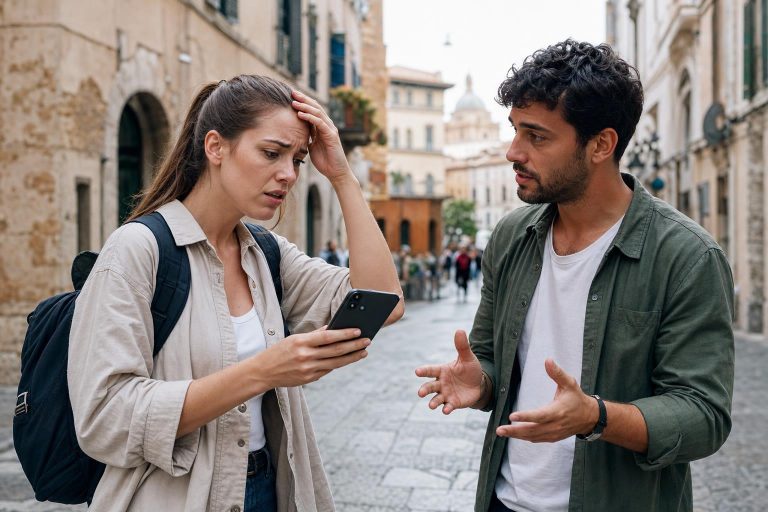
This is the part that makes many beginners nervous, but it should not. In Italy, it is completely normal to ask someone to repeat or speak more slowly.
| Italian | English |
|---|---|
| Può ripetere, per favore? | Can you repeat that, please? |
| Può parlare più lentamente? | Can you speak more slowly? |
| Non ho capito. | I did not understand. |
| Me lo può indicare sulla mappa? | Can you show it to me on the map? |
| Mi scusi, non sono del posto. | Excuse me, I’m not from here. |
Non ho capito is short and useful. You do not need to explain more than that. If you still feel lost, show the place name on your phone and ask:
Me lo può indicare sulla mappa? — Can you show it to me on the map?
A simple direction conversation
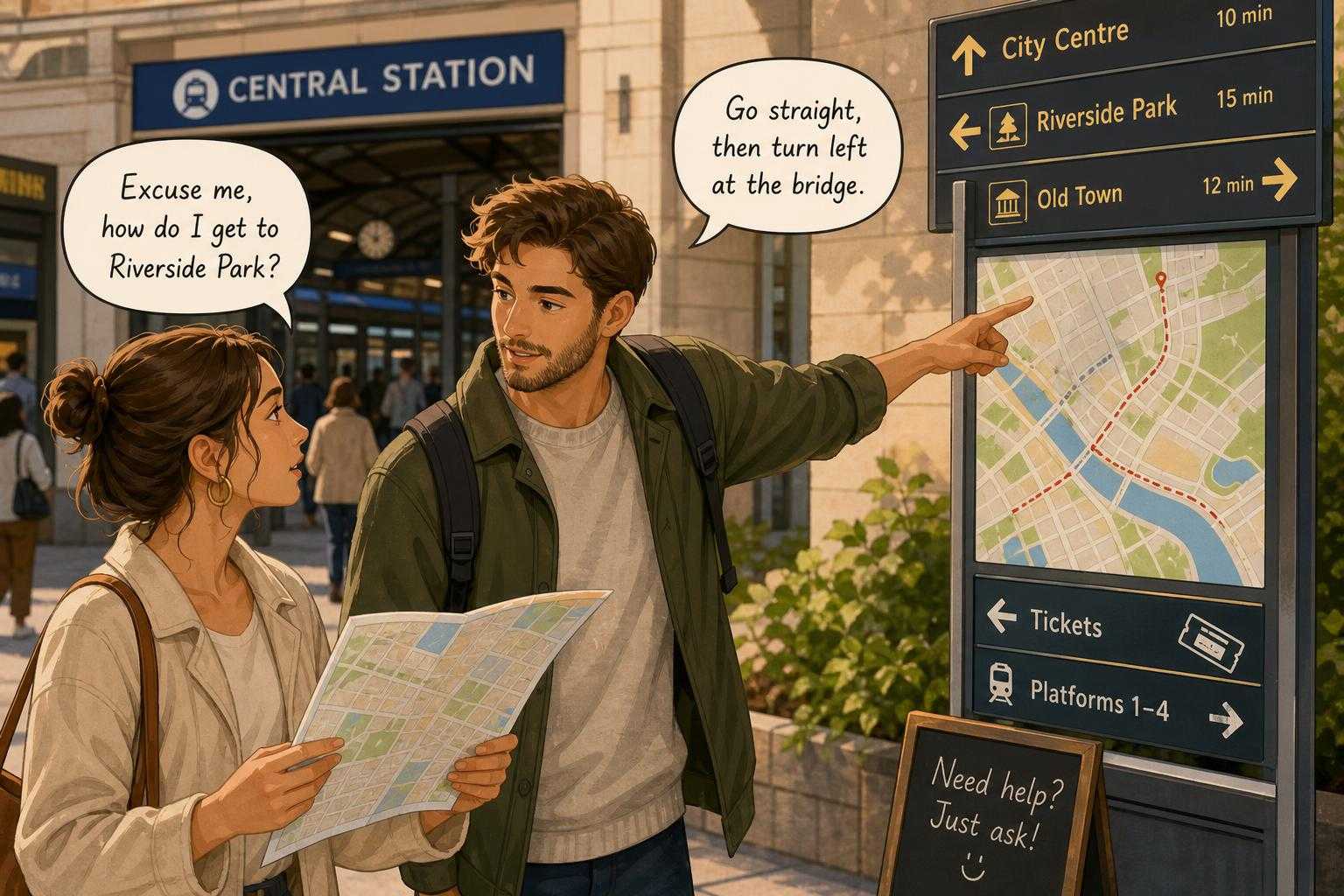
Short exchanges are often enough to get the route you need. Here is a short exchange you can practice out loud.
| Speaker | Italian | English |
|---|---|---|
| Traveller | Scusi, dov’è la stazione? | Excuse me, where is the station? |
| Local | Sempre dritto e poi a destra. | Straight ahead, then right. |
| Traveller | È lontano? | Is it far? |
| Local | No, cinque minuti a piedi. | No, five minutes on foot. |
| Traveller | Grazie! | Thank you! |
| Local | Prego. | You’re welcome. |
Even if you only catch a few words, you can still get the general idea. Listen for the route words: left, right, straight, near, opposite, and then.
A simple way to ask politely
Start with Scusi or Mi scusi, especially when you are stopping someone in the street. Then ask one short question.
- Scusi, dov’è la stazione? — Excuse me, where is the station?
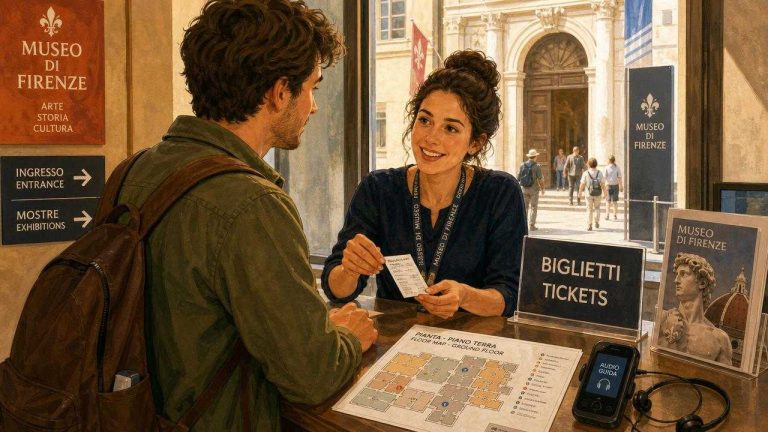
If you feel nervous asking a stranger, try asking someone at a hotel desk, ticket office, café, or shop. You can also show the place name on your phone and say:
- Dov’è questo posto? — Where is this place?
End with Grazie. You do not need to make the sentence perfect. A polite opening and a clear place name are usually enough.
If you want to sound a little more natural without learning advanced grammar, you can build on this approach with tips from How to Sound More Natural in Italian Without Learning Advanced Grammar.
Quick recap: the phrases to remember
| Italian | English |
|---|---|
| Scusi. | Excuse me. |
| Dov’è…? | Where is…? |
| Mi può aiutare? | Can you help me? |
| Sto andando nella direzione giusta? | Am I going in the right direction? |
| A destra / a sinistra / dritto | Right / left / straight |
| Può ripetere, per favore? | Can you repeat that, please? |
| Può parlare più lentamente? | Can you speak more slowly? |
| Grazie. | Thank you. |
You do not need a huge vocabulary to ask for directions in Italian. Start with Scusi, ask one clear question, and listen for the simple direction words: right, left, straight, near, and then. If you miss part of the answer, it is fine to ask again. A few calm, polite phrases are enough to get you moving in the right direction.