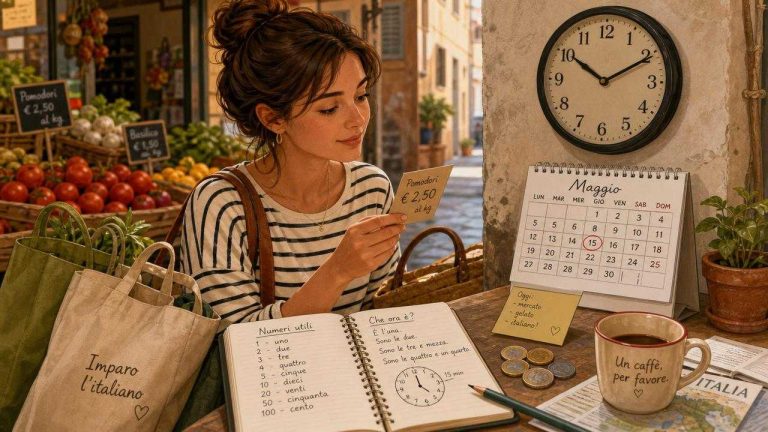

Italian Shopping Phrases for Markets, Stores, and Small Purchases
You’re standing in a shop in Italy, trying to ask the price, check the size, or find out whether you can pay by card. This is exactly where a few simple Italian phrases can make the whole experience easier and much more comfortable.
You do not need long sentences. A greeting, a short question, and a polite per favore or grazie are enough for most small shopping situations.
Start with the basics: prices and what something is called
When you shop, the most useful phrases are often the simplest ones. If you can ask “How much is this?” and “What is this called?”, you already have a strong starting point. For extra practice with everyday travel situations, you can also review Italian Phrases for Everyday Travel and Survival.
| Italian phrase | English meaning |
|---|---|
| Buongiorno. | Hello / Good morning / Good afternoon. |
| Quanto costa? | How much does it cost? |
| Quanto costa questo? | How much is this? |
| Quanto viene? | How much does that come to? |
| Che cos’è? | What is it? |
| Come si chiama? | What is it called? |
| Per favore. | Please. |
| Grazie. | Thank you. |
In many shops, pointing and saying questo is enough if the item is clear. Technically, questo can change depending on the word, but you do not need to worry about that in a quick shop conversation. Pointing helps.
Use Quanto viene? when you are asking for the total, especially at the counter or at a market stall.
Ask for sizes, colors, and options
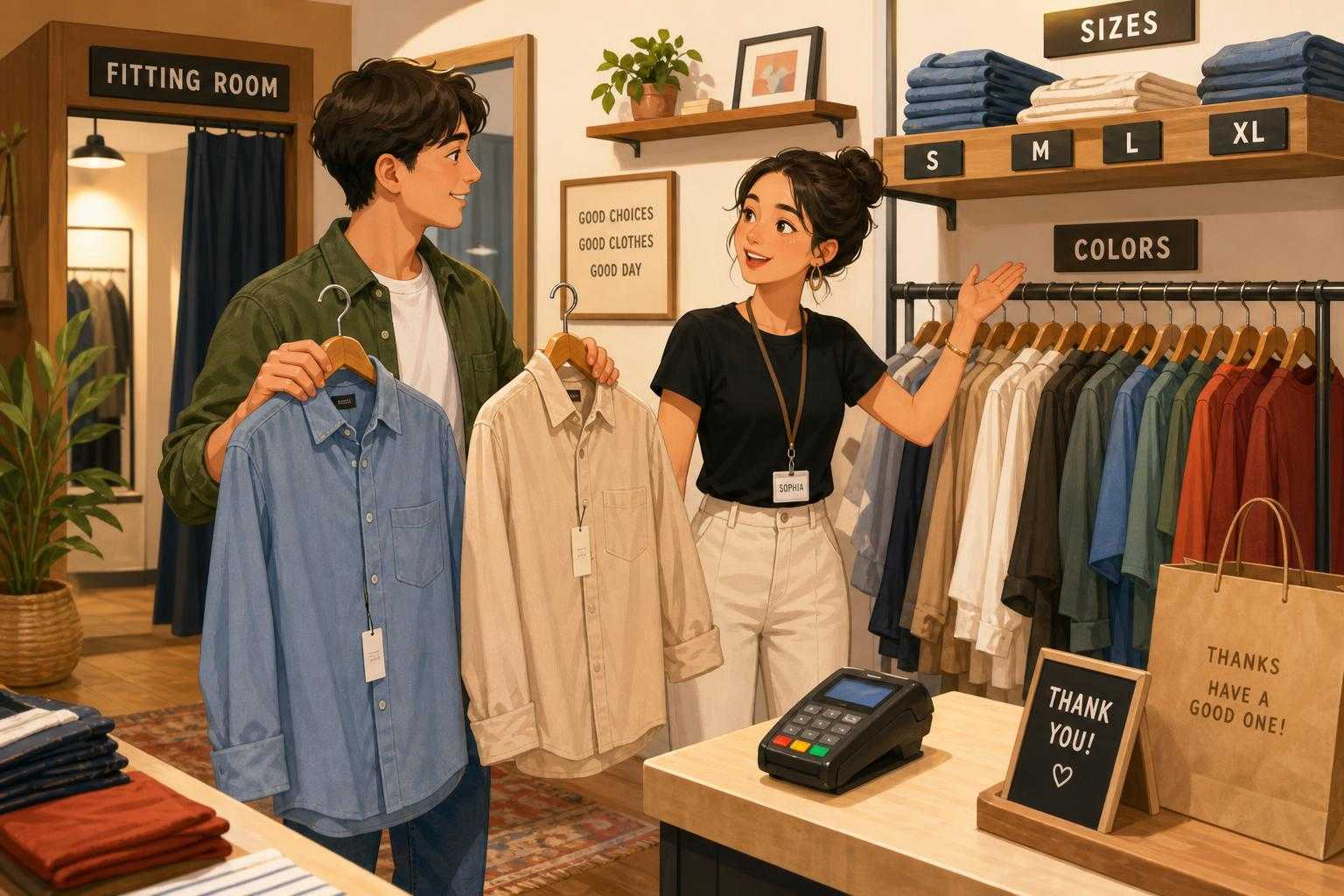
Clothing stores, shoe shops, and markets often require a little more than a price check. These phrases help you ask for the right size, color, or option without getting stuck.
| Italian phrase | English meaning |
|---|---|
| Avete questa taglia? | Do you have this size? |
| Avete una taglia più grande? | Do you have a bigger size? |
| Avete una taglia più piccola? | Do you have a smaller size? |
| C’è in nero? | Does it come in black? |
| C’è in un altro colore? | Does it come in another colour? |
| Posso provarlo? | Can I try it on? |
| Dov’è il camerino? | Where is the fitting room? |
C’è in nero? and C’è in un altro colore? are useful because they avoid tricky Italian words for “it.” You can use them while pointing at the item.
For Posso provarlo?, the ending can change depending on the item. You may hear provarla for a feminine item, or provarli for shoes or plural items. As a beginner, Posso provarlo? plus pointing will usually be understood.
Paying: cash, card, and practical questions
Before you reach the counter, it helps to know how to ask about payment. This is especially useful in small shops, markets, and stalls, where card payment may not always be available.
| Italian phrase | English meaning |
|---|---|
| Posso pagare con la carta? | Can I pay by card? |
| Prendete la carta? | Do you take card? |
| Pago in contanti. | I’ll pay in cash. |
| Una borsa, per favore. | A bag, please. |
| Un sacchetto, per favore. | A small bag, please. |
| No, grazie, non mi serve. | No thanks, I don’t need one. |
| Posso avere lo scontrino, per favore? | Can I have the receipt, please? |
| È tutto, grazie. | That’s everything, thanks. |
In Italy, lo scontrino is the receipt you get after paying. If you need one, Posso avere lo scontrino, per favore? is a polite and simple way to ask.
You may also hear bancomat when people talk about card payment. In everyday situations, carta is still a safe word to use
If you want more phrases for speaking naturally in everyday situations, this next post is a great companion. Italian Everyday Expressions to Sound Local
Useful phrases for markets and food shopping
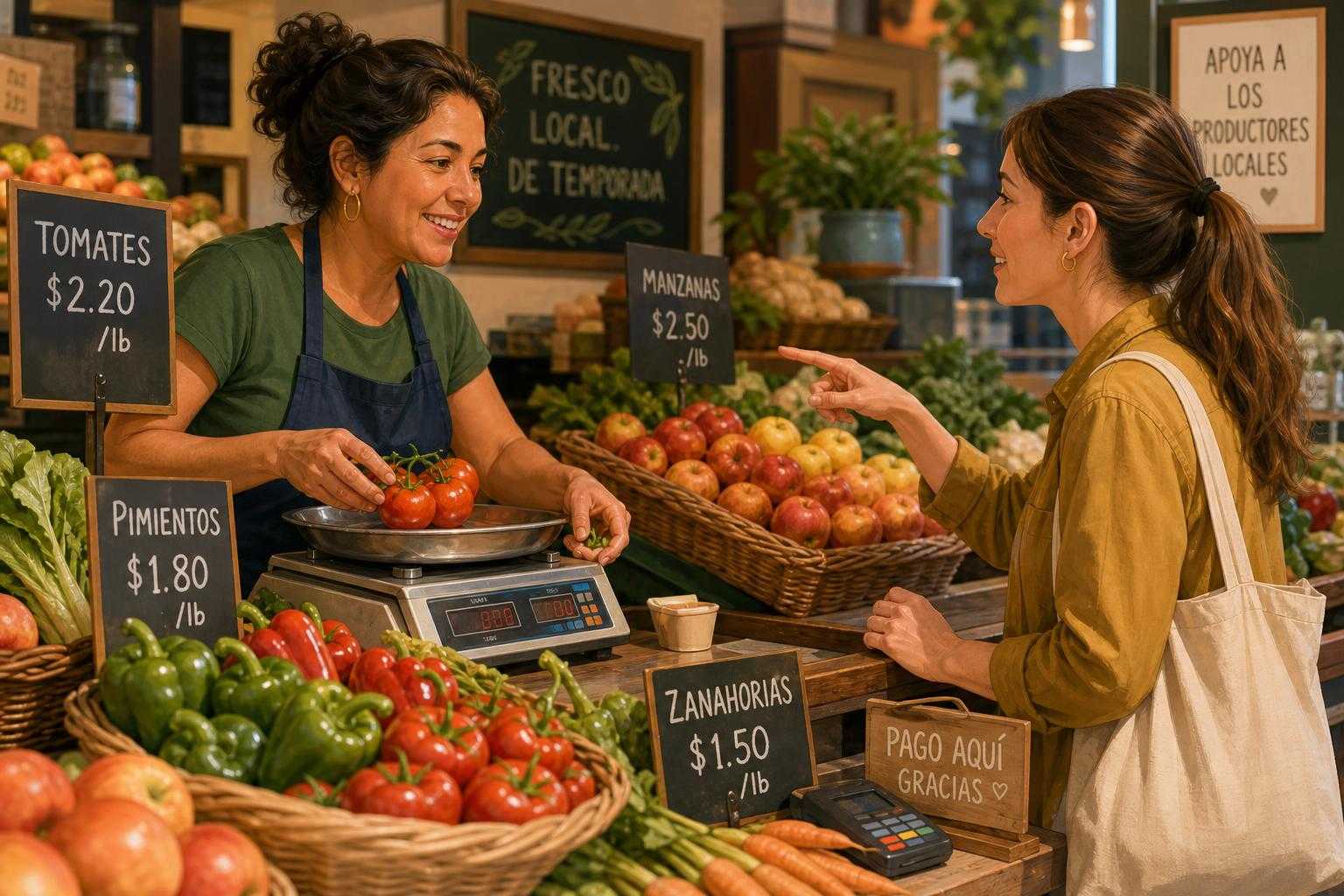
Markets are a good place to use short, direct Italian. You usually do not need long sentences. A simple phrase, a point, and a polite ending are often enough.
| Italian phrase | English meaning |
|---|---|
| Vorrei questo, per favore. | I’d like this, please. |
| Prendo questo, grazie. | I’ll take this, thanks. |
| Me ne dà un po’, per favore? | Can you give me a little, please? |
| Quanto costa al chilo? | How much is it per kilo? |
| È maturo? | Is it ripe? |
| Sono maturi? | Are they ripe? |
| È di oggi? | Is it from today? |
| Posso assaggiarlo? | Can I taste it? |
| Un etto, per favore. | 100 grams, please. |
| Solo un etto, per favore. | Just 100 grams, please. |
In food shops and markets, un etto means 100 grams. You will hear it often for cheese, cured meats, olives, and deli items.
For fruit and vegetables, È maturo? or Sono maturi? is often more useful than asking whether something is fresh. For bread, pastries, or prepared food, È di oggi? is a natural way to ask whether it was made today.
If you need to exchange or return something
You may not need these phrases often, but they are useful for clothes, shoes, gifts, and small purchases that do not fit or do not work.
| Italian phrase | English meaning |
|---|---|
| Posso cambiarlo? | Can I exchange it? |
| Posso fare un reso? | Can I return it? |
| Posso cambiarlo con una taglia più grande? | Can I exchange it for a bigger size? |
| È troppo piccolo. | It’s too small. |
| È troppo grande. | It’s too big. |
| Non funziona. | It doesn’t work. |
For clothing, piccolo and grande can change depending on the item, but the basic phrases will usually be clear with context.
Phrases shop staff might say to you
It also helps to recognize a few phrases you may hear from shop assistants. You do not need to answer perfectly. A short reply is usually enough.
Here’s the table with the simple reply translations added:
| Italian you may hear | English meaning | Simple reply | Reply meaning |
|---|---|---|---|
| Serve aiuto? | Do you need help? | Sto solo guardando, grazie. | I’m just looking, thanks. |
| Cerca qualcosa in particolare? | Are you looking for anything in particular? | Cerco una maglietta. | I’m looking for a T-shirt. |
| Che taglia porta? | What size do you wear? | Porto una M. | I wear a medium. |
| Vuole una borsa? | Would you like a bag? | Sì, grazie. / No, grazie. | Yes, thanks. / No, thanks. |
| Carta o contanti? | Card or cash? | Carta, per favore. | Card, please. |
| Ha bisogno dello scontrino? | Do you need the receipt? | Sì, grazie. | Yes, thanks. |
Sto solo guardando, grazie is especially useful when a shop assistant approaches you and you are not ready to buy. It sounds polite, calm, and natural.
Simple help phrases when you’re not sure what to say
Sometimes the phrase you need is not about shopping itself. It is about keeping the conversation moving. These quick expressions help when you need someone to repeat, slow down, or point you in the right direction.
| Situation | Italian phrase | English meaning |
|---|---|---|
| Ask someone to repeat | Può ripetere, per favore? | Can you repeat that, please? |
| Ask someone to speak more slowly | Può parlare più lentamente, per favore? | Can you speak more slowly, please? |
| Use a shorter slow-down phrase | Più lentamente, per favore. | More slowly, please. |
| Say you do not understand | Non capisco. | I don’t understand. |
| Ask for help | Mi può aiutare? | Can you help me? |
| Say you are just looking | Sto solo guardando, grazie. | I’m just looking, thanks. |
You can use Più lentamente, per favore on its own. It is short, polite, and easy to remember.
A quick shopping phrase cheat sheet
| Situation | Italian phrase | English meaning |
|---|---|---|
| Ask the price | Quanto costa? | How much does it cost? |
| Ask the total | Quanto viene? | How much does that come to? |
| Say you’ll take it | Prendo questo, grazie. | I’ll take this, thanks. |
| Ask for a size | Avete questa taglia? | Do you have this size? |
| Ask to try something on | Posso provarlo? | Can I try it on? |
| Ask to pay by card | Posso pagare con la carta? | Can I pay by card? |
| Ask for a bag | Una borsa, per favore. | A bag, please. |
| Ask for the receipt | Posso avere lo scontrino, per favore? | Can I have the receipt, please? |
| Say you are just looking | Sto solo guardando, grazie. | I’m just looking, thanks. |
| Ask someone to repeat | Può ripetere, per favore? | Can you repeat that, please? |
Keep it short and polite
You do not need perfect Italian to shop in Italy. Start with a greeting, ask one clear question, and add per favore or grazie when it fits.
A few phrases are enough for most small purchases:
| Italian phrase | English meaning |
|---|---|
| Buongiorno. | Hello / Good morning / Good afternoon. |
| Quanto costa? | How much does it cost? |
| Prendo questo, grazie. | I’ll take this, thanks. |
| Posso pagare con la carta? | Can I pay by card? |
| Una borsa, per favore. | A bag, please. |
| È tutto, grazie. | That’s everything, thanks. |
Practice two or three phrases out loud before your trip. In a real shop or market, short and clear Italian is usually enough to ask for what you need, pay politely, and keep the conversation moving.